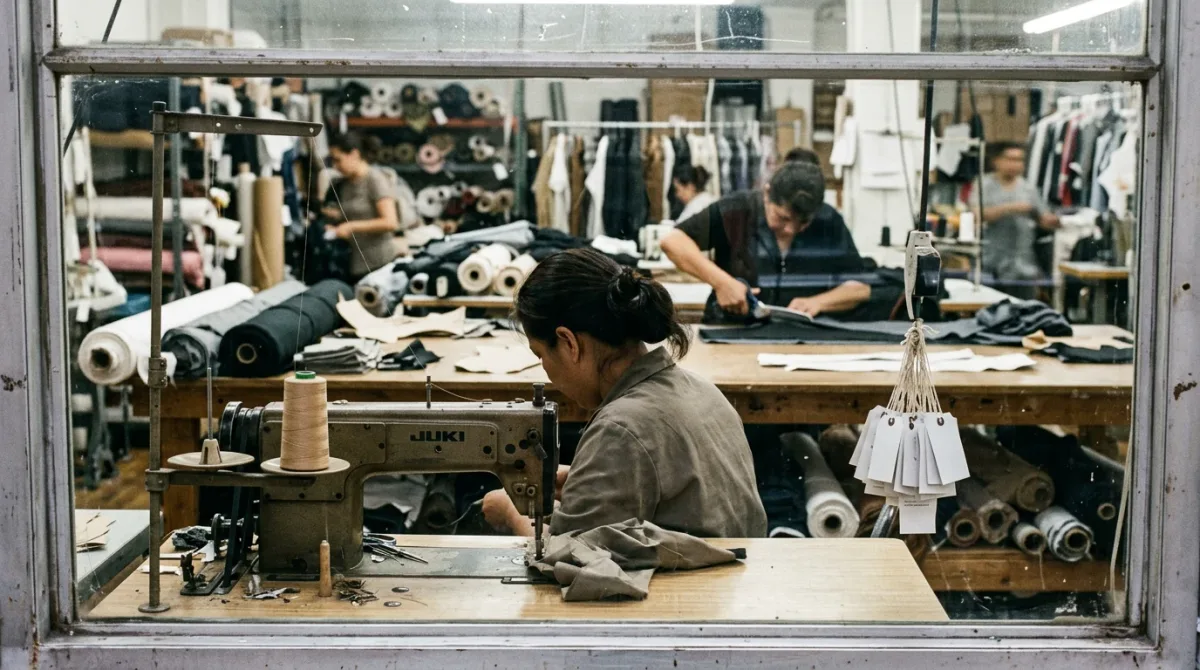
The Local Production Fund, a $1.7 million initiative from the New York City Economic Development Corporation and the Council of Fashion Designers of America, opened applications for garment manufacturers on April 20, 2026, with the goal of steering more clothing orders to factories in Manhattan's Garment District over the next two years and up to three seasons.
The structure is straightforward, at least on the manufacturer's side. Factories in the district apply first; once accepted, they receive credits they can use toward the cost of taking on reshored production orders from participating designers. Designers apply on a separate, later track, with that window opening June 23, 2026. The fund is built to connect up to 21 local manufacturers with as many as 43 designers, according to NYCEDC, which is administering the money jointly with CFDA.
CFDA president Steven Kolb framed the fund as an entry point rather than a subsidy for its own sake, saying it is meant to help manufacturers access local manufacturing, build lasting partnerships and grow within New York City
. NYCEDC interim president Jeanny Pak described the goal in similar terms: the new Local Production Fund will deepen collaboration between local designers and manufacturers.
What problem is this actually solving?
Both agencies point to the same pressure: tariff volatility and shifting global supply chains have made offshore production less predictable, which is pushing some designers to look closer to home. The Garment District, concentrated in Midtown South, still holds a working base of cutting, sewing, and sample-making shops, but that base has shrunk for decades as rents rose and production moved overseas. The fund is a bet that a direct subsidy on orders, not just goodwill, is what gets a designer to actually place work with a New York factory instead of a supplier in another country.
The Local Production Fund is also a sequel. It continues the Fashion Manufacturing Initiative, which CFDA and the city ran from 2013 through 2024. In that stretch, the initiative put $6.7 million into more than 220 grants and workforce programming, supporting 3,708 employees across local manufacturers, per NYCEDC's own accounting. The new fund keeps that partnership but narrows the mechanism to production credits tied to actual orders, rather than general-purpose grants.
Don't confuse it with the other CFDA fund
Coverage of the announcement has mostly treated the Local Production Fund as a single story, but it isn't the only new money moving through the Garment District this year. In January 2026, CFDA separately introduced the CFDA x NY Forward Grant Fund, financed by New York State's Department of State along with Ralph Lauren Corporation, which has also put $2 million toward the predecessor Fashion Manufacturing Initiative. That fund offers matching grants to Garment District designers and manufacturers for things like equipment upgrades and worker training — a different mechanism, a different funding source, and a different application process from the order-matching credits at the center of the Local Production Fund. Both run through CFDA, both target the same few blocks of factories, and the overlap in name and geography makes them easy to conflate in a quick read.
For a shop floor in the Garment District, the distinction matters. A factory chasing equipment money is applying to one program; a factory hoping a credit will help it say yes to a designer's order is applying to the other. Whether either fund meaningfully slows the district's decline will depend on how many of those 21 manufacturer slots actually turn into repeat business once the credits run out.
For a related business news perspective, read How New York's Biggest Design Prize Actually Pays Out.
For more context, read Allure Officially Opens First Retail Store in New York City.