Why does SoHo's storefront mix keep turning over?
SoHo's cast-iron blocks cycle through global brands because its rents are set by tourist foot traffic and a landmarked ground floor — a retail economics story dressed as a style story.
Style at NY Elite documents how the city dresses in practice: what holds up over three miles of walking, a subway platform in August, and February slush. Coverage moves between boroughs and price points. Written for readers dressing for an actual New York day rather than a photograph.
Street-level dressing across the city, from subway commutes to the Upper East Side, with notes on climate, distance walked and what survives February.

SoHo's cast-iron blocks cycle through global brands because its rents are set by tourist foot traffic and a landmarked ground floor — a retail economics story dressed as a style story.

A 1987 zoning rule was supposed to keep clothing production in Midtown. Sixty years of rezonings later, it's a smaller, stranger version of the same promise.

The L train has a wardrobe, the 2/3 has a wardrobe, the G insists it doesn't — how much of New York's car-by-car style folklore is observation and how much is just class with a train number.

One closet now has to serve a Midtown office and a Thursday-night LIE departure — and the compromise garment it produced has quietly rewritten American casual wear.

Nobody wears comfortable shoes in New York as a fashion choice first — the city's daily mileage decided that decades ago, and fashion only caught up.

It is not mourning and it is not minimalism — black in New York is infrastructure, and each neighborhood wears its own dialect of it.

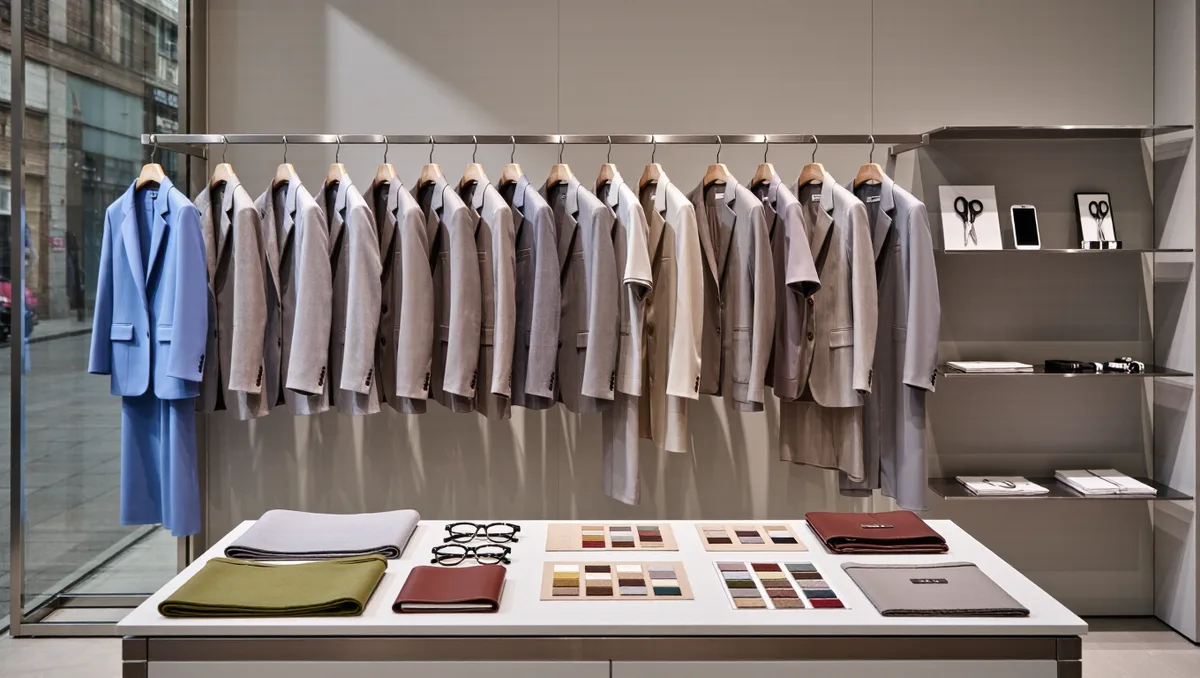
The financial district spent a century perfecting the suit — then quietly stopped requiring one, and what replaced it says a lot about work itself.

On Avenue A and East 9th Street, vintage is no longer the alternative to shopping — it is the main event, with rents, buyers and pricing to prove it.

Every good closet in this city has a quiet partner — the alteration shop on the corner that hems, let seams out and keeps a $40 blazer alive for a decade.

Behind every feeding-frenzy sample sale in Manhattan is a small industry of producers, warehouses and markdown math — and the discounts are less charity than clearinghouse.