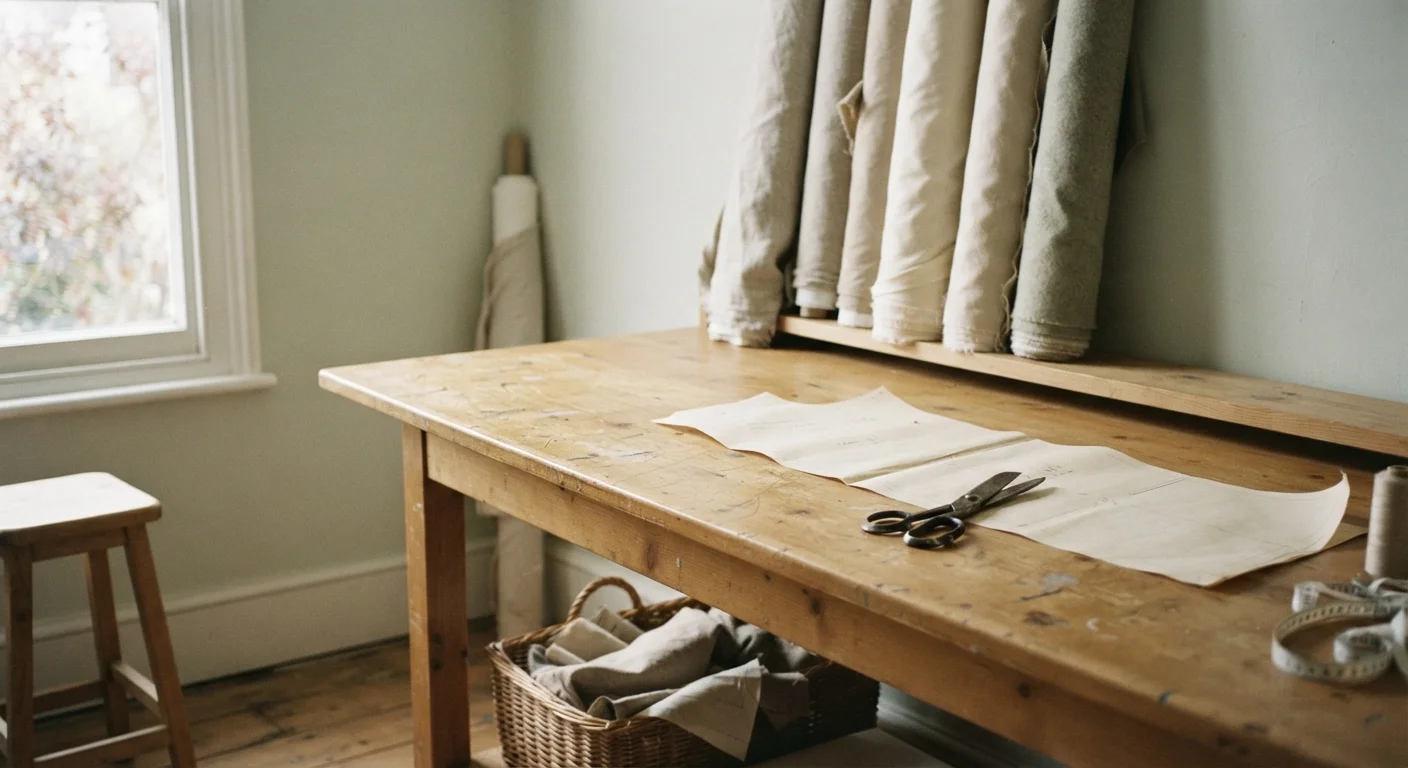
The Garment District — roughly West 35th to West 41st Streets, Broadway to Ninth Avenue — still concentrates hundreds of apparel businesses within walking distance of one another: patternmakers, sample rooms, button stores, fabric houses, and cut-and-sew shops, an arrangement the city's own planning studies describe as the densest apparel production district in the country. The 1987 special zoning district that preserves manufacturing space there was renewed in a revised form by the City Planning Commission's 2018 rezoning, per the Department of City Planning's adopted text. That's the whole trick of the neighborhood: proximity as infrastructure.
Walk-in distance is not nostalgia; it is the production economics of small-run fashion. A designer can carry a pattern to a sample room, sit through a fitting, pick buttons two blocks away, and have a showroom-ready garment in days. No other American city offers the loop on foot.
Why did the city zone a fashion district?
Because the industry was leaving and the buildings were the reason it could stay. Apparel manufacturing in New York fell for decades after its mid-century peak — the blocks lost floor space to offices as the industry shrank, and by the 1980s the remaining businesses needed protection from conversion pressure. The 1987 special district required building owners in its core to preserve manufacturing space; the 2018 revision eased some preservation requirements in exchange for targeted supports, a compromise the planning agency documented in the rezoning record. Save the Garment District, the advocacy coalition, called the deal insufficient; building owners called it overdue. Both positions are on the record in the hearing documents.
Who works there now?
The district's workforce runs heavily toward immigrants, with production workers — cutters, sewers, sample makers — concentrated in the district's few hundred remaining manufacturing businesses, counts the Department of City Planning published in its 2018 garment district plan. The cluster also includes the supply ring: fabric stores along West 38th and 39th, trims and notions shops, and the machinery-repair trade that keeps decades-old sewing equipment running. Designers use the district on demand; the district's permanent staff are the people who make the samples other neighborhoods design.
What is Fashion Week's relationship to the blocks?
Distant cousins. The runway calendar — now anchored at Spring Studios in Tribeca and a roster of venues across Manhattan, per the CFDA's official calendar — generates sample-room demand in the Garment District weeks before shows, because New York collections are cut close to show dates by industry custom. But the tents employ the district; they do not house it. When the calendar moved downtown over the 2010s, first from Bryant Park to Lincoln Center and then to scattered venues, the district's workload moved with the calendar, not the address.
Can the model survive the rents?
The evidence is mixed and honest coverage says so. Manufacturing employment in the district stabilized after the 2018 rezoning rather than continuing to fall, per city planning counts, but the stability is fragile: the preservation requirements cover less space than the 1987 version, and the advocacy groups' warning — that a shrunken critical mass stops being critical — is a mechanism, not a mood. The counterweight is demand itself: the small-run, fast-turn production the district sells is the production method domestic independent labels depend on, and the pandemic-era supply-chain disruptions made domestic capacity newly valuable, a shift garment-industry groups documented in their own recovery reporting.
What the record establishes is a working industrial district inside a commercial borough, held together by zoning and walking distance. What it cannot establish is the next decade — that depends on lease renewals, enforcement of the preservation rules, and whether the labels that need the district can afford to be near it.
For more context, read CAROLINE HU AW 24 during Paris Fashion Week.