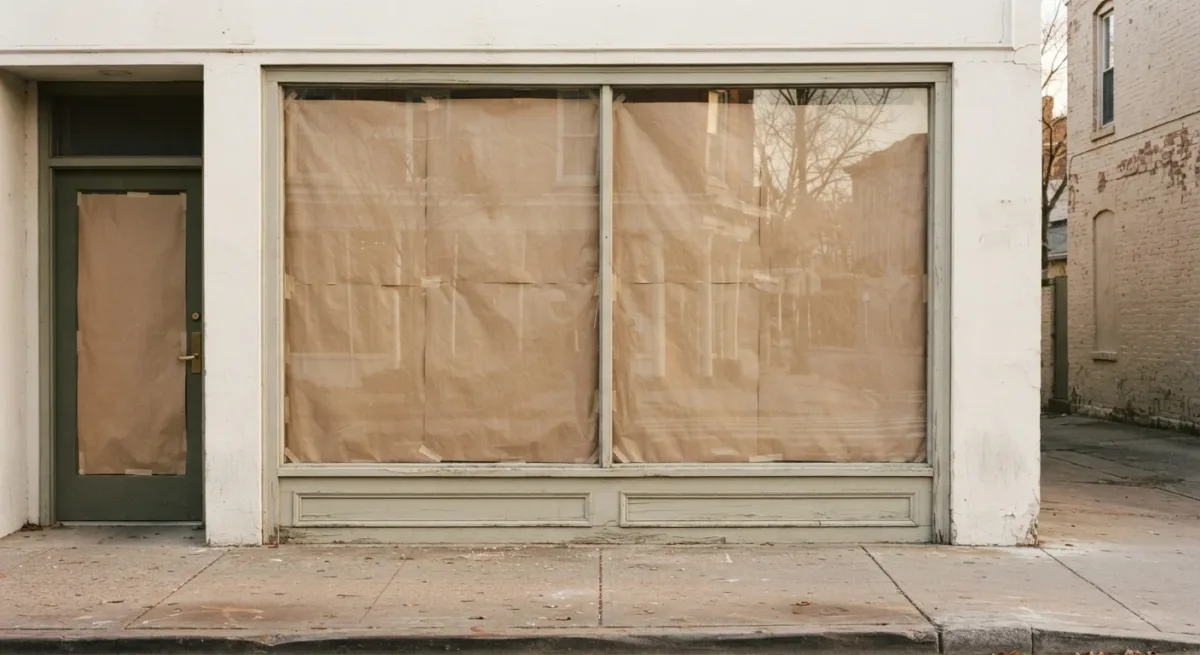
SoHo — the cast-iron blocks south of Houston, west of Broadway's retail spine — keeps turning over its storefronts because it runs one of the country's most expensive retail rent structures on some of its most constrained buildings: landmarked facades, small floor plates, and global-brand demand that bids ground floors up faster than local retail can pay, with prime Broadway corridors asking on the order of several hundred dollars per square foot per the major brokerage houses' Manhattan retail reports in recent years. The turnover is not a style cycle. It is a lease cycle wearing one.
The neighborhood invented the model it keeps eating. Artists took illegal loft studios in empty manufacturing buildings in the 1960s and 70s; galleries followed; the galleries drew shoppers; the shoppers drew brands; the brands priced out the galleries. Every account of the district, including the Landmarks Preservation Commission's own designation records for the SoHo-Cast Iron Historic District, traces that sequence.
What sets SoHo rents apart from the rest of the city?
Foot traffic density with a scarcity of boxes. The blocks hold small, deep, landmarked storefronts — protected so the facades cannot be modernized into generic retail — and the demand pool is planetary: a European or Asian brand entering the United States wants a Manhattan flagship address, and Broadway between Houston and Canal is on the short list of addresses that signal arrival. When several such brands bid on the few available boxes, the rent clears at flagship-marketing budgets, not at what a bookshop can pay. The brokers' published Manhattan retail reports document the corridor's asking rents holding at or near the city's top tier through the 2010s.
What did the pandemic change?
The cycle's tempo, not its logic. Lockdowns emptied the corridors; asking rents in SoHo's prime stretches fell from their peaks — declines in the range of 20 to 40 percent from 2019 peaks by 2021, per brokerage retail reports — and the recovery brought a different tenant mix: fewer fast-fashion flags, more beauty, jewelry, and what the brokers call experiential retail, the take-a-photo-buy-a-thing category. The ground-floor vacancy the recovery left behind became, briefly, a story about decline; by 2023-2024 the same brokers' reports showed corridors refilling at rents below peak but above the pandemic floor.
One detail the style coverage mostly skipped: the neighborhood's shoppers are overwhelmingly tourists, and the retail economics track the dollar and the visa as much as the trend cycle — when international travel fell in 2020, SoHo's sales fell with it, while residential-neighborhood retail in Brooklyn and Queens held steadier, per the city's own sales analyses.
Is the artist-then-gallery-then-brand story repeating anywhere now?
Observers keep nominating candidates — the Lower East Side, parts of Williamsburg, Bushwick's gallery strip — and the honest answer is that the mechanism transfers only partially. SoHo's transformation needed empty manufacturing lofts, which landmark law then froze; today's candidate neighborhoods start with occupied residential fabric and weaker foot traffic, so the escalation runs slower and often stalls. The real-estate industry's own analyses of the last cycle say as much: the SoHo template required a building stock nobody is building again.
What the record establishes is a district whose look survives by law and whose tenants turn over by lease arithmetic. What it cannot establish is the next tenant class — the brokers' reports guess every year, and the corridor answers on its own schedule.
For more context, read Why Does New York Still Have a Garment District?.