A front row seat at a major New York Fashion Week show costs nothing in dollars and anywhere from thousands to millions in everything else. Brands do not sell seats; they allocate them to people who return value — editors whose reviews move orders, buyers who place them, celebrities whose photographs earn the show more than a campaign would. The seat is an investment position, and the price is whatever the occupant's attention is worth.
This is the first thing to understand about fashion's most photographed furniture: the front row is not seating, it is a media plan. Every name card on those folding chairs represents a calculation about reach, revenue, or obligation, and the room is arranged in strict order of how much each calculation returned last season.
Is there a real price for a front row seat?
No legitimate one. Seats at designer shows are invitation-only and technically free; anyone claiming to sell one is selling either a package wrapped around it — hotel, car, beauty appointment — or a seat at an affiliated event, like a branded dinner or a charity gala with fashion programming. Industry reporting over the years has repeatedly flagged brokers reselling show access at inflated rates, and brands treat this as fraud because it is: the seat was never a commodity, and monetizing it outside the relationship economy breaks the system.
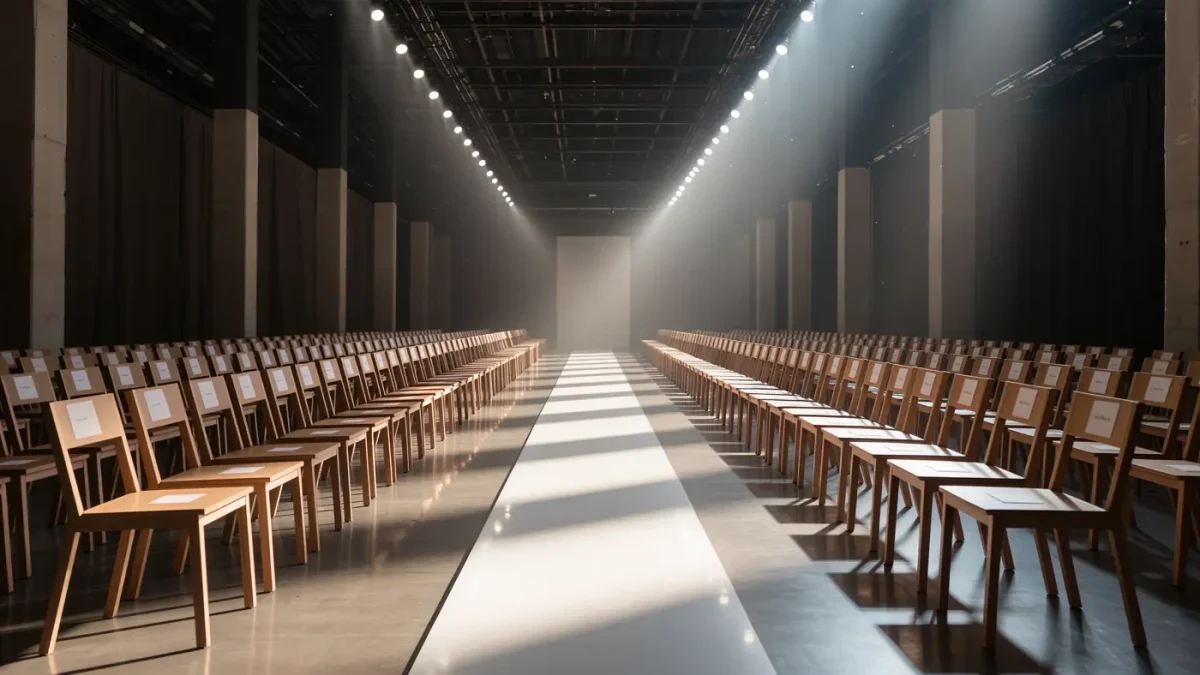
The closest thing to a market price appears on the production side. Staging a major show in Manhattan — a venue, lighting, sound, casting, samples, and seating for several hundred people — runs into seven figures, and the front rows consume a disproportionate share of the thinking. Show producers obsess over the first two rows because that is what the cameras will frame for the next six months.
Who gets a front row seat, and what do they pay in return?
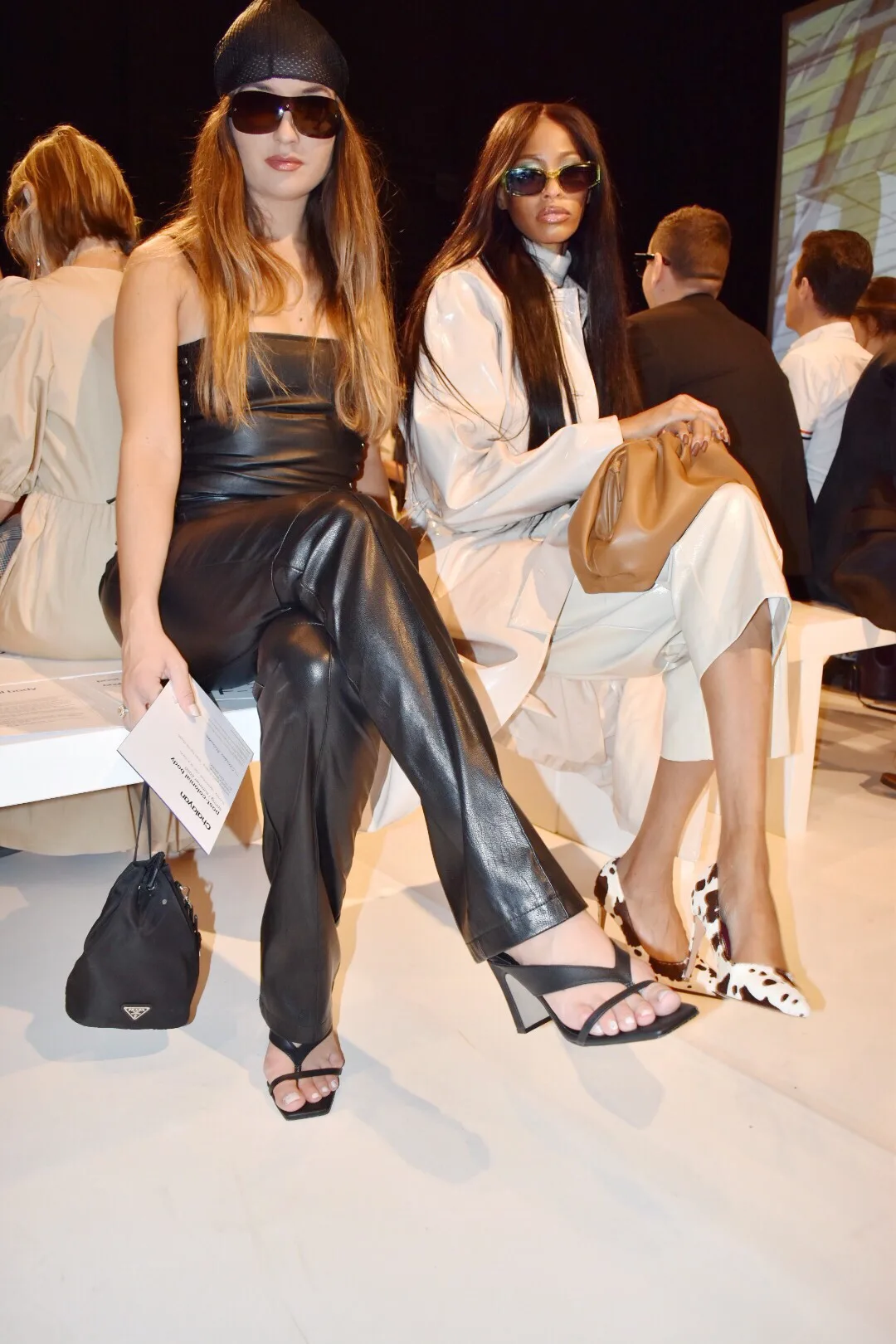
Three constituencies, paying in different currencies. Editors and critics pay with coverage: their review, their social posts, their placement of the collection in season recaps. Buyers pay with orders — a wholesale account that writes millions of dollars in purchases will always sit close to the runway. Celebrities pay with the photograph itself, which is why their contracts, informal as they are, typically specify the loan of looks, a styling team, and the front-row placement in exchange for attendance that the brand can publish.
Beyond those three sit the relationship seats: the investors, the retail partners, the museum curators, the stylist whose client booking next season depends on this show's success. Each of them earned the chair in a different ledger. Add up the ledgers and you have the real price of the row — a number no one totals because it is denominated in at least five currencies.
Then there is the internal front row, which nobody photographs: the design studio's own picks, the archivist, the atelier hands who built the collection, seated by the producer in a deference that costs nothing and means everything inside the building. Every show runs two seatings at once — the one the cameras see and the one the house sees — and woe to the producer who confuses them.
How much does a brand spend to dress a front row?
More than the seats themselves. A-list attendance at a major show involves loans of clothing and jewelry worth six figures, plus styling, travel, and the soft costs of the negotiation that got the person to Manhattan on the right afternoon. Per standard industry practice, nothing is billed; the entire package is a barter against the photograph and the headline. The economics only close if the celebrity's post outperforms paid media, which is the bet every brand is making.
For lesser-known attendees, the cost inverts: stylists and their assistants frequently spend out of pocket to dress clients for shows, betting that the visibility converts into future bookings. The front row's economy runs on deferred payment in both directions.
Why does the front row matter so much to the clothes?
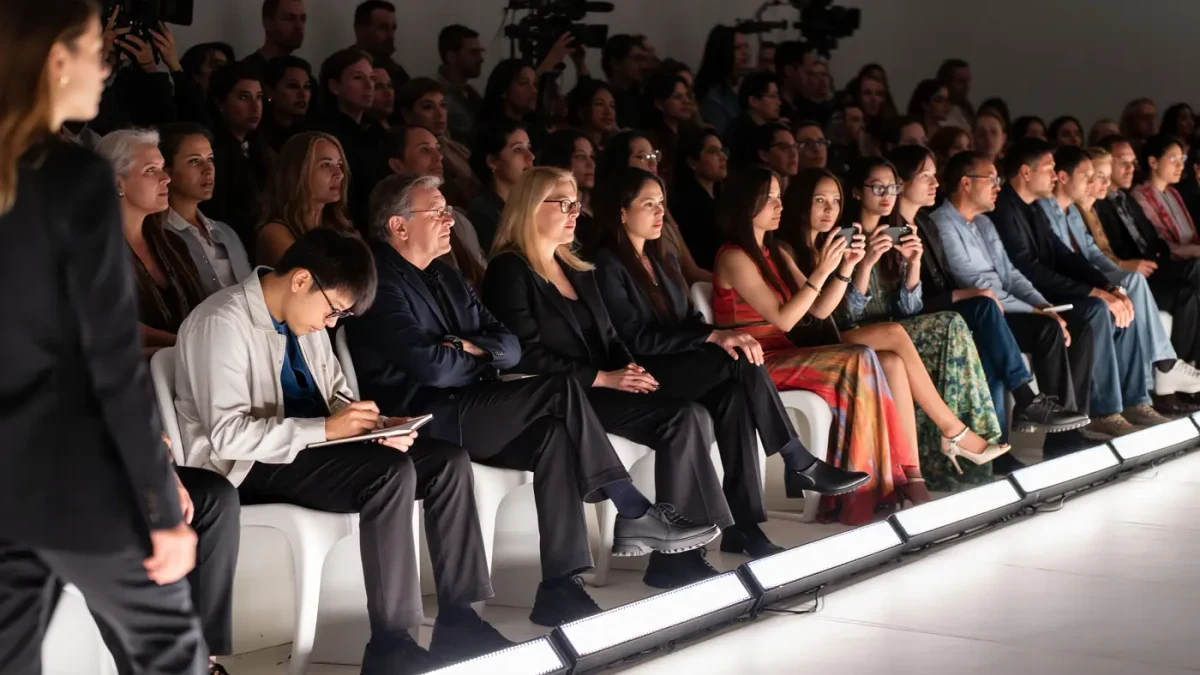
Because the photograph of the room is part of the collection's story. A front row full of recognizable faces tells retail partners and press that the brand has heat; an empty row tells them the opposite, regardless of what came down the runway. Designers and chief executives understand that the first three rows function as an audience survey — a live poll of who believes in the brand — and the images circulate accordingly.
This is also why seating charts are contested documents. Where an editor is placed — front row or second, beside a rival or beside a friend — is read like a diplomatic communiqué. Publicists negotiate placements the way agents negotiate billing. The chart goes through more revisions than the running order of the show itself.
Do the rules change at smaller New York shows?
They soften. At independent shows — an emerging designer staging a presentation in a Chinatown gallery or a Brooklyn warehouse — the front row is often filled by whoever the brand cannot afford to lose: the one crucial buyer, the one writer, the friends who worked on the collection for free. The currency is the same, the amounts are smaller, and the chairs might be borrowed. But the principle holds at every price point: nobody buys the seat, because the seat is how the brand pays for everything else.
That's the whole trick of the front row: it looks like the best free ticket in New York, and it is — as long as you understand that free things with this much care in the arrangement are never free. The seat costs exactly what you're worth to the person who put your name on it, and the price is renegotiated twice a year.