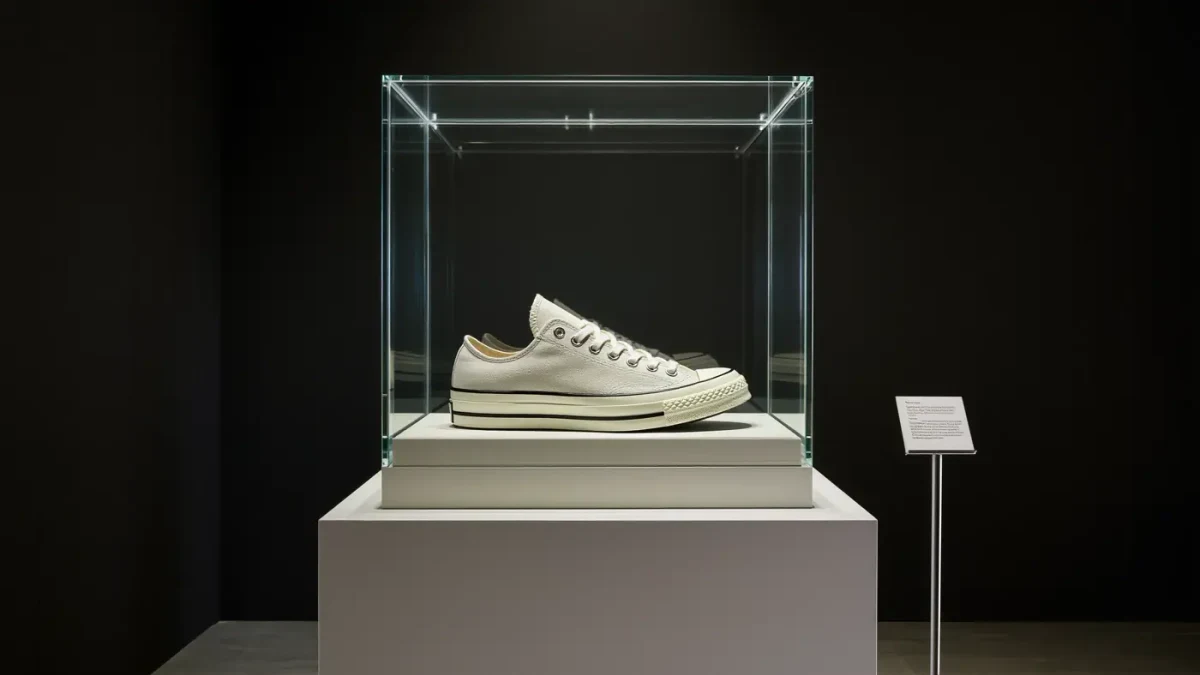
What does it mean when a sneaker — an object engineered for pavement, resale, and court sport — ends up in a climate-controlled museum case? It means the museum has conceded something. When the Brooklyn Museum staged The Rise of Sneaker Culture in 2015, and the Museum of Modern Art put mass-produced design classics like denim and athletic shoes into its galleries with the 2017 exhibition Items: Is Fashion Modern?, New York's institutions formally accepted that streetwear belongs in the same lineage as the couture gown and the designer chair. The object did not change when it crossed the threshold. The institution did.
The concession runs both ways. Museums spent a century treating fashion as a decorative-arts orphan, and streetwear as beneath even that — commercial, trend-driven, tied to youth markets rather than ateliers. Collecting a basketball shoe forced curators to argue, in acquisition language, that a design can be historically significant without being rare, hand-made, or expensive at retail. That argument, once won for the sneaker, opened the door wider: logos, graphics, rap merchandise, workwear adopted by subcultures. The vitrine stopped certifying wealth and started certifying influence. That is a real institutional shift, and it happened in living memory.
Why did streetwear reach museums when it did?
Because two clocks ran out at once. First, the generational clock: the collectors and curators who grew up on downtown skate shops, Harlem boutiques, and Queens sneaker stores reached positions of institutional power, and brought their reference points with them. Second, the market clock: by the mid-2010s streetwear resale prices were producing headlines and auction results, and museums noticed that the objects defining contemporary design were appreciating like art while sitting outside art collections. An institution that documents design history could no longer pretend the sneaker was a footnote. The footnotes had better provenance than the chapters.
New York's specific role is worth separating from the general trend. The garments themselves came from everywhere — West Coast skate culture, Japanese importers, European sportswear — but the resale economy that taught the market to treat sneakers as collectibles was substantially a New York phenomenon: trading forums run by local enthusiasts, consignment shops in downtown Manhattan, lines outside raffles in Brooklyn, and the culture of cultivated scarcity that turned a retail drop into a civic event. When the museum collected the shoe, it was also collecting that infrastructure — queues, forums, camp-outs — as history.
What gets lost when streetwear enters the vitrine?
The context, which is most of the meaning. Streetwear's significance was never primarily visual; a logo tee matters because of who wore it, where the drop happened, and what scarcity did to its price by Friday. Museums are built to preserve objects, and objects only. A display case can hold the Air Jordan silhouette but not the schoolyard hierarchy it enforced; it can hold the box, but not the camp-out. Curators have adapted with video, oral history, and commissioned context walls, but the gap is structural. Every acquisition of streetwear is also an acknowledgment that the museum captures the artifact and streams past the life.
There is also a time-lag problem the couture archive never faced. Traditional fashion enters museums after decades of editorial consensus; streetwear entered while the resale market was still repricing the same objects weekly. A sneaker can be accessioned as a design landmark and flipped online in the same news cycle, and the museum label's quiet authority collides with the market's loud one. The vitrine says: permanent value. The stock ticker says: check back Thursday. Both speak about the same object, which tells you exactly how strange the museum era is for this category.
What do curators actually do with a sneaker collection?
The same things they do with a gown, plus a few problems no one anticipated. Conservation staff photograph construction details, stabilize degrading materials — polyurethane soles from certain eras crumble chemically, a preservation nightmare couture never produced — and research provenance the way they would for a dress, tracing a shoe from its retail drop through its owners to the box it arrived in. Acquisition decisions now involve interviewing resellers, reading trading-forum archives, and negotiating with collectors who know the market better than the registrars do. The museum has had to become a student of the very market forces it once stood apart from, and the scholarly apparatus — catalogs, symposia, study appointments at institutions like the Museum at FIT — has grown up around objects that were, a decade before, sold out of duffel bags on Canal Street.
Is the museum the end of streetwear's story, or a new chapter?
Neither extreme is right. The pessimistic read — that institutional acceptance sterilizes a living culture — underestimates how little the culture has asked for permission. The optimistic read — that the vitrine validates everything — flatters the museum's power beyond its reach. The accurate version is that New York's institutions have become one more venue where the style competes, alongside the resale app, the drop queue, and the sidewalk. In that competition the museum brings something the market cannot: memory with a maintenance budget. Auctions reprice; vitrines preserve. A city that once documented street fashion only in photographs now keeps the objects in storage rooms on Fifth Avenue and Eastern Parkway, cataloged beside the gowns they were once considered unworthy of hanging near. The sneaker did not need the museum. The city's memory, though, is better for it.