Fashion week party lists are built by publicists working from a simple master hierarchy: talent first, editors and buyers second, stylists and creatives third, everyone else last. RSVPs are collected, cross-checked against a brand's priority sheet, and converted into a door sheet that security treats as law. Everything else — the plus-ones, the DMs, the day-of pleading — is negotiation at the margins.
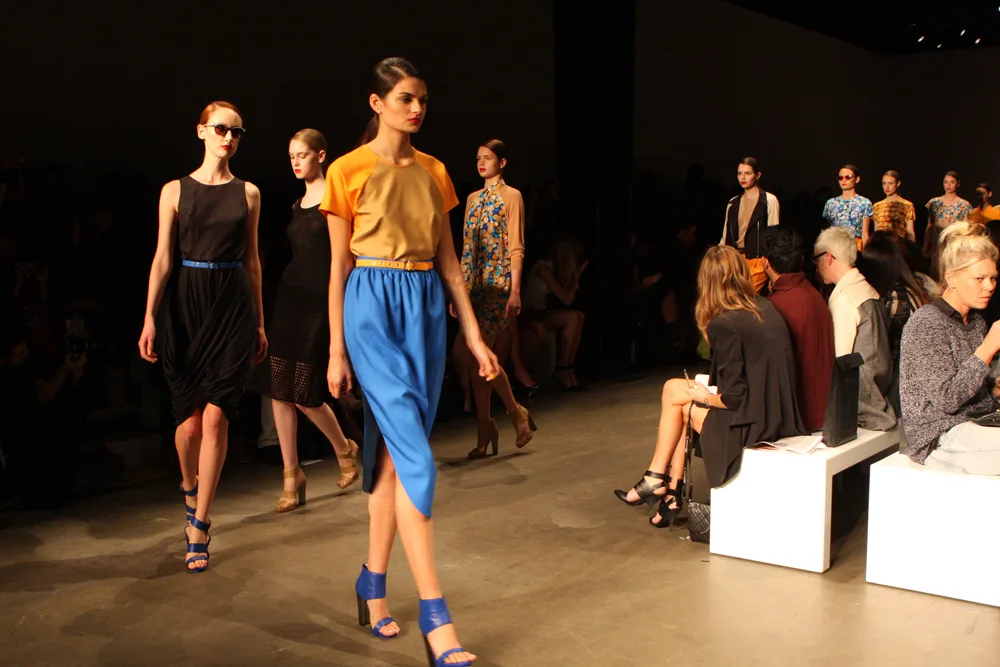
Twice a year, for about eight days each September and February, Manhattan hosts a rolling event economy that has no exact equivalent: a few hundred shows, presentations, dinners, and parties compressed into a single calendar, most of them free to attend and nearly impossible to get into. The bottleneck is never the venue. It is the list.
Who actually compiles the guest list for a fashion week party?
Usually a public relations agency, hired by the brand, working with the brand's own communications team. The agency drafts the master list from its contacts database; the brand marks its priorities — the actors it dresses, the editors it courts, the retail partners it needs to flatter. Independent party hosts, like the nightclub groups and event series that program fashion week nightlife, maintain their own lists built from years of door data: who showed up, who stayed, who improved the photos.
The resulting document is less an invitation roster than a ranking exercise. A veteran events producer can tell from the formatting of a door sheet which names are load-bearing and which are decorative. Fonts do not change, but emphasis does, and the person at the rope has usually been briefed on the difference.
What does the RSVP actually do?
Less than people think. The RSVP confirms interest; it does not guarantee entry, and everyone in the industry knows it — which is why confirmations arrive with the telltale phrase "RSVP does not guarantee admission." What the RSVP really measures is demand. Publicists over-invite by design, expecting a certain percentage to decline, skip, or leave after one drink, and the overbooking ratio is tuned like an airline's.
The responses themselves are data. A party that fills is a party whose host has leverage for the next season; a party that empties by midnight becomes a cautionary note in someone's deck. Agencies track no-show rates by name, and repeated no-shows quietly demote a person from hard list to soft list to not-listed.
Why do some people get in without an RSVP?
Because door staff are paid, in part, to exercise judgment. The rope is the industry's last unautomated checkpoint: no app decides who enters a fashion week party, only a person with a list, a flashlight, and instructions. That person can admit a well-dressed stranger to fix a thin room, or hold a confirmed name to protect capacity for talent that has not arrived.
The economics favor flexibility. Venue capacity is fixed, but the value of each guest is not — a editor with a camera roll full of the brand's runway looks is worth more inside than four plus-ones combined. Door people internalize this arithmetic. The regulars at the established doors in Chelsea, the Lower East Side, and the Meatpacking District can read a queue the way traders read an order book: who gets pulled, who waits, who is waved past with two words.
How do brands decide who matters on the list?
Through a mix of reach, revenue, and relationships. The reach tier is measured in followers and clippings; the revenue tier is buyers, executives, and clients who actually spend; the relationship tier is everyone the brand owes something to — a stylist who pulled looks for a shoot, an editor who ran a favorable piece, a museum curator who included the designer in a show. Fashion week parties are how those debts get paid without cash.
This is also why the lists shift from season to season. A brand that is courting a new creative director's circle will load the party with that crowd. A brand with a new store opening in SoHo will pull heavily from the retail and real-estate worlds. The party list is a snapshot of the brand's current strategy, readable like a balance sheet if you know the names.
What has changed in the RSVP economy?
Automation has touched the edges: RSVP platforms, QR codes on invitations, digital door sheets synced to tablets. But the core sorting remains stubbornly analog, because the criteria are subjective by design. No algorithm can weigh whether a certain stylist's presence will keep a certain actor at the party past midnight, and that calculation — not headcount — is what hosts are optimizing.
The other shift is the content calculus. Per industry reporting on the fashion event business over recent seasons, brands increasingly staff their parties with creators whose entire job is to post from inside the room, which means the list now includes people invited not for who they are but for what they will publish. The old tiers remain. A new one has been bolted on: the invited audience.
How do you actually get on these lists?
By being useful to someone who compiles them. Publicists add names that come recommended by clients they cannot refuse; brands add names that come from executives. Cold requests from strangers go to the bottom of the soft list, which is a polite word for nowhere. The reliable routes are unglamorous: work on shows, write about the industry, style the shoots, staff the events, become someone whose presence a busy person can vouch for in a two-word text.
That's the whole trick of the RSVP economy: the lists look exclusive from outside and transactional from inside. Admission is never bought directly, but it is always earned somewhere — in clippings, in favors, in years of standing on the right side of the rope.