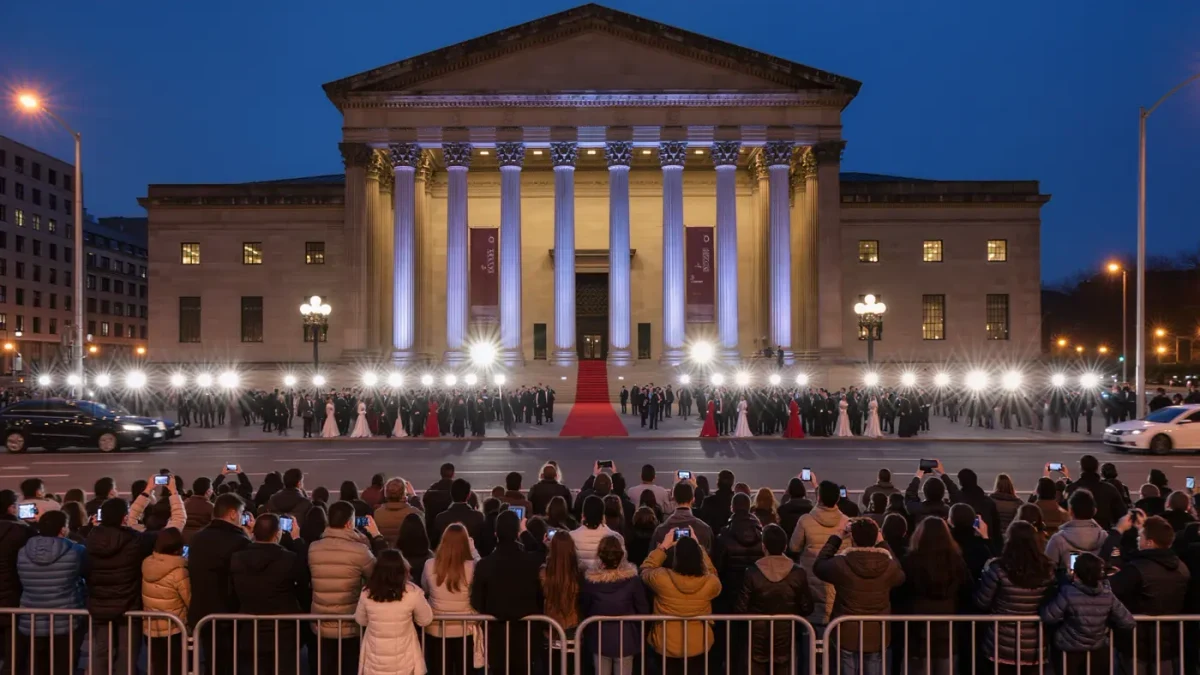
The Met Gala ends around 11 p.m., and that is precisely when the second economy of the night switches on. Everything after the steps is paid for by someone else — usually a brand, occasionally a nightclub group, rarely the guests — and admission is settled not in dollars but in leverage. Understanding who foots the bill explains who ends up inside.
First Monday in May is often described as fashion's Super Bowl, but the football analogy stops at the museum door. The Costume Institute benefit is a fundraiser with fixed tables, bought seats, and a guest list approved by Vogue; the after-party circuit that follows is a free-market scrum by comparison, with dozens of competing hosts, no ticket price, and a currency made entirely of names. The two events share a date and almost nothing else.
Who actually pays for a Met Gala after-party?
Almost always a brand, working through its events and communications budgets. A fashion house, a spirits label, a tech company angling for fashion credibility — one of them writes the check for the venue, the security, the lighting design, the DJ's fee, and the astonishing quantity of champagne that vanishes between midnight and 4 a.m. The host on the invitation is often a celebrity face; the logo on the invoice is the actual host.
The arithmetic is not mysterious. A downtown venue of reasonable size — a club in the Meatpacking District, a restaurant space in NoHo, a rented townhouse on the Upper East Side for the quieter set — can run well into six figures for a single gala night, once holiday-level staffing and security are factored in. Brands accept the number because the guest list is the most concentrated audience in American fashion: every editor, stylist, executive, and image-maker who matters is in town, already dressed, already awake, and looking for somewhere to be seen.
Why would anyone pay that much for a party?
Because the party functions as advertising with better targeting than any campaign. A single after-party photograph — a pop star in the season's hero look, a movie actor laughing near a bottle of the sponsor's tequila — can generate more earned media per dollar than a print spread. The guests are not the audience; they are the production crew for content that will circulate for weeks.
This is why the sponsoring brand cares about things a regular nightclub never would: the ratio of photographers to guests, the quality of the light in the entry corridor, whether the bar's back wall photographs acceptably. Event producers who work the gala circuit describe briefs that read more like photo shoots than hospitality. The drink menu matters less than the backdrop behind it.
How does the guest list actually work?
Through publicists, in tiers. The first tier is confirmed talent — the actors, musicians, and models whose attendance was negotiated alongside the brand's campaign relationships. The second is press and industry: editors, buyers, stylists, the museum-adjacent crowd. The third is the plus-ones, the hangers-on, and the people whose names a door person has been instructed to recognize. Each tier shrinks as the night goes on.
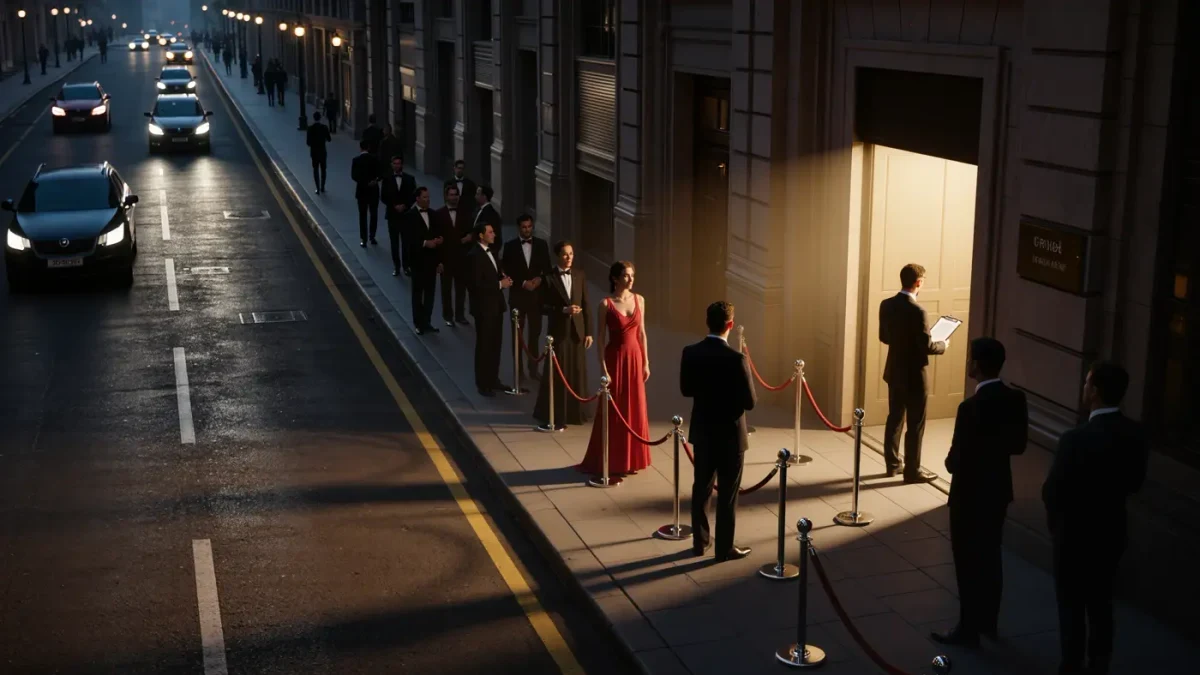
The door is where the economy becomes visible. Security teams work from sheets that separate a hard list (no negotiation) from a soft list (judgment calls) from a wish list (arrive after 1 a.m., dress well, don't argue). Doormen at the established party venues — the same few doors that handle fashion week, New Year's Eve, and every premier launch in between — are paid, in part, for their taste. Their discretionary judgment is a genuine asset that venue groups cultivate the way restaurants cultivate a maître d'.
What does it mean to be on the list — and not on it?
Being on a hard list is the industry's quiet form of compensation. Nobody is paid to attend; the attendance is the payment, and it flows to people who can confer legitimacy back on the brand. This is why the lists skew toward people with large followings or powerful jobs, and why an unknown with an extraordinary look can occasionally leapfrog an executive. Door logic rewards whoever improves the room's photograph.
The corollary is that list placement is also a disciplinary tool. Publicists move people down tiers for writing the wrong thing, dressing the wrong clients, or simply being out of favor that season. There is no appeal process because there is no formal system — the list is a relationship, not a database, and relationships can be renegotiated.
Why so many parties, and why spread across downtown?
Because exclusivity multiplies when guests have to choose. The night after the 2025 gala reportedly followed the pattern of prior years: a heavyweight brand party anchored somewhere around the Bowery or the Meatpacking District, a music-industry option in a Midtown hotel, a smaller art-world gathering in a West Village townhouse, and an unlisted final destination known only by text message. Scarcity is the point. A party everyone can attend confers no status on anyone.
The geography is deliberate too. Downtown reads as insider; a party below 14th Street implies you know where culture actually happens, even if you arrived in a black car. Hotels along the park hold the establishment scene, but the photographs that matter tend to come from the converted warehouses and gallery spaces of TriBeCa and Chelsea, where the ceilings are high and the light is controllable.
Is the after-party economy changing?
Slowly, and at the edges. Brands have grown more precise about what they buy: fewer open bars for hundreds, more closed dinners for forty, content captured on site and released on the sponsor's own channels. The rise of the brand-owned media machine means some of the value once outsourced to paparazzi is now captured in-house. And enforcement of the no-phones policy at the gala itself has pushed the documented portion of the night even harder into the after-hours, where phones are welcome and everything is content.
What has not changed is the underlying structure. The Metropolitan Museum of Art's Costume Institute benefit remains the year's most photographed dinner, per the museum's own announcements, and the city's party infrastructure — the publicists, the door people, the venues that flip from restaurant to playground in a single afternoon — treats it as the annual championship. The tickets to that championship are free. The currency is relevance, and the exchange rate is brutal.
In the after-party economy, the drink is free, the room is sponsored, and the only thing anyone actually pays with is who they know — and who knows them back.
That's the whole trick: a night with no ticket price, funded entirely by people who need the room, filled entirely by people who need to be in it. Everybody pays. Almost nobody pays with money.