There is no dress code at a Chelsea gallery opening, and that is exactly why the dressing is so deliberate. The room runs on an inverted logic: the more informal the stated rules, the higher the interpretive stakes. Everyone arrives in clothes that say they did not try, and everyone understands the trying involved. The gallery opening is fashion's stealth runway — free entry, real stakes.
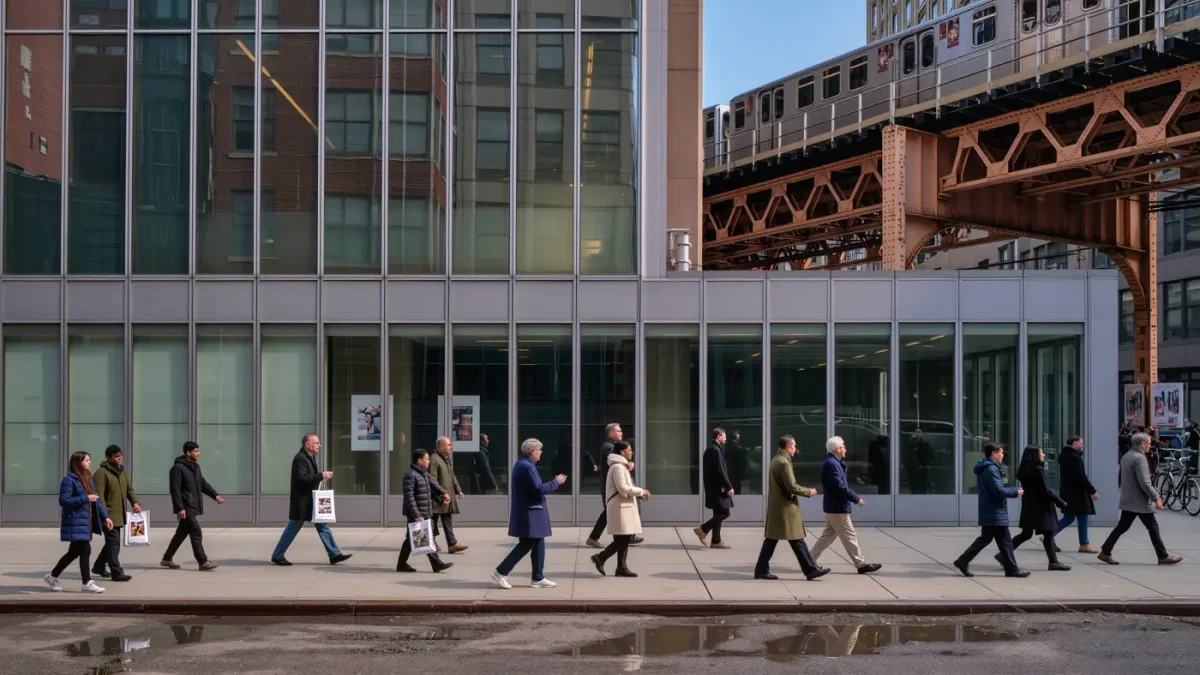
Walk West 24th Street or West 25th Street on a Thursday evening between six and eight, and the blocks between Tenth and Eleventh Avenues turn into a distributed cocktail party. Doors are open, wine is poured, and the crowd spilling onto the sidewalks is dressed with an intensity the invitation never mentions. Fashion editors have treated these blocks as a scouting ground for years; the photographs that come out of them feed a quiet corner of the style economy.
Why did gallery openings become style events?
Because they offer what fashion events increasingly cannot: unstructured room to circulate in, a built-in pretext for looking at and being looked at, and no gatekeeping at the door. Anyone can walk into a gallery during an opening. There is no list, no rope, no publicist weighing your value. That openness attracts exactly the crowd that closed events exclude by accident — young stylists, art-adjacent creatives, students from the design schools — and the mix makes the room photograph well.
The overlap is also professional. The same publicists who place celebrities front row at shows increasingly broker artist-fashion collaborations, and the gallery is where those relationships incubate. An opening is a networking event wearing a cultural alibi, and everyone in the room is fluent in both languages.
What do people actually wear to an opening?
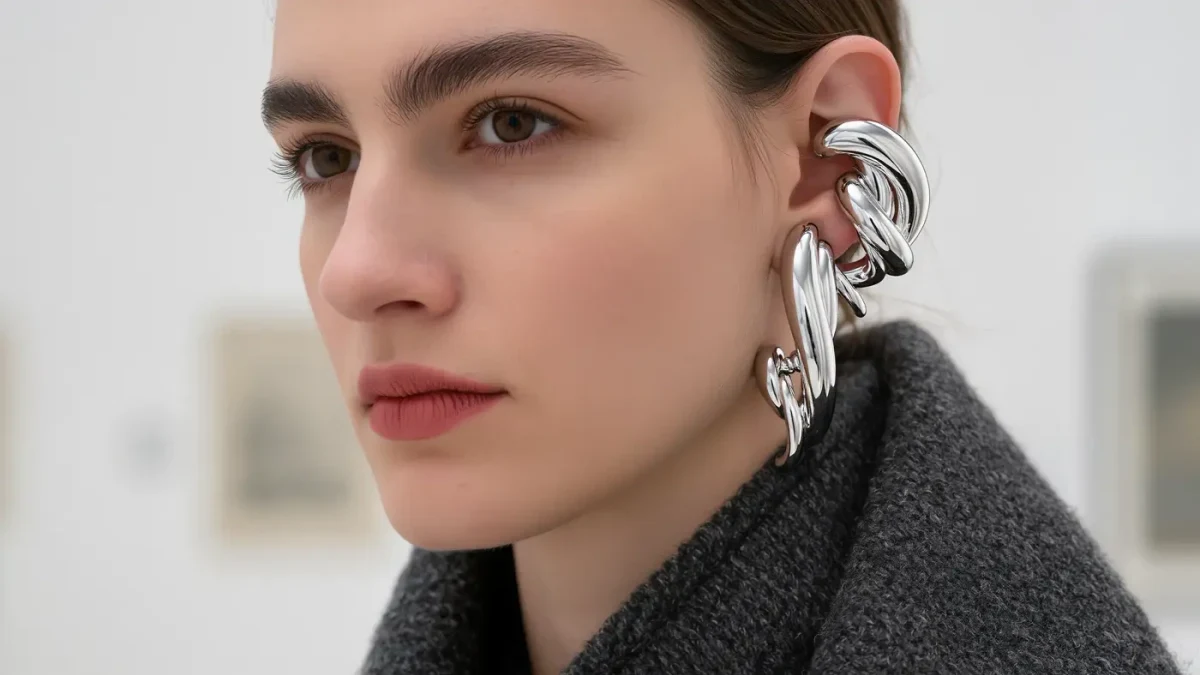
Aspirationally casual clothing with one calculated extravagance. The house style of the Chelsea opening is a uniform of restraint — good trousers, an unstructured coat, flat or low shoes built for standing on concrete for two hours — disrupted by a single loud element: a sculptural earring, an archival jacket, boots that cost more than the art-adjacent salary suggests. The extravagance is the message; the restraint is the discretion.
Shoes deserve their own paragraph, because the logistics are real. Chelsea galleries are industrial spaces with concrete floors, and an opening circuit can mean a dozen storefronts in an evening. The crowd that circuits seriously dresses for mileage. Heels appear, but they belong to people being driven, and everyone can tell.
The coat is the other piece of engineering. February openings happen in weather that punishes anything impractical, and the coat-check line becomes the room's second networking venue. A great coat, worn open over a deliberately plain outfit, is the opening circuit's equivalent of a headline look: it works at the door, in the queue, and in every photograph taken on the sidewalk between venues, which is where half the evening's images actually happen.
Who hosts these openings, and why free wine?
The galleries themselves, as a matter of standard practice. An opening is the gallery's single best sales tool of the season: collectors who might ignore an email will walk through a show if there is a glass of wine and a crowd. Per the galleries' own public programming, openings on the West 24th Street corridor and around West 21st have long been scheduled Thursday evenings to stack — one can visit five or six in a night, which is precisely the point.
The wine is not generosity; it is dwell time. A collector who stays twenty minutes is a collector having a conversation with a director. The fashion crowd functions here as atmosphere that makes the room feel like an event rather than a store, and the galleries know it. Two industries, one pour.
How does the fashion crowd use the openings circuit?
As a low-risk stage with high-level witnesses. A front row seat photographs you for one walk-in; an opening lets you be seen continuously for two hours by people who matter to your career, at zero cost and with plausible deniability. Nobody can accuse you of dressing for attention at an art opening. That deniability is the entire appeal.
Stylists circuit the openings to cross paths with editors outside the hierarchy of an office. Emerging designers use them to dress exactly one or two visible people in the room — a whisper campaign conducted in clothing. And the street-style photographers who work fashion week increasingly treat the corridor on a good Thursday as an off-season practice range, per the schedules they post themselves.
Is the scene changing?
The real estate is. Chelsea's gallery district has been migrating in pockets for years — toward the Lower East Side, Tribeca, and uptown corridors — as rents reshape who can afford a storefront, a shift documented extensively in coverage of the New York art market. Where galleries go, the opening circuit follows, and the fashion crowd follows the circuit. The style economy of the opening is portable; only the wine is local.
What has not changed is the exchange rate between art world and fashion world. Each supplies what the other lacks: the galleries get energy, press, and a younger collector class; fashion gets a venue with no door, no fee, and a crowd that treats a Thursday in Chelsea like an occasion. All either industry had to do was show up dressed — carefully, invisibly, precisely.
That's the whole trick of the unannounced dress code. When no one tells you what to wear, what you wear becomes your entire résumé for the evening, and everyone in the room has done the reading.