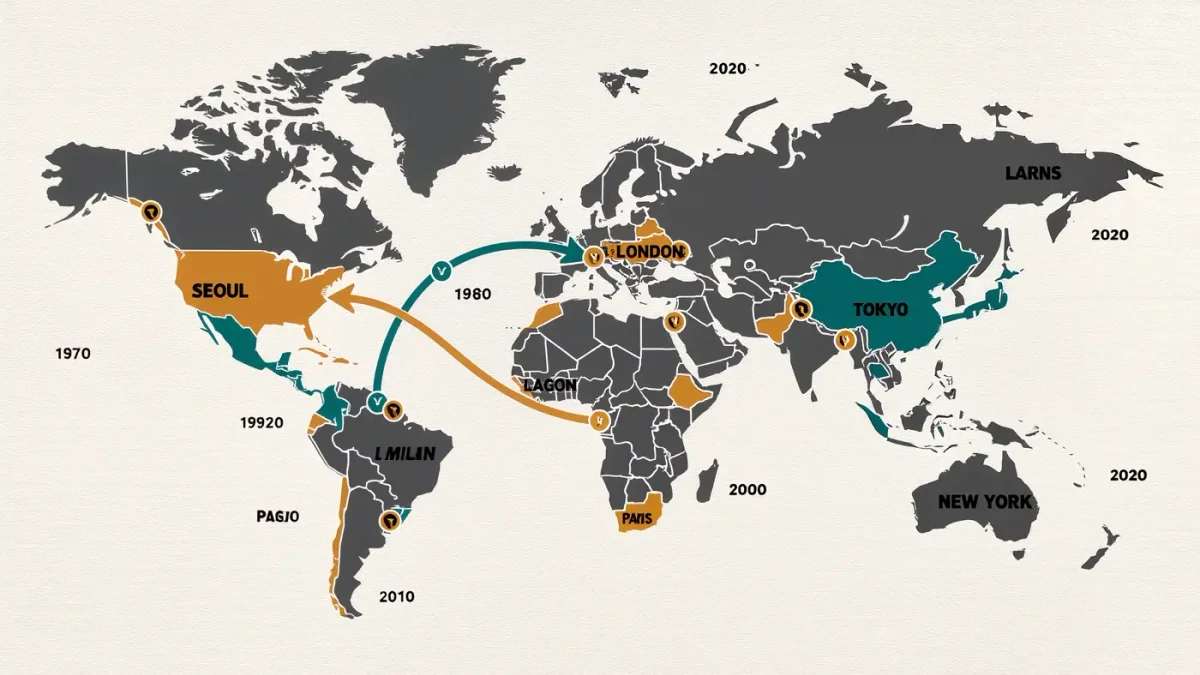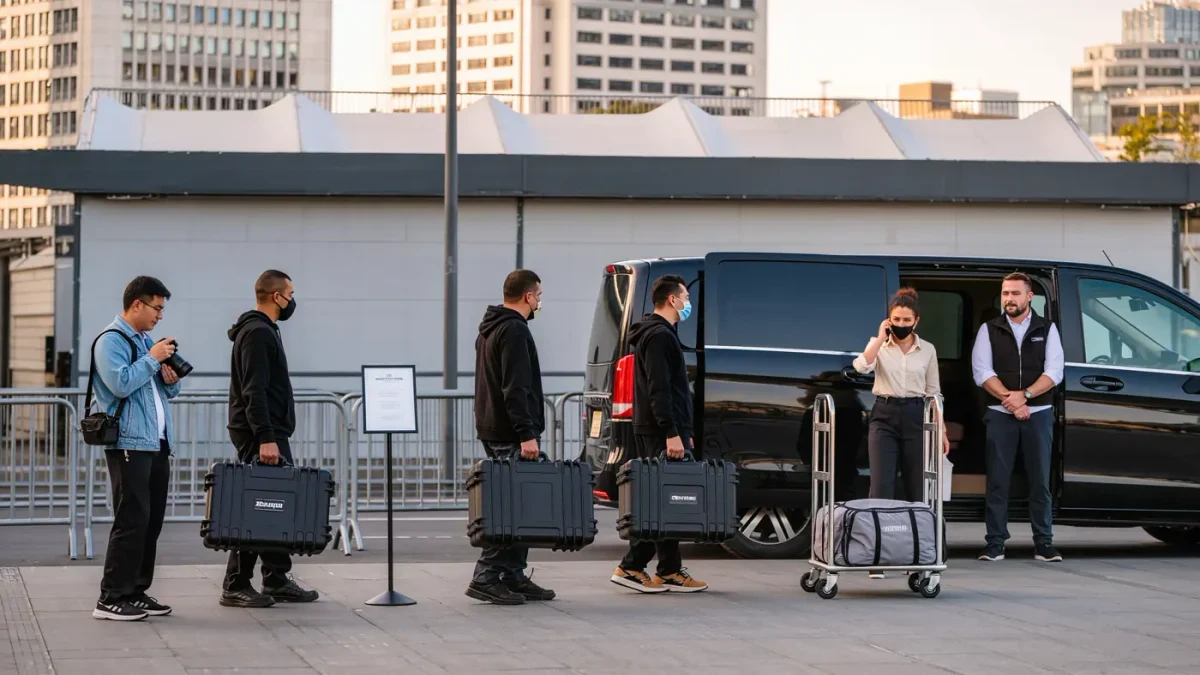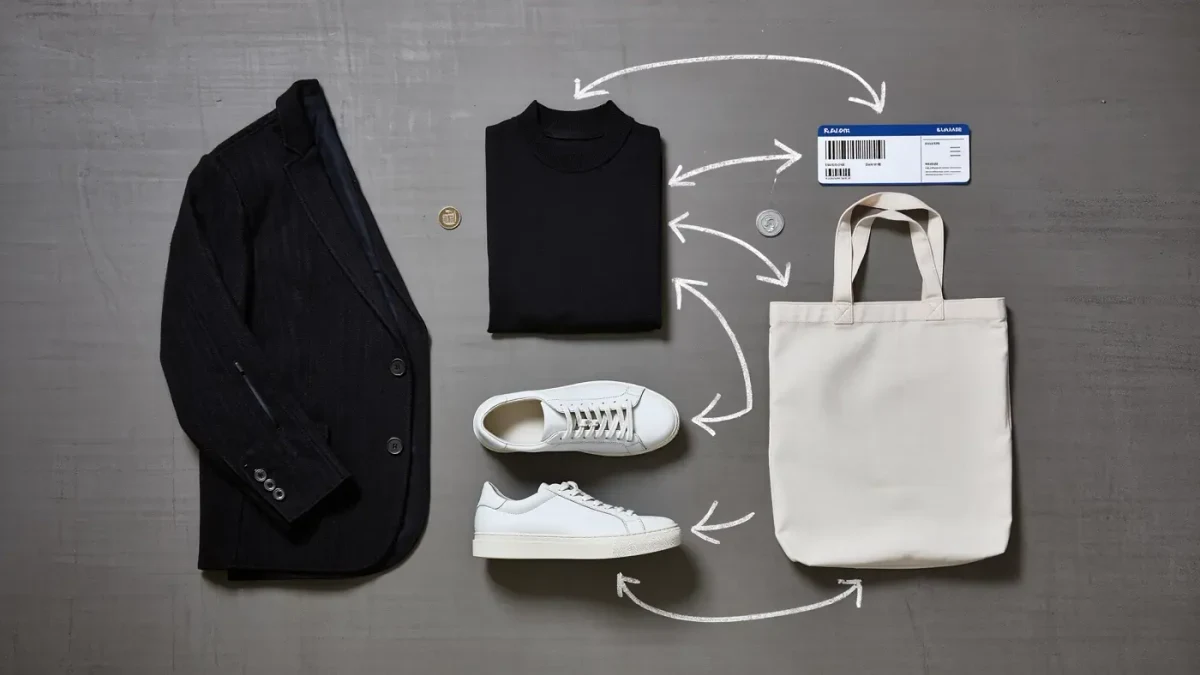
Who actually produces the thing the world calls 'New York style'? Not the city's residents, mostly — a supply chain. The black-on-black uniform, the all-purpose coat, the sneaker-first silhouette, the studied unbotheredness: these are manufactured products, assembled by four interlocking industries headquartered in New York and exported to every market with a mall or a phone. Tens of millions of people visit the city each year, and tens of millions more will never come, yet both groups consume the same exported image. The style is real in the way a brand is real: made, marketed, and constantly restocked. Tracing the production line explains a lot about why the local original looks less like its own export every year.
Station one is scripted media. Film and television have dressed New York for export since the mid-century, converting the city's dressiest register into a repeatable silhouette — and streaming multiplied the distribution at zero marginal cost, so a costume department's decisions now reach more wardrobes in a weekend than a runway reaches in a decade. Station two is fashion media itself: the magazines, websites, and street-style apparatus headquartered in Manhattan, which decide which local looks become 'New York' and which stay local facts. Editorial is the myth's standards bureau. It does not create the raw material so much as certify it — a necessary step, because exports need quality control before they travel.
Who else has a stake in the product?
Station three: the brands, both the global houses that stage their campaigns against New York backdrops and the local labels whose entire identity is municipal — logos that read as addresses, graphics that wear the city's name as their own. For these companies 'New York' is a provenance mark, functioning exactly like a regional food label: it certifies attitude, speed, and a certain tolerance for concrete. Station four is retail and tourism, the last mile. Fifth Avenue flagships, airport shops, and souvenir stands sell the myth at every price point, and the visitors who came to see the city leave wearing it — returning to dozens of countries with the uniform purchased at the source, like pilgrims with relics. Each station adds value and removes friction. None of them, notably, is the sidewalk.
The interesting economic property of the myth is that it appreciates with distance. Inside New York, the style reads as practical: black hides wear, the coat solves weather, the sneakers solve pavement. Outside, the same choices read as philosophy — minimalism, armor, cool. Export strips the logistics and keeps the aesthetics, which is precisely what makes it sellable. A New Yorker wears black because it survives the subway. A customer in another hemisphere wears black because it survived the subway in a show they streamed. Same garment, different factory seconds.
How did the machine get so centralized here?
History did the site selection. New York spent a century accumulating all four stations in one grid: the magazine industry headquartered around Midtown South, the garment trade that gave Seventh Avenue its authority, the ad agencies and casting infrastructure that stage national campaigns, and the port and later the airports that made the city the country's front door for both goods and images. When television centralized in Manhattan, the distribution layer locked in behind the production layer. No other American city ever held all of those functions at once, which is why 'style' exports carry this city's name and not a competitor's. The machine did not conspire to make New York the capital of the look. It just never had anywhere else to be.
Does the myth ever travel back home?
Constantly, and this is the machine's cleverest feature. The exported image returns through tourists dressed as the city they saw on screens, through residents who shop at the same flagships, and through global trends that arrive back on New York sidewalks wearing a New York label. The city ends up consuming its own exports, which then read as further proof of the original. It is a closed loop with excellent margins — self-authenticating, since every confirmation of the myth, even a synthetic one, is manufactured locally. Few style traditions can claim immunity to their own merchandising. New York's doesn't try.
What the machine cannot export is the part of the style that costs nothing and travels worst: the reasons. The weather calculus, the walking distances, the fear of looking overdone on a train of equally busy people, the class geometry that makes visible effort suspicious in some blocks and mandatory in others. Those constraints are invisible from outside and unbuyable inside a store, which is why the exported style always looks slightly overproduced when it walks back through the port authority of the real city. The myth is faithful to the look. It never had room for the logic.
So is 'New York style' fake?
Fake is the wrong category. It is a manufactured image of a real practice — the way a city's skyline postcard relates to the skyline. The underlying practice exists: New Yorkers do dress in a distinctive register, produced by genuine constraints of climate, transit, cost, and density. The export machine takes that register, standardizes it, certifies it, and ships it to a customer base that will never test it against a February platform. Both things are true at once, and the honest way to hold them is to treat 'New York style' as a product line built on a real patent. The city invented it. The machine sells it. And the residents, as usual, wear the cheaper version.