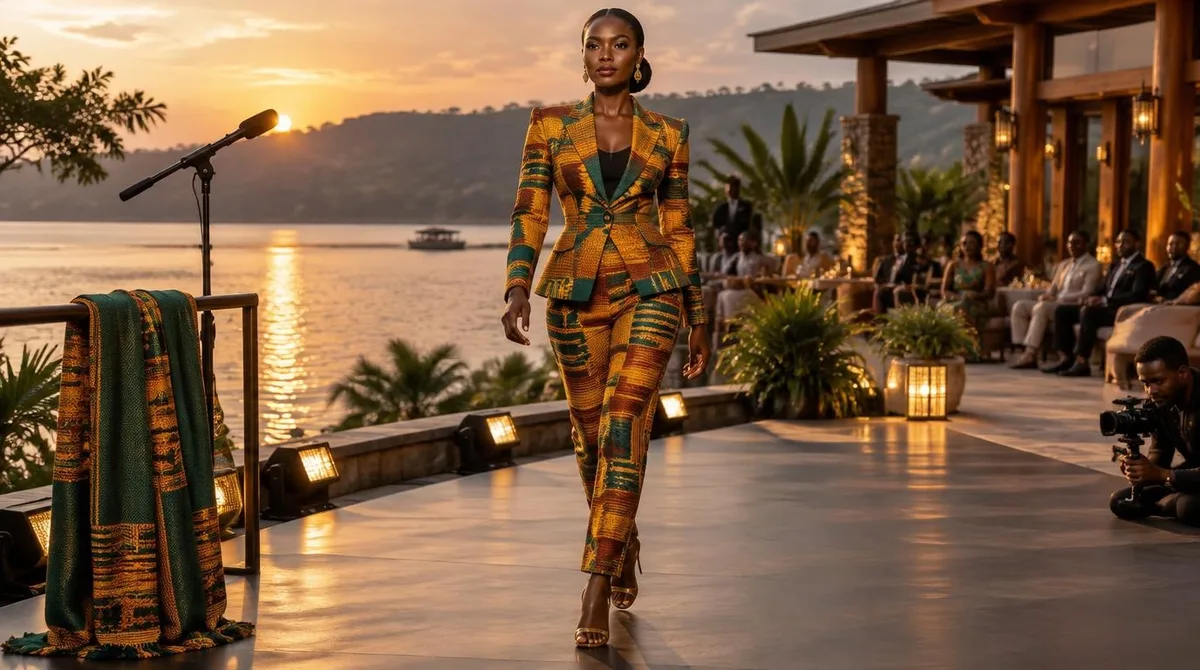
The maiden Black Star Fashion Week closed with the Presidential Runway on Saturday, 7 November, at the Royal Senchi Hotel in Akosombo, and the interesting part was not the clothes. It was the framing. According to MyJoyOnline, the evening gathered Ghana's leading designers, creative-industry figures, musicians and fashion enthusiasts to celebrate design, craftsmanship and cultural heritage — and then spent a large share of its stage time on the business case for all of it.
That is what separates this from a typical national showcase. A runway show celebrates what a country's fashion already looks like. A fashion week with a summit attached, a recognition programme and a named commercial campaign is trying to change what it becomes. Read that way, the Presidential Runway is less a debut than a thesis: Ghanaian fashion has the creative record; what it needs now is structure, investment and standards. Anyone who has watched New York argue the same point about its own industry for decades will recognize the argument immediately.
What actually happened at the Royal Senchi?
The runway featured collections from notable designers including Abrantie the Gentleman, Boyedoe, Kenneth Tetteh, Chocolate, Atto Tetteh, Quofi Akotuah, Nessa Atelier, BloombyEdzi and Adjeponmaa, alongside emerging talents from the 16-Region Designer Programme — a detail worth pausing on, because a pipeline that reaches all sixteen regions is a structural claim, not a casting note. The evening also folded in performances from Ghanaian musicians Okyeame Kwame and Lamisi, per the source report, positioning music and fashion as one cultural package rather than separate programming.
The week itself began earlier, with the Black Star Fashion Summit in Accra on 4 November, and the Presidential Runway served as its culmination. The whole initiative sits under the broader PUT GHANA ON campaign, which seeks to strengthen Ghana's fashion ecosystem, promote local designers, encourage investment and create greater international visibility for the country's fashion. That sequencing — summit first, runway last — tells you the organizers see the talking as the substance.
Why honor seven pioneers at a brand-new event?
Because the tribute segment was doing archival work. New York fashion leans on institutions to store its memory; Ghanaian fashion, by the account of this event, is doing that memory-keeping through recognition, in public, at the moment the industry is asking for investment. The event honoured seven Ghanaian fashion icons and industry pioneers, both living and departed, for contributions to indigenous textiles, African couture, contemporary design, fashion education and the garment industry. For related coverage, see Fashion as Archive: Inside the Two Institutions That Store New York's Style Memory.
The names carry the history. Madam Joyce Ababio was recognised for integrating Kente into everyday clothing and for her contribution to fashion education: in 1995 she became the first Ghanaian designer to win Best Formal Evening Wear at Miss World, she has dressed successive First Ladies since 1992, and she founded the JACCD Design Institute Africa. The late Kofi Ansah was celebrated as a pioneer of African couture whose designs helped take Ghanaian fashion onto the international stage. The late Juliana Miranda Norley Kweifio-Okai founded Chez Julie in 1960, pioneering a blend of African dress and international influences while opening doors for women in business. The late Ricci Osei, of the St Ossei and BRASS labels, was remembered for connecting fashion with art, music and culture.
The living honourees map the industry's full supply chain. Mawuli Kofi Okudzeto, whose labels include MAWULI and MKO.GH, was recognised for shaping hiplife fashion and Ghanaian streetwear for a generation. Nora Bannerman-Abbott was celebrated for her entrepreneurial leadership of Sleek Garments Export Limited and her role in manufacturing and export development. Tetteh Adzedu, founder of Adzedu of Shapes, brought African menswear and traditional textiles into contemporary design, with international recognition including the 1998 Principal Prince Claus Award and selection for a UNESCO event in Paris. Design, education, streetwear, manufacturing, export: that is not a list of celebrities. It is a value chain, presented as one.
What did the speeches actually ask for?
Both headline speeches pushed the same direction, and neither was soft. Rex Owusu Marfo, the Coordinator of the Black Star Experience, known as Rex Omar, challenged Ghanaian designers to continually improve their craft, invest in professional development and treat fashion as a serious commercial enterprise. He stressed brand development, quality, production, marketing and commercial sustainability, and noted that Ghanaian fashion has enormous potential but requires deliberate effort to build competitive businesses that can succeed locally and internationally.
Keynote speaker Kwasi Kyei Darkwah, the broadcaster known as KKD, called for stronger support for designers and a more structured approach to developing the industry. He advocated specialisation, higher professional standards and greater investment across the fashion value chain, and framed fashion as an economic sector capable of generating employment, stimulating tourism and creating opportunities across manufacturing, textiles, retail and related industries.
That framing is the real story for anyone who follows how fashion economies work. Cities that turned runway culture into industry — New York most famously — did it by treating design talent as one input among several, with manufacturing, retail, education and export around it. The Presidential Runway's speakers were asking Ghana to skip the romantic phase and go straight to the industrial one. Whether that is possible is the open question, but stating it out loud, at a presidential-branded event, is itself a signal. We covered a connected angle in Who Manufactures 'New York Style'? A Tour of the Export Machine.
What should outside observers watch next?
Three things. First, whether the 16-Region Designer Programme produces repeat participants, which would show the pipeline is real. Second, whether the PUT GHANA ON campaign converts into investment, since encouraging investment was one of its stated aims. Third, whether the Black Star Experience's stated goal of connecting fashion, culture, tourism and economic development shows up as concrete programming rather than rhetoric — the source notes that Ghana continues to explore those opportunities, which is language for a work in progress.
The evidence from Akosombo establishes a maiden event with real institutional ambition: a summit, a recognition programme, a regional talent pipeline and an explicit commercial argument. What it does not yet establish is durability. First editions are easy to admire and hard to repeat. The measure of Black Star Fashion Week will be the second one — and whether the designers it honored as pioneers end up with an industry structured enough to train the next seven.