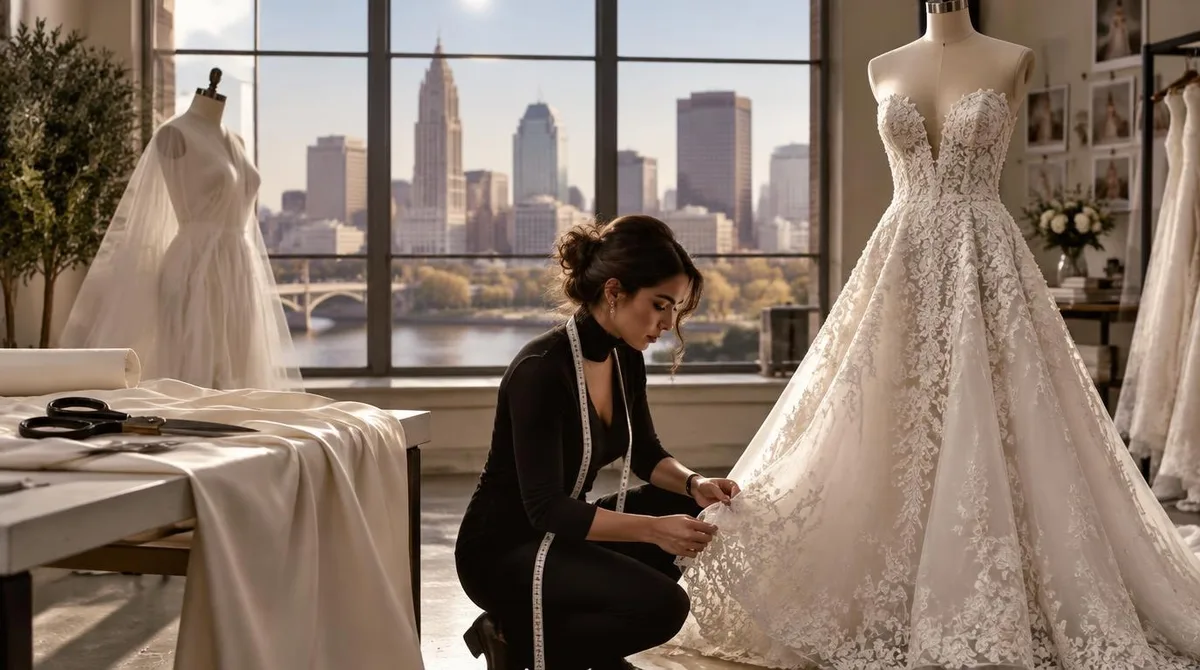
The gown is the tell. When Joan Madison closes Fashion Week Columbus 2026 on Nov. 14 at Prototype: The Experimental Museum, she will show a collection drawn from her life's body of work — the pieces she calls "wearable art," statement garments meant, in her words, to carry "empowering and powerful messages to women." A bridal couturière from Reynoldsburg, Ohio, headlining a fashion week. That is the story this year's program is quietly telling.
The week — its 17th annual edition — begins Sunday with eight events running through Nov. 14, themed "Your Body is a Work of Art," according to a press release from the Columbus Fashion Council, the nonprofit behind it. Per The Lantern, Madison is the first local designer ever asked to headline. For anyone who watches how fashion events actually function, that detail matters more than the runway calendar itself.
Most coverage of regional fashion weeks treats them as miniature versions of the big-city shows. The more useful frame is different: these weeks are infrastructure. They are where a city's fashion community — designers, models, photographers, stylists — gets the working experience that nowhere else offers at that scale. And this year, Columbus is making an argument about what that infrastructure is for.
Why does the headliner choice matter?
Because headliners are how an event states its values without saying a word. Madison opened her own bridal boutique in 2000 and Joan's Bridal Couture, a full-service bridal salon at 7374 E. Main St. in Reynoldsburg, in 2006. She is a "Project Runway" alum who began participating in Columbus Fashion Week in 2013. Thirteen years of showing up, and now the marquee. "It kind of gives me a reflection of my experience with them," she told The Lantern, "and then I get to look at my career and just to see where I was 13 years ago with them, and then where I am today." We covered a connected angle in Who Decides What Counts as New York Fashion Week?.
The lesson embedded in that arc is the one every emerging designer needs to hear and rarely does: nothing comes overnight. Madison says it plainly. "You have to put in the work. You have to, and you will be rewarded." A hometown designer elevated to headliner is a career ladder made visible — which is, arguably, the week's real product.
What is the week actually selling?
Not clothes, mostly. Executive director Yiema John describes the council's job as creating "a platform for designers, for models, photographers [and] different creatives within the central Ohio region." This year she is explicit about doubling down: "It is no secret that it is a challenging year for a lot of nonprofits, and I think that a rising tide lifts all ships."
That is a candid admission wrapped in an optimistic metaphor. Nonprofit-run fashion weeks sit in a squeeze — cultural programming, charitable mission, and an industry that expects polish — and John's answer is to invest harder in the community rather than chase outside prestige. The program reflects it: an Ohio State Luncheon at Campbell Hall, the Curve Runway Show at the Columbus Museum of Art, the Finale at Prototype: The Experimental Museum. These are civic venues, not rented production warehouses. The fashion week is positioning itself as civic life, not industry spectacle.
Is the emerging-designer training real or rhetorical?
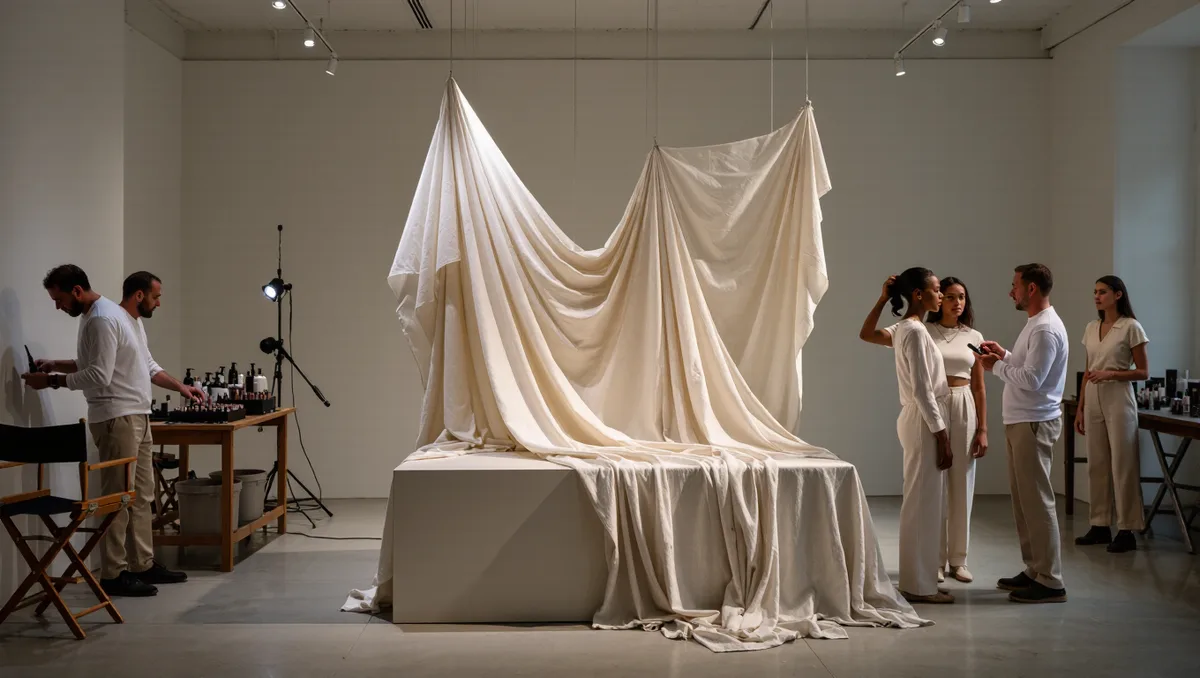
Real, and more concrete than most mission statements. John describes the actual work the week demands of its participants: selecting models, doing the marketing, working with a stylist to make sure the clothes fit and the show moves. "The actual work of producing a show and getting that real-life experience," she says, "is definitely a very value-added service that we provide for our emerging talent."
That is the gap between a hobby and a career, and it is the hardest one to cross. A student can learn sewing anywhere. Learning to produce a show — casting, fittings, the clock running — requires a stage. Regional weeks like Columbus supply it, and the supply is scarce.
What does Columbus offer that bigger cities don't?
Access, says John, and she names it as the city's structural advantage. "Our accessibility to leaders and movers and shakers and decision makers is unlike any other." For Ohio State students especially, the week doubles as an introduction to the city itself — a way to see, in her words, "the various ways that they're able to live and thrive in the region."
There is a broader point hiding in that. The biggest fashion capitals trade on exclusivity; their lists are guarded, their front rows priced. A mid-size city's fashion week runs on the opposite mechanic: proximity as the draw. The barrier to shaking a decision-maker's hand here is a ticket, not a decade of networking.
Which event captures the year's mood?
The Luxe Levels Fashion Show on Thursday, which John singles out with unusual warmth. It is a woman-owned business, run for years by owner Jasmine Tucker, whom John describes as "so philanthropic and very community-minded." The format — "more of a girls' night out type of show," with food, a DJ and music — is a party first and a runway second. That ordering is not a compromise. It is the point: fashion as social occasion, community as the product.
What should readers take from Columbus 2026?
That the regional fashion week is not a smaller New York. It is a different institution with a different job — training ground, civic gathering, career ladder — and Columbus is leaning into that job at the moment when, by its own director's account, nonprofits are struggling. Madison's headlining slot is the symbol; the eight-event program is the substance. Whether the "rising tide" holds will be visible in whether the designers it launches keep launching. The evidence so far, at least in one bridal atelier in Reynoldsburg, suggests it can work. For related coverage, see The RSVP Economy: How New York Fashion Week Party Lists Are Actually Built.