Here's the answer up front: a runway look is built to fit exactly one body, and that body is chosen because of the clothes, not the other way around. The garment a designer sends down the catwalk is a sample — a one-off prototype, usually cut small, because fabric and atelier hours are expensive and a prototype only needs to fit a single model once. That single fact quietly shapes casting calls, fitting sessions, and what a customer eventually finds in a store.
Call it the sample size problem. The clothes you see on a runway are not merchandise. They are sketches made solid, and the fit is provisional until a model is pinned into them the night before the show. Understanding how that works explains a lot about why fashion looks the way it does — and why the bodies wearing it have historically looked one particular way.
What exactly is a sample size?
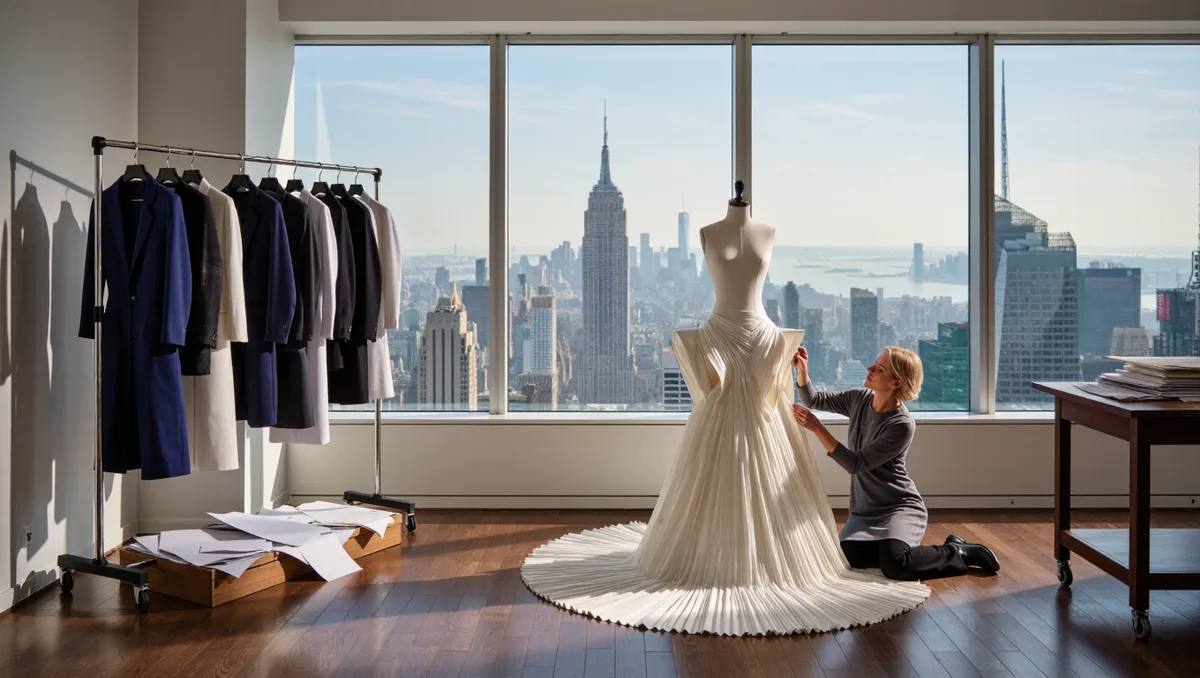
A sample is the first finished version of a design. A patternmaker cuts it, a sewer constructs it, and the studio uses it to judge proportion, drape, and whether the idea works at all. Because it only needs to fit one person, the studio builds it around a fixed internal standard — the house's sample size. That standard varies by label and by country, but the logic is always the same: one reference body, so every new design can be compared against the last one.
Working this way saves money. Fabric, muslin, and skilled construction hours are costly, and a studio cannot afford to cut a prototype in every size it might eventually sell. So the industry runs on a single fit model — a real person hired for stable, well-documented measurements — and the sample is cut to her. Everyone in the atelier knows what a size 8 dress should look like on her frame. That consistency is the point. It's a quality-control tool, not a statement about who clothes are for.
But a tool has consequences. If every look is cut for one body type, then casting becomes a search for that body. The model doesn't get chosen to suit the dress; the dress was already cut to suit her.
How does sample sizing shape casting?
Once a collection is cut, the casting process is largely a matching exercise. A casting director is looking for the frame the atelier already built for. A model whose proportions differ from the sample will need serious alterations, and alterations cost time the studio doesn't have in show week. The result is a runway that, season after season, presents a narrow physical range — not because anyone in the room is necessarily making a statement about bodies, but because the clothes arrived with a body already implied.
That's the whole trick, and it's easy to miss. The uniformity of the runway reads as an aesthetic choice. Often it's logistics wearing an aesthetic costume.
The pressure runs both directions, though. Casting has widened in recent years as houses have faced criticism — and as some labels have decided that a broader range of bodies is simply better business. When a designer wants to show a larger model, the practical answer isn't just booking her. It's cutting a second sample, or grading the pattern up, which means more fabric, more fitting hours, and more risk that the design's proportions fall apart in translation. Inclusivity on the runway is a sourcing decision before it is a values statement.
What happens at the fitting?
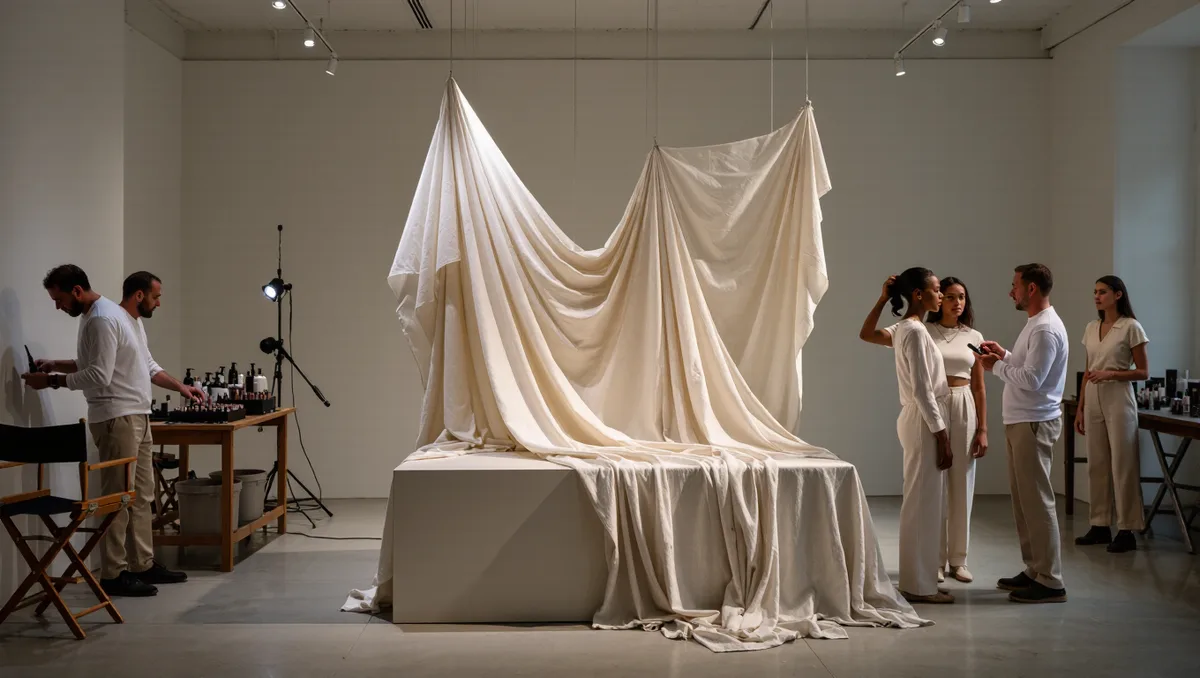
A fitting is where the sample meets the human. Days before the show, the model arrives at the studio, the look goes on, and the atelier team pins, tacks, and sometimes re-cuts on the spot. A hem rises three inches. A shoulder seam moves half an inch back. The garment leaves the fitting with chalk marks and a deadline.
This is also where a look can die. If a sample simply cannot be made to sit right on the booked model — if the alteration would wreck the design — the look may be pulled from the show entirely. Runway lineups shift for this reason constantly, and the audience never knows. A dress that "didn't make the show" often didn't fail creatively. It failed at the pins.
For readers who want the wider machinery behind this — who writes the wholesale orders once the show is over — the showroom is where those decisions actually get made, and the sample's life continues there. For related coverage, see The Showroom Explained: Where Wholesale Orders Actually Get Written Between Fashion Weeks.
Where does a sample go after the show?
The show is the sample's publicity tour, not its retirement. Afterward, samples circulate through a small secondary economy. Press offices lend them to magazines and stylists for editorials. Showroom teams use them for buyer appointments, so a retailer in another city can feel the weight of a coat before committing to an order. Some samples are sold — to collectors, to archive dealers, to resale platforms — often at prices that reflect their one-of-one status. Others are destroyed or donated once a season closes, because storing hundreds of prototypes in New York costs real money. We covered a connected angle in Fashion as Archive: Inside the Two Institutions That Store New York's Style Memory.
What this means for the curious shopper: a "sample sale" is exactly what it sounds like. The garments on the rack are prototypes, frequently in sample size only, frequently bearing the small scars of a fitting — pin marks, chalk ghosts, a hand-replaced zipper. That's not damage. That's provenance.
There's a quieter destination too. Significant samples end up in institutional collections, where they become the historical record of a house. The city's two big fashion archives exist largely because someone kept the prototypes. A sample that fit one body for eleven minutes on a runway can spend the next fifty years teaching students how a silhouette was actually built.
Why hasn't the industry just sized up?
Partly inertia, partly economics, partly the fit-model system itself. Change the sample size and you change every pattern in the archive, every grading rule, every internal standard the studio uses to judge its own work. That's a costly reset for a business that runs on thin margins and seasonal deadlines. It also changes casting, since the reference body changes with it.
Our analysis: the sample size problem is less a scandal than a bottleneck, and bottlenecks move when the economics move. Extended sizing in retail, castings that book beyond the original sample, and made-to-order models all loosen the constraint. But as long as a prototype is cut for a single figure, the runway will keep quietly auditioning the world for that figure. The clothes decide first. Everyone else adapts.
That's the honest version of the story — a system built for consistency, producing uniformity, and slowly being argued out of it. Whether the argument wins depends less on runways than on ateliers, where the pins are.