Why do fashion shows keep moving to Brooklyn? Because the borough solves, in one geographic decision, the three problems that plague Manhattan productions: space, cost, and signaling. A raw industrial floor in Williamsburg or a converted factory in Bushwick offers square footage Manhattan can no longer provide at any rational price, with freight access, parking for trucks, and a authenticity signal that a generic white box cannot buy.
The migration has been building for years, and it now reads less like an exception than a second venue circuit. During fashion week the bridges run both ways: editors Uber to Greenpoint in the morning and back to Midtown showrooms by afternoon, and the calendar lists borough shows without asterisks. What started as a downtown brand's gesture has become infrastructure.
What does Brooklyn actually offer that Manhattan can't?
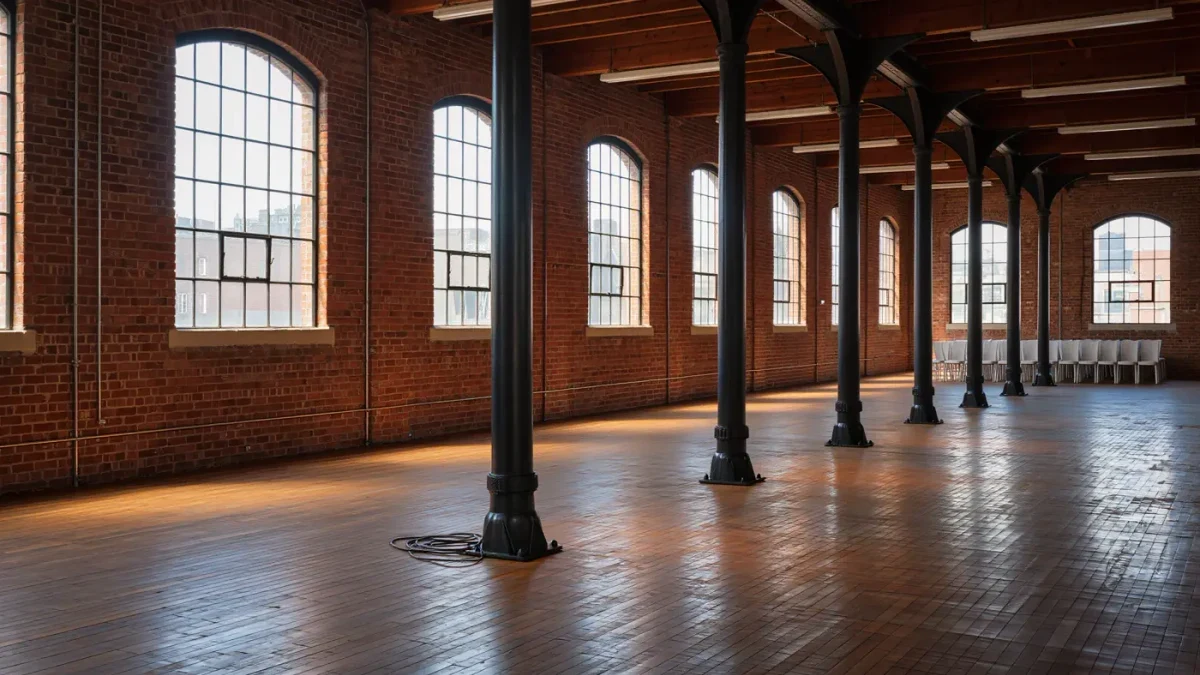
Space first. The borough's industrial heritage — manufacturing lofts, marine warehouses, former factories along the waterfront in Dumbo, Red Hook, and Greenpoint — produced buildings with the two attributes shows need most: deep floor plates and high ceilings. A show that would be cramped in a Manhattan event space breathes in a Brooklyn warehouse. Load-in is easier too: ground-level doors, real loading docks, room for trucks to idle. In Manhattan, logistics are a tax on every production; in Brooklyn they are often the reason the building exists at all.
Cost second, though the gap has narrowed as the borough gentrified. Event rents in Williamsburg are no longer cheap by any historical measure, but they still undercut comparable Manhattan floors, and the spaces themselves — brick, steel sash windows, concrete — arrive pre-styled. A production designer can spend a fraction of the dressing budget because the building does the aesthetic work. Daylight through factory glazing photographs beautifully and costs nothing.
Signaling third, and least quantifiable. For a certain kind of American brand — sportswear-forward, youth-coded, street-adjacent — showing in Manhattan reads as tradition and showing in Brooklyn reads as point of view. The venue becomes part of the collection's argument before a single look appears. It also matches where the audience actually lives: the stylists, image-makers, and culture writers a young brand most wants in the room are disproportionately Brooklyn-based, and a venue across the river turns attendance into a small act of commitment that filters the guest list in useful ways.
What does the borough cost the brands in return?
Friction. Every Brooklyn show imposes a time tax on guests and on the production itself. Editors budget their fashion week hours ruthlessly, and a venue that costs forty minutes each way from Midtown showrooms loses the casual attendees who drop in when a space is convenient. Brands compensate by timing — late morning or early evening, between the Manhattan slots — and by over-delivering on the destination: a reason to stay, a set worth photographing, a bus or car service for the front row. The venues that succeed at hosting fashion have learned to sell not just space but logistics: shuttle coordination, freight scheduling, and enough restrooms and power to support a hundred-person crew.
The neighborhoods have their own calculus. Local business districts welcome the pop-up spending a show brings — catering, florists, hardware rentals, drivers — and Bushwick and Red Hook have hosted productions that left real money in local pockets. City data on the borough's manufacturing and creative sectors underlines the base: Brooklyn holds a large share of New York's population and a substantial portion of its creative workforce, and its industrial business zones were preserved in part to keep exactly these kinds of production uses viable.
- Dumbo and Vinegar Hill: waterfront warehouse scale, cobblestone glamour, established event infrastructure.
- Williamsburg and Greenpoint: the editorial heartland; loft floors, proximity to the creative class that fills seats.
- Bushwick and East Williamsburg: raw industrial scale and lower rents; where the biggest builds go.
- Red Hook: isolated but dramatic; marine warehouses, harbor light, and a destination logic all its own.
Is Brooklyn a trend or a permanent second circuit?
By now the evidence favors permanence. The borough's creative economy is documented in city planning data, its event venues have professionalized, and two decades of brands crossing the river have normalized the trip for press and buyers. The better question is whether Manhattan itself — with its shrinking stock of affordable, workable mid-size venues — is quietly ceding the show business to the borough across the East River. A brand choosing where to stage a collection is no longer choosing between center and edge. Both sides of the river are the center; the choice is just about which kind of room tells the story best.
The venue becomes part of the collection's argument before a single look appears.
Consider what the venue swap does to the guest experience itself. A Manhattan show is a stop in a corridor: guests arrive from a showroom, leave to a dinner, and the event competes with the rest of the day's schedule. A Brooklyn show is an occasion — a destination with a trip attached — and brands have learned to use that. The ferry to Red Hook becomes part of the show's memory; the L train schlep to a Bushwick warehouse selects for guests who actually want to be there. Hospitality extends accordingly: a coat check that works, a coffee that is good, a exit that does not strand three hundred people on a dark industrial block. The venue decision, in other words, is really a hospitality decision, and the brands that treat it as logistics alone consistently underperform the ones that treat it as the first scene of the show.
There will always be shows that need Midtown's proximity and Madison Avenue's gravity. But the industrial loft with steel windows and a freight door has become a legitimate answer to the question every producer asks — where can we build this? — and increasingly the best answer starts with a bridge.