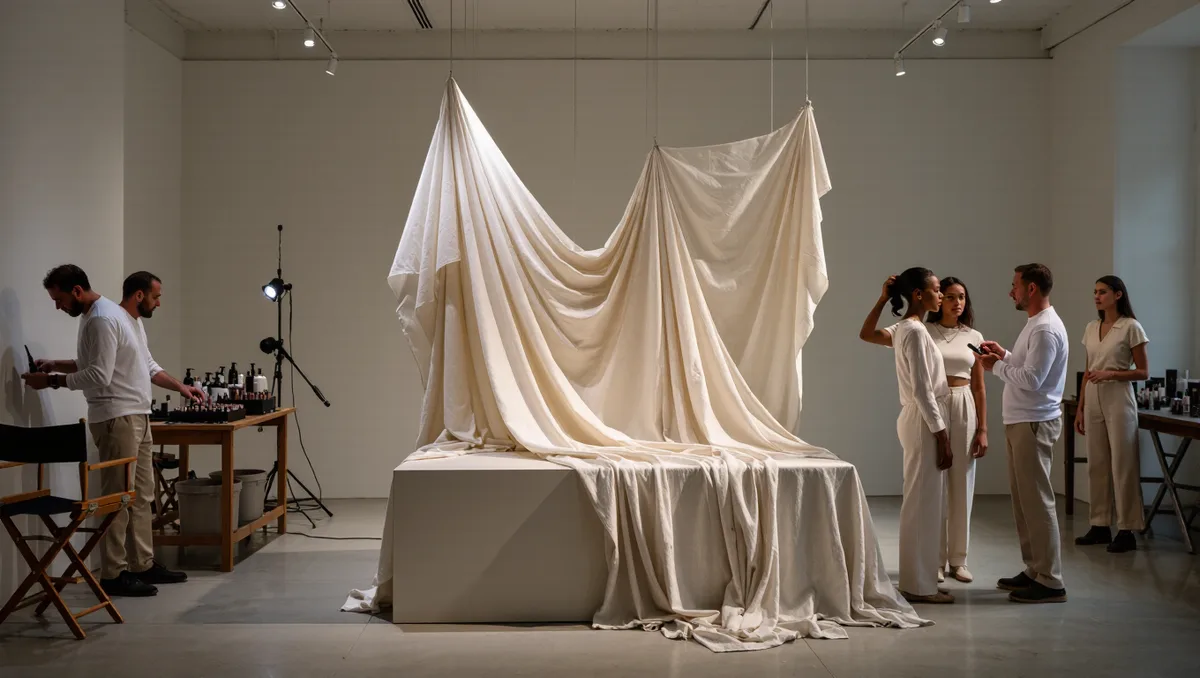
A fashion show looks like a mood. It is actually a machine. The clothes walk out on time, in order, pressed and fitted, because a small army spent weeks building a production that is designed to hide its own labor. The audience sees a runway; backstage, the same twelve minutes run on duct tape, dressers, and a schedule measured in seconds.
The honest answer to what goes on behind the scenes of a fashion show: months of planning compressed into a final day of controlled chaos, ending with a countdown so tight that a single late hem can reorder the whole exit lineup. The glamour is real, but it is the last thing to arrive. Everything before it is logistics.
This is the version of a show the front row never sees, and it explains a lot about what lands on the rail later. If you want the crew roles in detail, our field guide to who actually does what backstage covers the job titles. Here, the focus is the arc: how a production comes together, and where it most often comes apart.
Where does a show actually begin?
Long before a single look is finished, the producer and the designer agree on the shape of the event. How many looks. How many models. Standing or seated, and in what kind of space. That decision cascades through everything: the budget, the lighting plot, the number of dressers, the length of the runway. A show in a raw Tribeca loft asks a different production plan than one in a conventional venue, which is part of why the same downtown addresses keep reappearing on the calendar. We covered a connected angle in What One Runway Show Actually Costs: A Line-Item Tour From Venue to Backstage.
Casting starts early for the same reason. A casting director pulls candidates from agencies, runs go-sees, and builds a board of options for the designer to approve. The final call sits with the house, not the agency. The mechanics, and the politics, are their own subject; how runway casting actually works deserves its own reading. What matters for production is simpler: every model confirmed is a fitting that must be scheduled, a look that must be assigned, and a body that must be in the room on show day. For related coverage, see How Runway Casting Actually Works: Go-Sees, Callbacks, and Who Makes the Final Call.
What happens in the fitting weeks?
Fittings are where the show becomes real. A fit model, or the cast itself, works through the collection look by look while the designer and studio team pin, mark, and correct. This is the part of the process a seamstress reads from the inside out: where a dart sits, whether the grain hangs true, whether a sleeve cap has enough ease for a model to move her arms on the runway. A garment that photographs beautifully but restricts a walk gets rebuilt here, or it fails in public later.
Each look is then photographed on the model who will wear it and filed into a run-of-show. That document is the spine of the entire production. It lists every exit, in order, with the model, the garments, the shoes, and the accessories. Dressers study it like a script. When the show runs, nobody improvises; the run-of-show already decided everything.
How does the venue build-out work?
The space is a construction site first and a fashion venue second. Load-in happens the day before, sometimes two. Lighting riggers hang the plot. The runway itself, often a raised platform, is built and taped. Sound gets tested against the room's acoustics, because a track that sounds crisp in an office sounds muddy under a low ceiling. The seating plan, or the standing pen layout, is marked on the floor before anyone arrives.
Rehearsal eats the evening. Models walk the runway in order, learn the turns, and get timed. A producer with a stopwatch is not being fussy; the music, the lighting cues, and the photographers' expectations all assume a pace. A show that runs long stops being a rhythm and becomes a wait, and the audience feels it even if it cannot name why.
Why is show day so chaotic?
Show day inverts the calm. Hair and makeup stations run in parallel, staggered against the exit order so no model is finished two hours before she needs to be. Dressers unpack the looks, steam everything again, and set each station with shoes, jewelry, and the run-of-show page for that exit. The backstage floor is deliberately organized chaos: tape on the ground marking lanes, a dresser per model, a seamstress on standby with a kit.
The final stretch compresses hardest. In the last minutes before the first exit, dressers finish last adjustments, line the models up in order, and hold them there. Then the countdown: the producer calls the sequence, the first model steps to the mark, the music lifts, and the door opens. Sixty seconds of pure motion, then the room goes silent and controlled. That is the whole trick. The chaos is engineered to end exactly on the beat.
What can go wrong, and who fixes it?
Productions plan for failure because failure is routine. A zipper breaks; the seamstress is already standing there. A model is late from a previous show across town; the running order has slack built in, or the producer swaps two exits on the spot. Shoes that fit in the fitting pinch under hot lights; gel pads and spare sizes sit backstage for exactly this reason. Nothing about this is glamorous, and none of it is visible from the seats.
Timing is the most common casualty. In production English, running late for a scheduled start is what it means to be behind schedule, and Cambridge Dictionary defines the phrase as completing something later than planned or expected. Shows live or die by that margin. Doors open late, the audience gets restless, and the compressed backstage timeline, already tight, loses the slack it was counting on.
What this means for how you read a show
Our analysis: the production is part of the collection's argument. A show built around speed and volume tells you the clothes are meant to be produced and sold, not just admired; a slow, theatrical staging signals a house spending its budget on image. When you watch coverage or read a review, the staging choices you see were paid for, staffed, and rehearsed by people whose names never appear in the credits. The line-item cost of a single show makes that visible: venue, rigging, staffing, all of it.
It also reframes what the audience is actually judging. The runway is the final, polished surface of a process that began with a casting board and a fitting pin. The next time a show looks effortless, read that effortlessness as the production working exactly as designed. Nothing about it was easy; it was simply hidden well.
What remains unknown from the seats is everything: the fittings that failed, the exits that were cut, the crisis absorbed at 8:47 a.m. That invisibility is not an accident. It is the product.