When did ugly shoes win? The honest answer: when the walking got serious. New York is one of the few American cities where a substantial share of residents moves between errands, transfers and offices on foot, and a mile of city walking is not a walk — it is freight logistics applied to a human body. Footwear here is chosen the way a warehouse chooses forklifts. Style negotiates with the mileage, and the mileage has never lost.
Do the arithmetic out loud once and the wardrobe explains itself. A commute from Crown Heights to Midtown can include a ten-minute walk to the A train, a transfer sprint at Hoyt–Schermerhorn, another four blocks at the far end — call it two miles before 9 a.m., two more after, plus whatever the day inserts. Federal data on commuting collected by the U.S. Census Bureau shows New York leading the nation in walking and transit share by wide margins, and each of those walking minutes is a referendum on your shoes. A beautiful shoe that cannot do eight blocks is, in this city, a costume.
How did sneakers take over the whole wardrobe?
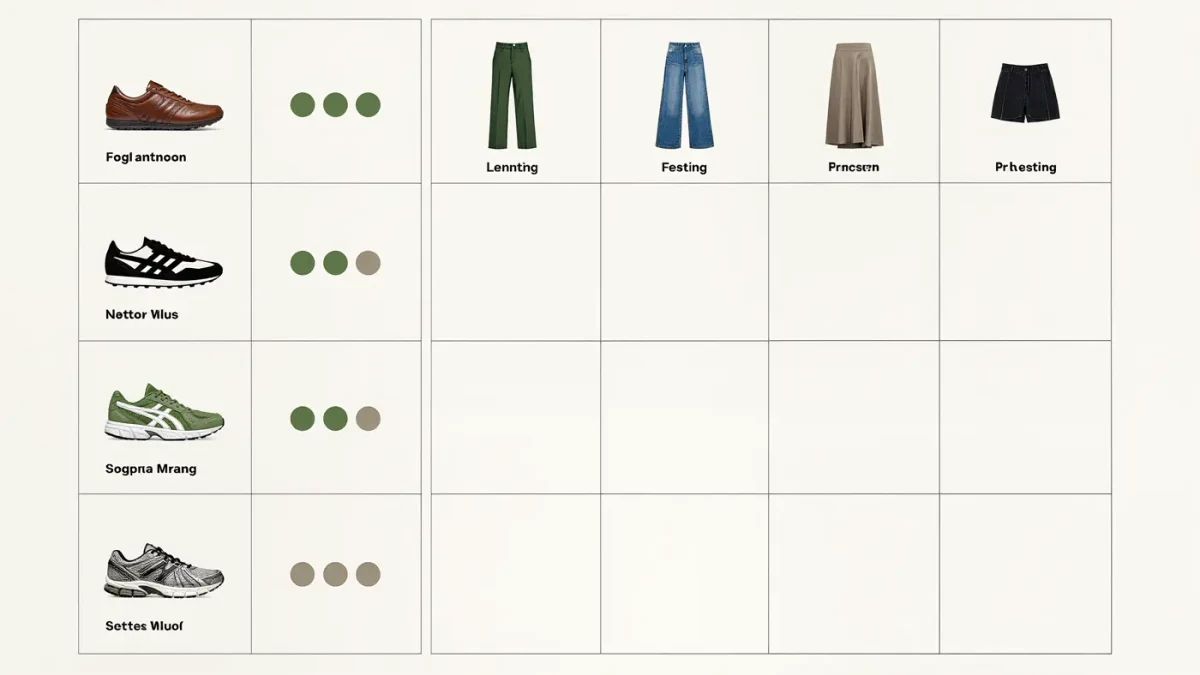
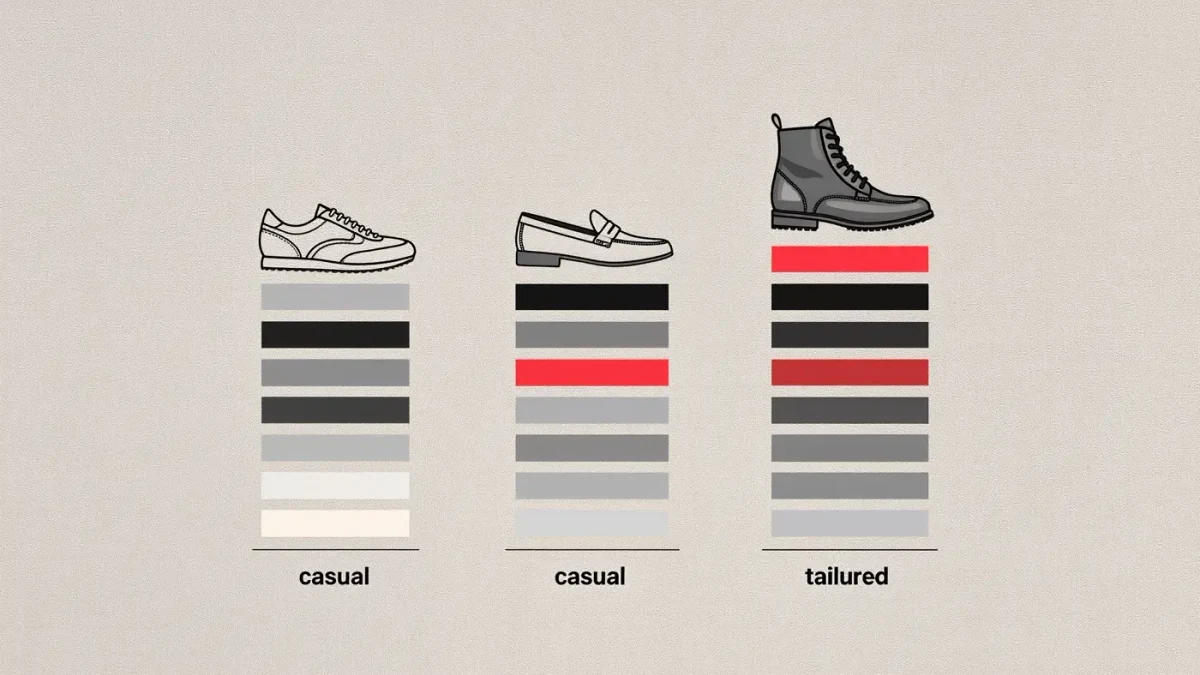
In stages, each one a defeat for a different category of shoe. Dress leather lost first: by the 2010s, conservative leather sneakers from heritage athletic brands had colonized finance offices, offering the silhouette of respectability with the sole of a gym. Heels retreated to occasions — dinners, events, dates with a known number of blocks. Loafers survived by hybridizing into lug-sole and sneaker-sole variants. Even boots, the city's cold-weather standard, now compete with insulated runners. The progression followed infrastructure: as walking distances and transit dependence grew, footwear drifted toward shock absorption, and the fashion cycle — which always flatters whatever most people are already doing — ratified it.
The sneaker's second victory was symbolic. Athleisure made comfort legible as taste rather than surrender, so the same commuter who once changed shoes at the office stopped bothering. New York's professional dress had already loosened; footwear was where the loosening showed first, because footwear is where discomfort is paid in the most immediate currency.
What do different shoes signal here?
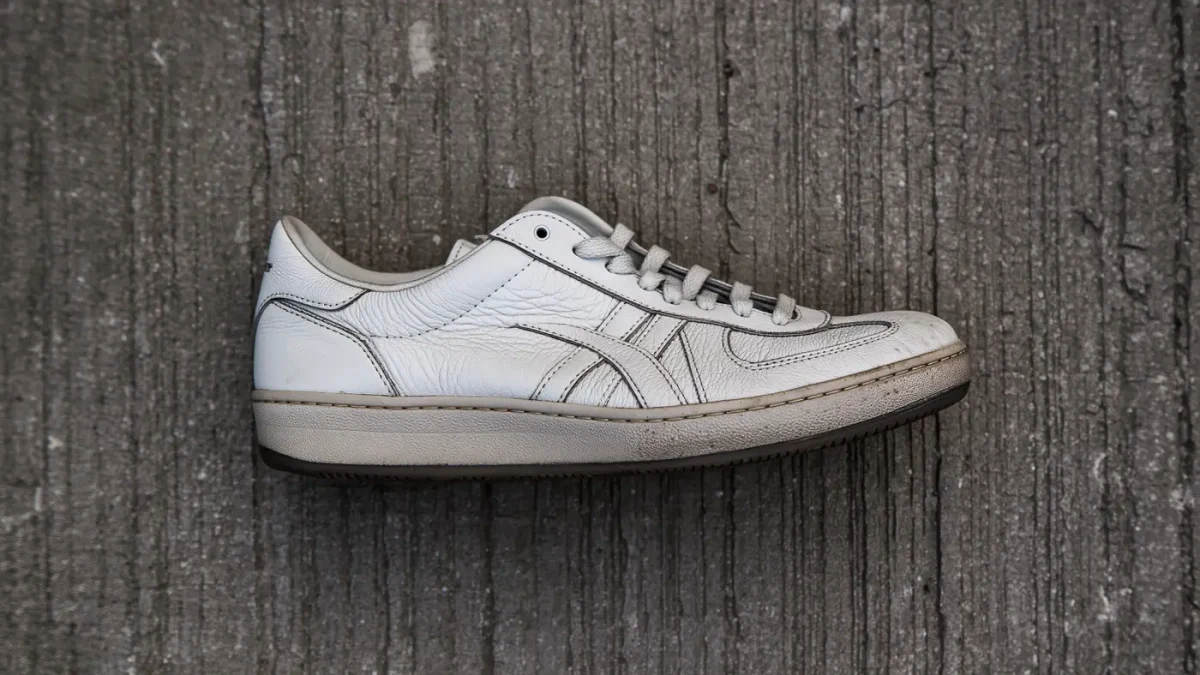
The codes are legible to locals the way car models are legible in Los Angeles. Pristine white leather sneakers signal someone whose walking happens in small, planned doses — car service to lobby, lobby to restaurant. Scuffed trail runners worn with tailored trousers signal a serious walker, someone navigating the city by mileage rather than itinerary. Limited-release basketball sneakers signal cultural fluency and, often, a commute where the shoes are the only status garment that matters. Work boots outside job sites signal neighborhoods where they are genuinely the best tool, and nobody in those neighborhoods is worried about what Downtown thinks.
Shoe condition is the deep tell. New York pavements are coarse aggregate concrete — mildly abrasive, mildly wet, relentlessly leveling. Every resident's soles record their routes the way tree rings record weather. A cobblestone-worn heel says the West Village; a subway-stair scuff pattern says anywhere at all. You can fake the clothes. The soles tell the truth.
Is any of this reversible?
No, and the reason is structural. The city keeps getting denser along transit corridors, housing keeps situating people farther from where they work, and none of the walking goes away. Retail has adjusted permanently: national footwear market data reported by the U.S. Census Bureau's retail surveys shows casual and athletic footwear outselling dress footwear for over a decade. Shoemakers now design for the commuter explicitly — cushioned dress shoes, waterproofed leather runners, sneakers dressed up until the category boundary dissolves entirely.
The lasting lesson is that New York style is downstream of New York logistics. The coat exists for the platforms, the black exists for the grime, and the sneaker exists for the miles. Anyone who wants to understand what the city will wear next should stop reading runways and start counting crosswalks. Fashion follows the mileage. The mileage always collects.
How many miles does a New Yorker actually walk?
More than the wearer usually admits. Local health surveys conducted by the city's health department have documented that New Yorkers walk more than residents of any other large American city, with meaningful shares of adults logging significant daily walking just through transit access — the walk to the station, the transfer, the last blocks. Stack a transfer-heavy commute, a lunch errand and an evening leg, and two to four miles of unplanned pavement is a normal weekday, in whatever shoes the outfit demanded. Multiply by roughly 250 workdays and the footwear decision becomes the single highest-stakes garment purchase in the wardrobe. No other item is asked to absorb that much city.
The repair economy tells the same story from the other end. Cobblers and sneaker-cleaning shops cluster near transit hubs because their inventory is generated by mileage: resoled heels, replaced heel taps, cleaned and re-glued sneakers, stretched leather. A good pair of leather-soled shoes in New York is not a purchase but a maintenance contract, renewed a few times a year at a shop within walking distance of a station — which is to say, chosen by the same logistics that wore the shoes out. Footwear here is bought, broken and rebuilt on the city's terms, and the shops that manage that cycle are as much transit infrastructure as the stairs that scuffed the leather.
Weather closes the loop. A single winter storm converts every sidewalk into a salt-and-slurry test, and the commuter who kept a beautiful but permeable pair learns the lesson in one February. Waterproofing, lug soles, quick-drying knits: the regional market quietly demands a shoe that survives both a July heat wave and a slush emergency, a spec sheet few dress traditions ever contemplated. The sneaker did not conquer New York because a designer decided so. It conquered because the specification was written by the weather, the pavement and the timetable — and nothing prettier has ever met it.