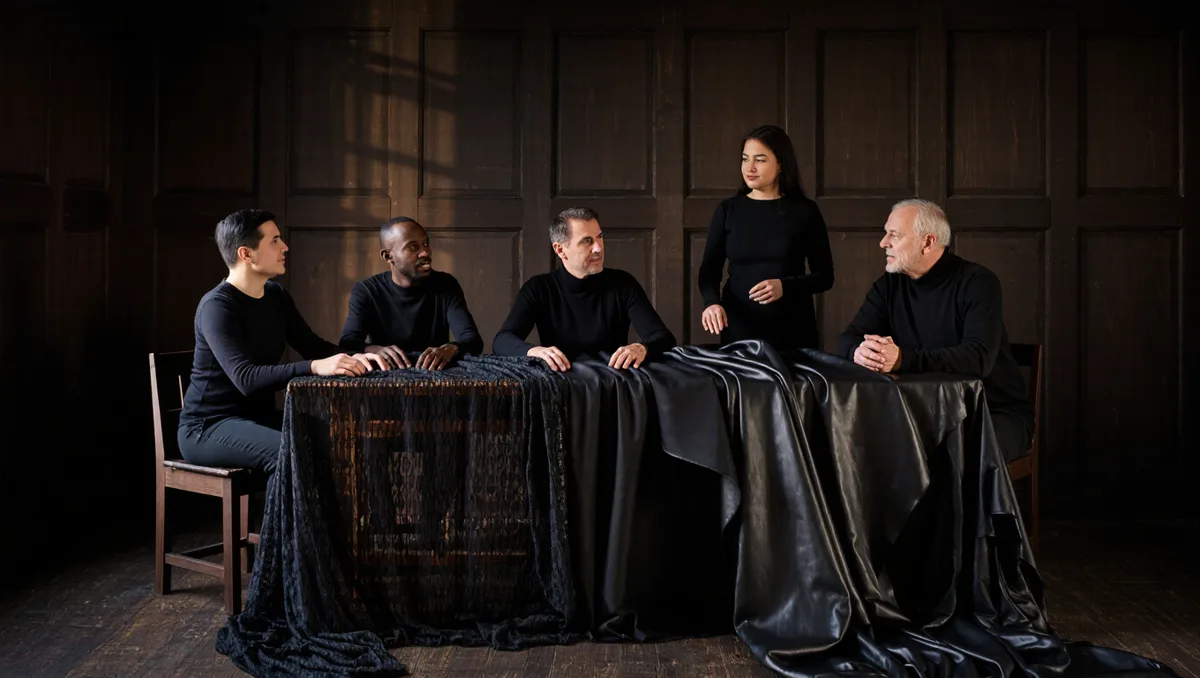
Why does everyone in New York wear black? Because black is the only color that solves all of the city's problems at once. It hides subway grime and restaurant stains, reads as serious in a meeting and cool at a party, flatters every body, never clashes with itself, and photographs well in both harsh summer sun and gray November drizzle. New Yorkers did not choose black for poetry. They chose it because it performs — which is why the cliché survives every generation that mocks it, including the one wearing it now.
The practical case alone would explain half of it. City streets are abrasive: platform edges, taxi curbs, bicycle wheels, coffee in motion. A white shirt in New York has a life expectancy measured in lunches; a black shirt shrugs off all of it. Add the economics — black garments age invisibly, so a coat or dress stays presentable for a decade — and you have a color that behaves like a financial instrument. Depreciation-resistant, universally liquid. That is the unglamorous floor under the mystique.
Did downtown invent the black uniform?
Downtown canonized it. The artists and dancers of Greenwich Village in the fifties and sixties adopted black for reasons that were equal parts budget and stance — it was cheap, it announced seriousness about non-serious work, and it declined to entertain. Punk made it armor on St. Mark's Place in the seventies; the downtown fashion scene of the eighties and nineties, the era of minimal Japanese and Belgian designers, elevated it to philosophy. By the time the stock figure of the writer dressed in black appeared, the color had migrated from subculture to default: any New Yorker who wanted to signal taste without effort reached for it.
Uptown wore black too, but with different syntax. The little black dress uptown was Chanel-derived, occasion-driven, worn against jewels and good hosiery. The same color, three miles south, was worn against combat boots and bedhead. Same dye lot, different languages — which is the recurring pattern of this city's style history.
Who wears black by profession?
The occupational map is real and oddly precise. Gallery assistants and anyone adjacent to the art world wear black because the work is about the art; the outfit must cancel itself out. Restaurant staff and sommeliers wear black because it disappears against dim rooms and hides spills through double shifts. Architects and designers wear black because their training treated it as evidence of discipline. Musicians — jazz especially — wear black because stage lighting treats it as a void that lets the instrument glow. And fashion industry people wear black because fashion photographs color; the wearing of color is left to the clothes.
Each profession reached black independently, for functional reasons, which is why the city's total looks overdetermined. The gallery on West 24th Street, the restaurant on Arthur Avenue, the studio in Long Island City: different economies, same wardrobe. When that many unrelated industries converge on one color, the color stops being a choice and becomes a background condition.
Is the black uniform fading?
In cycles, and it always comes back. Color runs through New York periodically — the street-style era of the 2010s put primaries on every sidewalk outside shows, and recent years have favored creams, browns and quiet color blocking among the fashion-adjacent. Municipal surveys and city demographic data from the City of New York record nothing about clothing, of course, but the eye does the counting: on any winter weekday, the platforms of the N and the platforms of the 1 both run majority black, punctuated by one puffer in rainbow chrome per car.
Black's persistence also has a demographic logic. New York absorbs arrivals constantly, and black is what you buy when you do not yet know the codes — it is the safe default that reads competent everywhere from a start-up in Dumbo to a funeral in Queens. The uniform reproduces itself through newcomers. Every generation thinks it discovered gray, flirts with oatmeal, and returns to black by its second winter.
The honest conclusion is that the cliché is accurate and misunderstood. New Yorkers do not wear black to look thin, or sad, or European. They wear it because it is the only color with a perfect attendance record in a city that demands performance from everything you own — color here has to justify itself daily, and black never misses. That is not a mood. That is a maintenance schedule.
What are the rules for wearing black well here?
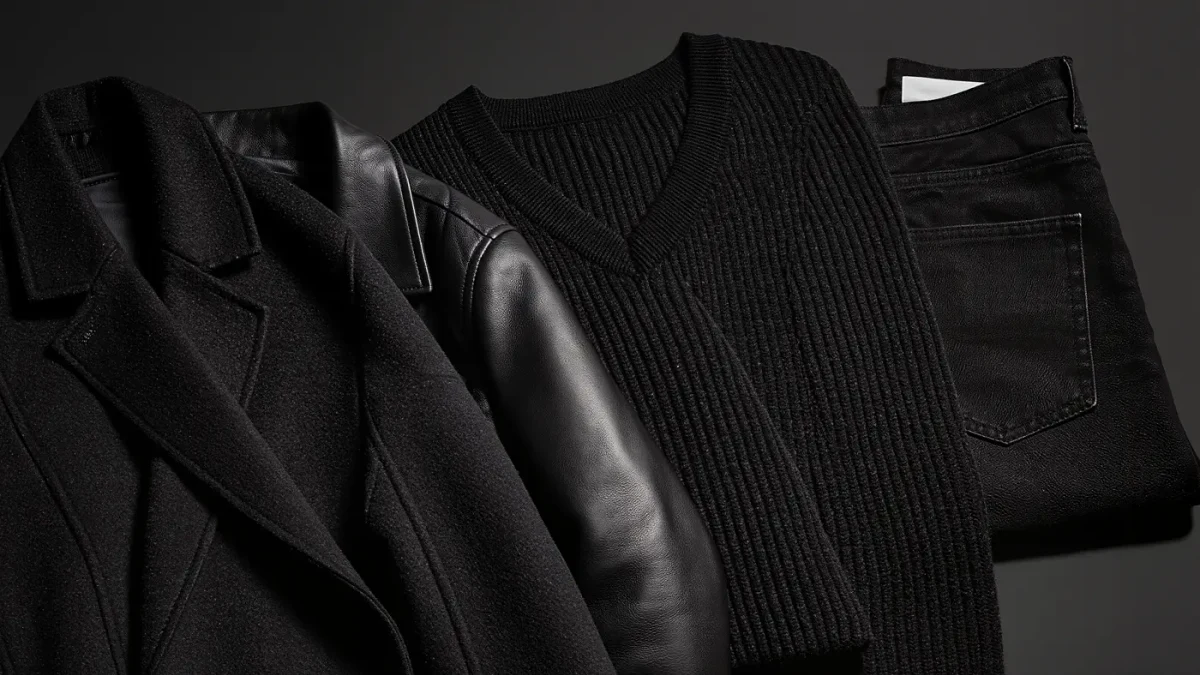
Texture is the whole game. Because everyone wears the same color, differentiation happens in the surface: matte against sheen, wool against leather, a ribbed knit against flat cotton. New Yorkers who look intentional in all-black are usually playing three textures against each other; those who look flat are wearing one fabric in one weight. Fit does the rest. Black is unforgiving of sloppiness in silhouette precisely because it hides everything else — stains, seams, age — so the cut carries the entire message. It is a color that forgives maintenance and punishes tailoring shortcuts, which suits a city that launders constantly and alters sparingly.
There is also a seasonal asymmetry worth noting. Black dominates cold months overwhelmingly, but New York summers loosen the palette — linen in oatmeal and white appears on the same sidewalks that wore charcoal in February, and the shift is practical, not fashionable: black absorbs heat and shows sun-faded wear. The true believer's summer concession is black in lighter weights, which the city accepts as a compromise between identity and thermodynamics. Come the first cold week of October, the palette snaps back. The uniform has a season, like everything else that survives here by working.