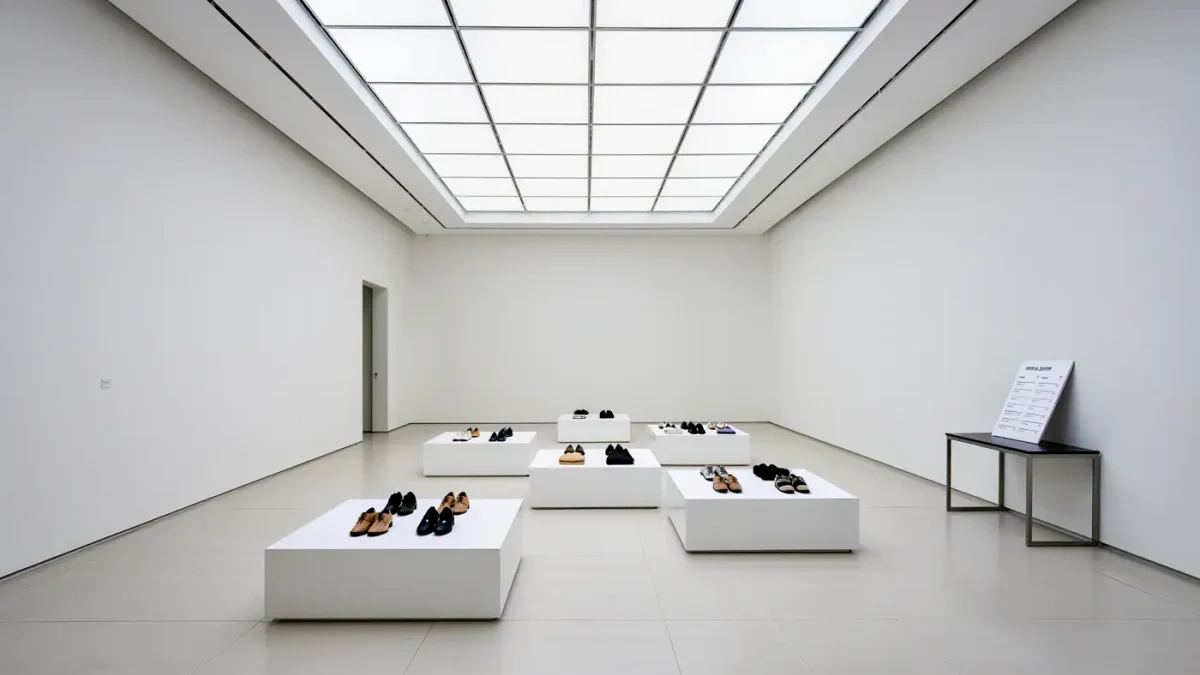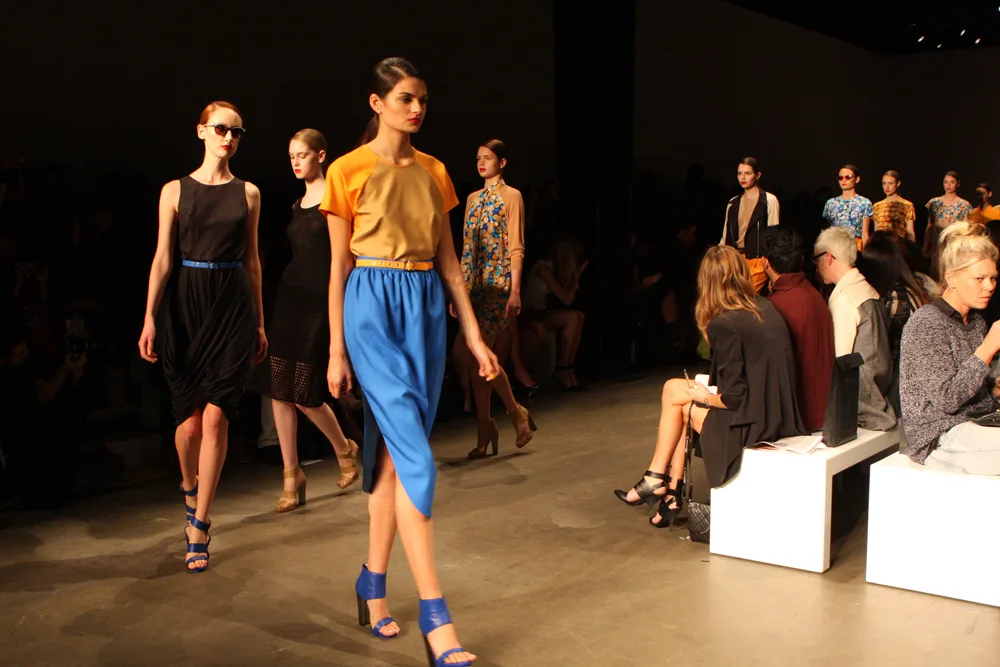
Why would a fashion brand skip the runway and stage a presentation instead? Because a presentation delivers most of what a show delivers — a dated collection, a press moment, a buyer appointment — at a fraction of the cost, with none of the live-performance risk. Instead of models walking a catwalk for twelve minutes, they stand on pedestals or move through a room while editors and buyers circulate for two hours, photographing, touching fabric, and placing orders on the spot.
In New York the format has become a fixture of fashion week's middle tier. Walk the calendar any February or September and the presentations are everywhere: a SoHo loft, a Lower East Side storefront, a borrowed penthouse in Midtown. The rise is not a fad. It is a structural answer to a structural problem: shows are built for spectacle and image, while the actual business of fashion happens at arm's length from a catwalk.
What is the real difference between the two formats?
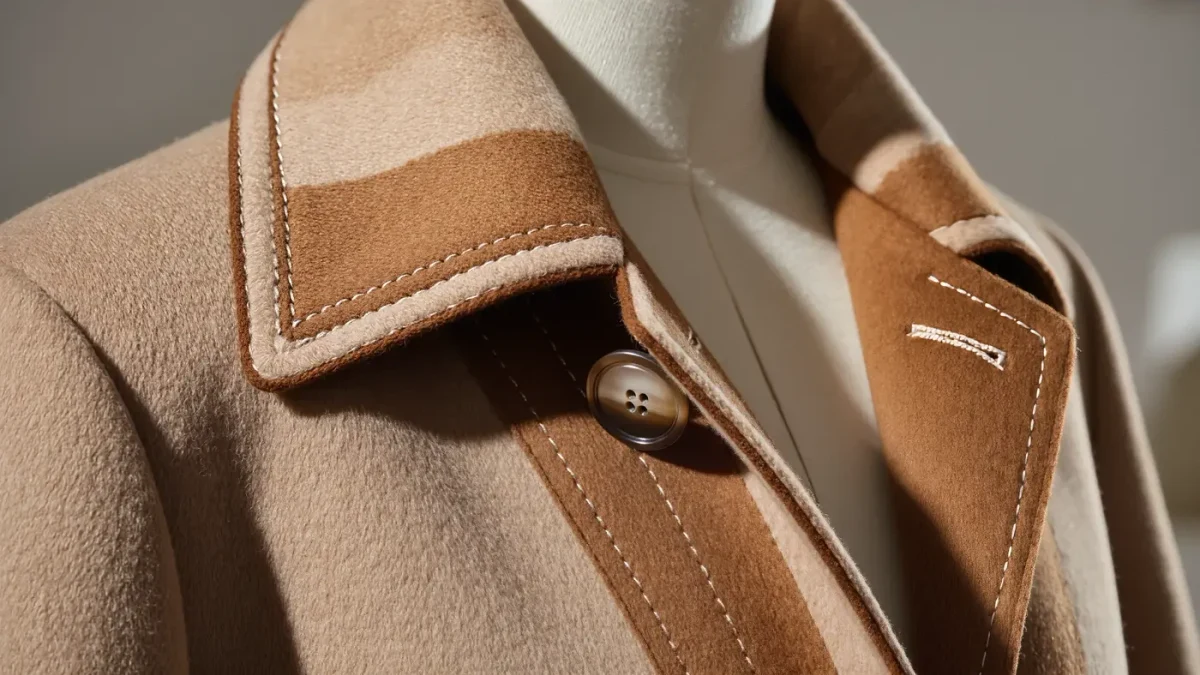
A runway show is theater with a fixed duration. The audience sees each look for seconds, in an order chosen by the stylist, under lighting chosen for video. A presentation is an exhibition with a duration measured in hours. The same coat that flashes past on a catwalk can be examined seam by seam at a presentation; a buyer can ask the model to turn, feel the weight of the knit, and check the interior finishing. For clothes whose selling point is craft rather than silhouette — knitwear, tailoring, hand-finishing — that proximity is not a compromise. It is the pitch.
The economics differ just as sharply. A presentation eliminates the runway build, the seating, and much of the choreography labor; a smaller venue, a smaller cast, and a longer window do the work. Fewer moving parts means fewer failure points. No lighting cue can be missed because there are barely any cues. The format also tolerates flexible attendance — buyers drift in between appointments rather than arriving once, seated, for a fixed call time — which fits how the industry actually schedules its week.
| Runway show | Presentation | |
|---|---|---|
| Duration | 10–15 minutes, fixed | 2–4 hours, open flow |
| Cost structure | High: venue, build, large cast and crew | Lower: smaller space, static staging, fewer staff |
| Buyer experience | Viewing only; orders later | Hands-on; questions answered in real time |
| Media output | Video, motion, spectacle imagery | Stills, detail shots, atmosphere |
| Risk profile | Live performance; single take | Recoverable; errors correctable mid-event |
Why do some brands still refuse to present?
Because the show buys something a presentation cannot: the moving image and the myth. A collection in motion — fabric behavior, gait, the silhouette in actual light — tells a story that stills flatten. Big houses with campaign budgets and livestream audiences use the runway as a content engine, and their economics justify it. For them, the twelve-minute show is not a sales tool; it is an advertising production that happens to have an audience. The presentation, by contrast, is honest about being what shows secretly are anyway: a trade fair with better lighting.
The prestige calculus matters too. For decades the catwalk carried a hierarchy — shows were for the established, presentations for the aspiring — and some designers still feel the gradient. But the line has blurred. Digitally native brands built on stills find that presentations feed their channels better than a shaky livestream. Craft-led labels find that their customer literally wants to touch the product before buying. And the editorial press, which once ignored presentations, now covers them as first-class calendar events.
Does the format change what gets designed?
Arguably yes, and this is the quiet consequence nobody puts in a press release. Designing for a catwalk rewards drama: volume, motion, exaggeration that reads from thirty feet. Designing for a presentation rewards finish: the inside of the garment, the hand of the fabric, details discovered at arm's length. A calendar weighted toward presentations quietly shifts the city's aesthetic toward clothes built for proximity — which, not coincidentally, is also what retail customers actually buy. A buyer's order sheet reflects what can be explained in a showroom conversation, not what looked best in motion.
Venue choice deepens the contrast. A presentation lives or dies on the room's character — a raw Chinatown loft, a storefront on Orchard Street, a penthouse overlooking Madison Square Park — because guests spend hours in it rather than minutes, and the space becomes part of the collection's storytelling. Shows, by contrast, can absorb an anonymous venue; the runway build overwrites whatever the room was. This is why presentations tend to cluster in neighborhoods with architectural personality and why the format rewards brands with a strong sense of place. The room is doing narrative work that a catwalk delegates to the choreography instead.
There is a hybrid future, and New York is already living in it. Brands run a small presentation for buyers in the morning and a filmed sequence for content in the afternoon. Others alternate: a show when the collection has a story that needs motion, a presentation when it has craft that needs touch. The choice is no longer about status. It is a media decision, a sales decision, and a budget decision — and the brands that thrive treat it that way rather than as a referendum on their importance.
The presentation is honest about being what shows secretly are anyway: a trade fair with better lighting.
The static format will not replace the catwalk, and nobody serious wants it to. But for a growing share of the calendar, standing still turns out to be the smarter move. The clothes get looked at longer, the orders come faster, and the room empties without a strike crew. That is the whole pitch.