The runway model walk exists for one reason: to move a garment through space so a buyer, an editor, and a photographer can all read it in the same twelve seconds. The long stride, the planted core, the squared shoulders — none of it is vanity. It is a delivery system. The walk is calibrated so the clothes, not the person inside them, stay the subject.
That is also why the walk varies from show to show. A designer who wants ease sends models out looser and slower. A designer who wants armor asks for a stride that reads like a verdict. The standard catwalk walk is a baseline, and the interesting story is always in the departures from it.
The purpose here is legibility. Everything about the stride follows from that. The sections below take the walk apart: the mechanics, the pause, the history, and why some houses coach their models to break the rules on purpose.
What is the standard runway walk actually doing?
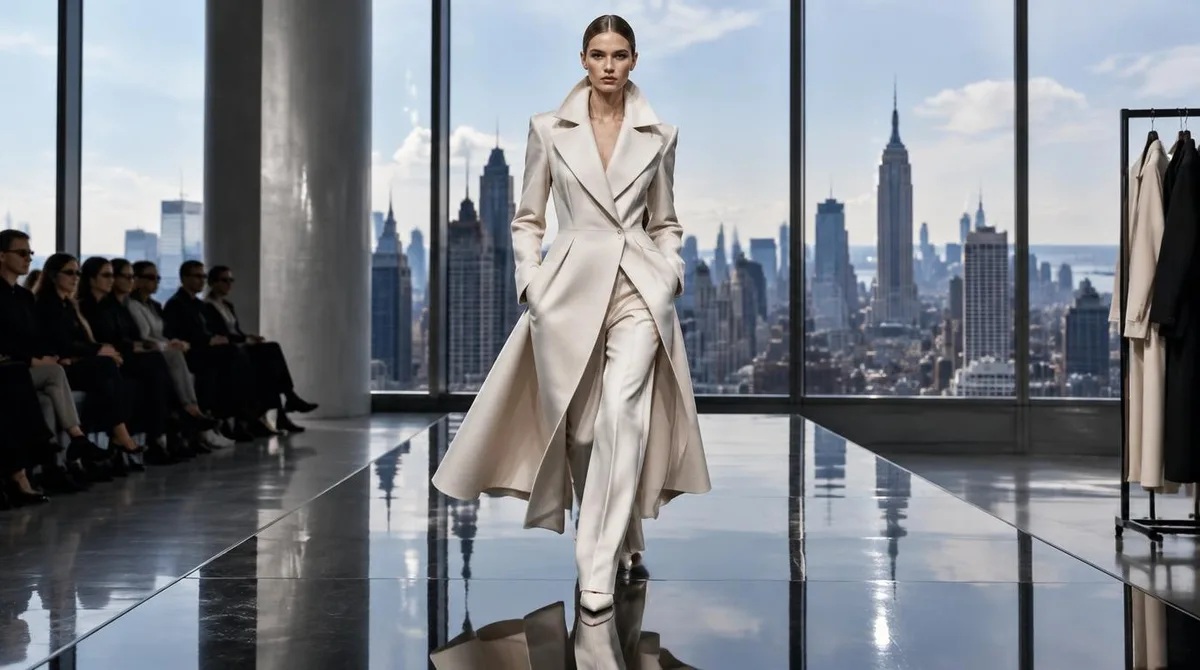
Strip it down and the classic walk does three jobs at once. It keeps the body vertical and quiet, so the eye goes to the garment's line rather than the wearer's effort. It lengthens the stride beyond a normal walking gait, which lets fabric — a column skirt, a wide trouser, a long coat — complete its movement before the model reaches the end of the platform. And it sets a pace the room can follow, steady enough that a photographer at position three and an editor at position nine both get a clean look.
The posture does the quieting. Weight stays over the hips, the ribcage floats rather than sways, and the arms swing little or not at all. From backstage, the difference between a trained walk and an untrained one is visible at the shoulder line first: an untrained walker leaks tension upward, and the garment reads jittery. A trained walker moves from the legs, and the jacket stays still. That stillness is the point.
There is also a footwork logic. Placing one foot almost directly in front of the other narrows the body's silhouette and gives the walk its distinctive, slightly exaggerated roll. It looks theatrical. Mechanically, it is about presenting the front of the garment, then the side, then the front again in the shortest possible distance — a rotating display on a moving plinth.
Why the pause at the end of the runway?
The turn at the end of the catwalk is the walk's punctuation mark, and it exists because the runway is a one-way street for attention. The model walks away from most of the room. The pause — a stop, a weight shift, a turn — is the single moment when every seat has a front view again. It is also the moment photographers time their frames around, which is why a fumbled turn shows up in the wire images and a clean one does not.
Good turns are economical. The model stops on the beat, transfers weight to the back foot, pivots, and exits without breaking the garment's line. A lingering pose belongs to a different era and a different economy; today the turn is usually brisk, because shows run on tight timing and a slow turn compounds across forty exits. The choreography of those exits — who goes when, at what interval — is its own discipline, covered in Twelve Minutes, Timed to the Second: The Hidden Choreography of a Runway Show.
One more function is easy to miss: the pause gives the audience a beat to register the look as a whole. Walking shows a garment in motion. The turn shows it at rest. Buyers ordering for stores need both readings, which is why the walk-to-rack pipeline starts with what happened at the end of that platform — a process traced in From Runway to Rack: How Buyers Turn a Fashion Show Into a Store Order. This connects to our earlier piece, From Runway to Rack: How Buyers Turn a Fashion Show Into a Store Order.
Where did this walk come from?
Honestly: from convention, hardened over the twentieth century, and no single inventor. As fashion shows moved from salon presentations — where mannequins strolled among seated clients — to raised runways built for photographers and large audiences, the walk professionalized around what the new staging demanded. Longer platforms rewarded longer strides. Faster shows rewarded efficiency. The exaggerated, hip-led stride that reads as "runway walk" today is the residue of those pressures, refined in agencies' training sessions and passed from one generation of models to the next.
It is worth being precise about what that history is not. It is not a timeless aesthetic law. It is a set of solutions to staging problems — sightlines, photography, timing — that a particular show format created. Change the format and the walk changes. That is exactly what happens when designers choose standing presentations or unusual venues, where models move through a room rather than down a plank, and the rigid stride would look absurd.
Why do some designers coach models to break the stride?
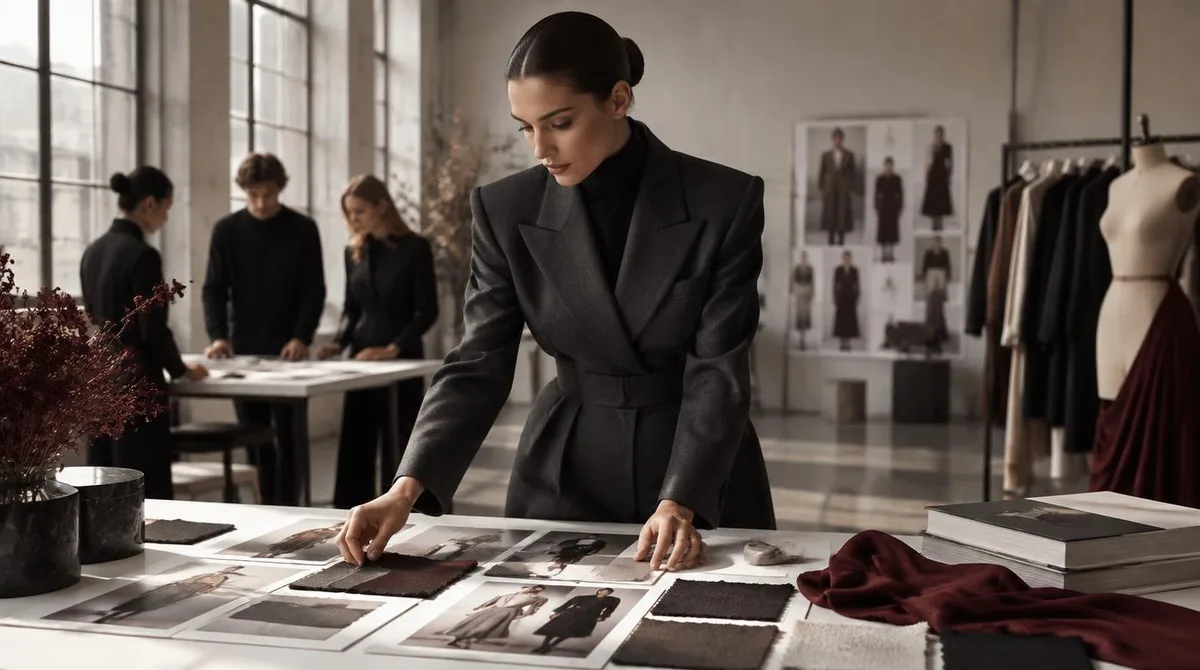
Because the standard walk carries a standard message, and not every collection wants to send it. The classic stride says authority, polish, control. A designer showing deconstructed tailoring, or clothes meant to look caught mid-motion, may ask for a looser gait, a slower pace, even a deliberately awkward step. The coaching is real: at rehearsals, a choreographer or the designer themselves will walk the models through the pace and the turns, adjusting each one. The walk is staged like everything else in the show.
The break can also be practical. Heavy or restrictive garments change what a body can do; a model in a rigid sculptural piece cannot produce a fluid commercial stride, and pretending otherwise would read as struggle. Better to build the difficulty into the choreography so it reads as intention. Our analysis, watching how shows are staged season after season, is that the most successful walk departures are the ones that look inevitable for the clothes — as if the garment itself were deciding how the body moves.
What this means for a viewer is simple. When a walk looks strange, ask what the clothes need. The answer is usually on the runway, in the fabric's weight and the garment's cut, not in the model's mood.
How does a walk become a model's signature — and a booking asset?
Over many exits, a model's walk stops being technique and becomes identity. Casting directors book specific bodies for specific walks: the stride that makes a slip dress move like water, the stomp that sells a combat boot, the glide that makes a gown look weightless. A distinctive walk is remembered at callbacks, and it travels with the model from one casting season to the next. In an industry where faces are compared constantly, a walk is a differentiator nobody can copy cleanly. Readers following this should also see How Runway Casting Actually Works: Go-Sees, Callbacks, and Who Makes the Final Call. Readers following this should also see How Runway Casting Actually Works: Go-Sees, Callbacks, and Who Makes the Final Call.
That signature is built, not born. It comes out of repetition, coaching, and the model's own physical proportions — hip width, leg length, natural rhythm — tuned to what the market currently wants. The training side of that pipeline, from first lesson to first booking, is laid out in How to Walk a Runway: Lessons From the Pros, and the selection machinery that decides which walks get booked sits behind How Runway Casting Actually Works: Go-Sees, Callbacks, and Who Makes the Final Call.
The commercial logic is blunt. A show is a production with a running order, and a model whose walk reliably makes the clothes look their best is a safer line item than one whose walk is merely famous. The stride that gets applauded is nice. The stride that gets rebooked pays the rent.
What the stride tells you, once you can read it
The catwalk walk is a legible document once you know the grammar. A fast, planted stride reads as control; a slow, loose one reads as ease; a broken, uneven gait reads as a collection thinking about imperfection. The pause is a service to the room, the posture is a service to the garment, and the signature is a service to the model's own career. None of it is accidental, and none of it is about the walk itself.
Next time a show's exits look uniform, that uniformity is the message — the house wants nothing competing with the clothes. Next time they do not, look at the fabric first. The walk is answering a question the clothes asked.