How much does one runway show cost? For an established brand in New York, the honest answer starts around $200,000 and climbs past seven figures depending on the venue, the casting, and how much theatrical ambition is involved. The clothes are not the expense. The show is a temporary production company assembled for roughly seventy-two hours — staging, lighting, sound, staffing, security — and then dismantled as if it never happened.
The numbers are famously opaque because brands rarely publish budgets, and the same show can be reported as $150,000 or $1 million depending on who is counting and what they include. But the line items are consistent across every production, whether it happens in a Chelsea pier shed or a Chinatown loft. Follow the money category by category and the anatomy of a show becomes legible.
Where does the money go first?
Venue. A raw space in Manhattan — a pier building on the West Side, an empty retail shell, a rented floor in a Terminal Stores-type warehouse — can run from the low five figures to well over $100,000 for a day of load-in, show, and strike. Brands that show at official venues during New York Fashion Week trade flexibility for infrastructure: the build is simpler, but the rental is not cheap. The venue line also absorbs permits, insurance riders, fire marshals, and the union labor that many large Manhattan spaces require for load-in. A building with freight elevators and a loading dock is worth more than its square footage suggests; one without both can add hours of overtime to the budget.
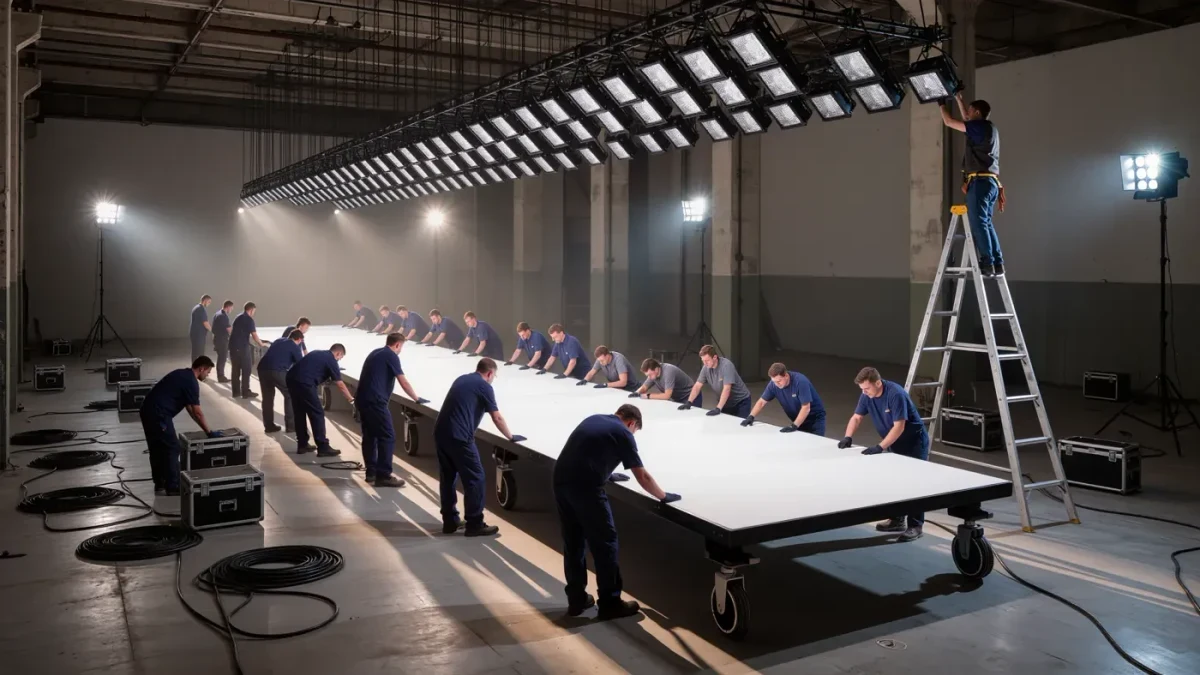
Then the build. Even a minimalist show is a construction project. A raised runway with proper decking, skirting, and a safe surface for heels; seating risers; a lighting grid with hundreds of fixtures; a sound system tuned to the room; scrim, draping, and signage. Production designers talk about the build in the same vocabulary as theater because that is what it is. The difference between a bare white box and a designed environment is often the single largest swing in the whole budget — which is why so many young brands choose the bare white box and let the clothes carry it.
What does the backstage actually cost?
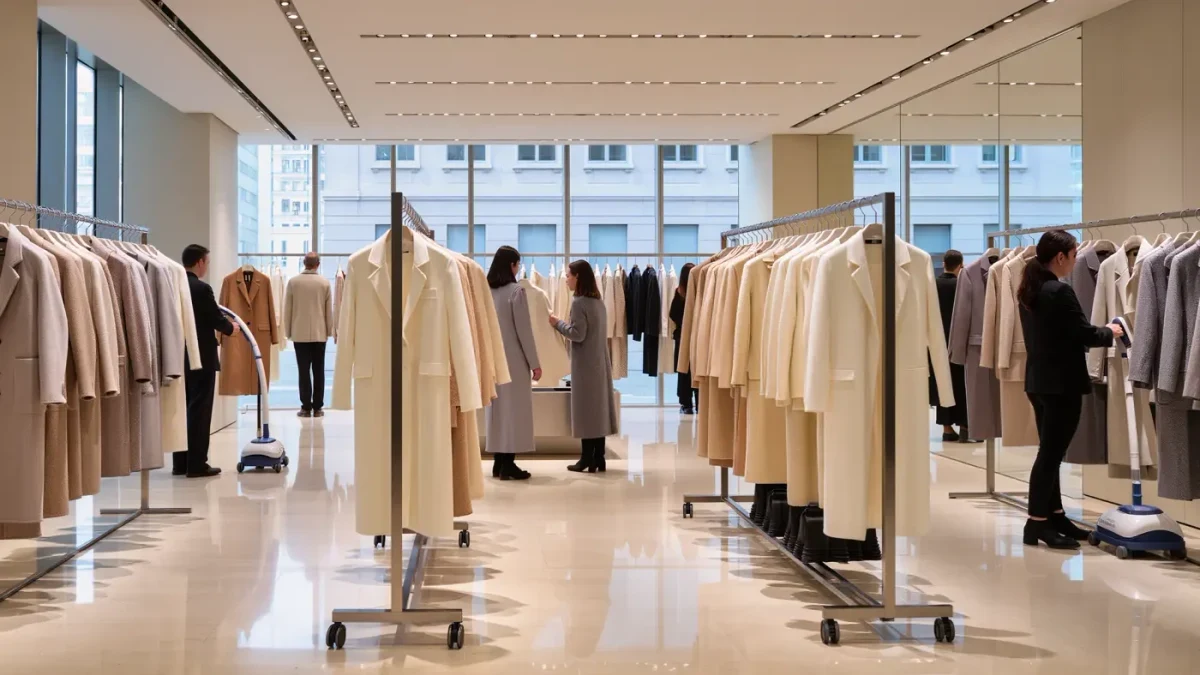
Backstage is where shows quietly get expensive. A professional backstage operation includes a production office, a dressing area with racks and mirrors and lighting, hair and makeup stations with power to spare, steaming and pressing equipment, and a catering operation that feeds a small workforce across a long day. The people count is the shock: hair, makeup, manicures, dressers, stylists, seamstresses for emergency alterations, production managers, backstage door security, and runners. A mid-size show can field a hundred-person crew that exists on payroll for a week and performs for fifteen minutes.
Hair and makeup alone can consume a substantial line. Key artists at the top of the field command significant fees, and a large cast multiplies the cost per head. Brands offset this with sponsorships — a beauty house provides the artists and product in exchange for branding — but sponsorship money is not free money; it arrives with obligations, product placement, and its own logistics.
Do models get paid?
Yes, and the rate varies enormously. Casting a show means negotiating day rates through agencies, and top names command fees that dwarf what a newer face earns. The model line in a show budget is not just fees: it includes fittings days before the show, the fitting garments themselves, and sometimes travel and accommodation for cast flown in from overseas. Casting directors take their own fee for assembling and managing the cast across multiple rounds of go-sees. A cast of forty costs several times what a cast of twelve costs, which is one reason cast sizes have trended down even as production values elsewhere have climbed.
| Line item | What it covers | Typical weight |
|---|---|---|
| Venue and permits | Space rental, insurance, fire safety, loading logistics | Highly variable; often the largest single line |
| Build and lighting | Runway, seating, sound, lighting grid, dressing of the space | Second-largest swing factor |
| Casting and models | Agency fees, day rates, fittings, travel | Scales with cast size |
| Backstage crew | Hair, makeup, dressers, seamstresses, production staff | Fixed floor plus per-head costs |
| PR and invitations | Show producer, publicists, seating, guest management | Modest but non-negotiable |
| Documentation | Photography, video, livestream | Small line, long tail of value |
Why do brands keep paying it?
Because the show is not really an event — it is a compressed marketing buy, an order-generating machine, and a signal all at once. Federal economic data has long shown New York dominating American fashion design employment, and in a city where the industry's attention concentrates twice a year, declining to show reads as a statement in itself. A show that produces a handful of strong images, a clean buyer order sheet, and a rumor of heat has done its job. One that produces none of those things was, financially, a very expensive party.
The honest accounting also includes what audiences never see: the months of production management, the deposits paid before the collection was finished, and the contingency every producer holds back for the inevitable failure — a delayed truck, a blown lighting cue, a model who cancels at the fitting. That is the real line item nobody puts on the deck. The show must not merely go on; it must go on as if the chaos were impossible.
Another cost hides in the timing of payment itself. Productions run on deposits and progress payments — a percentage to hold the venue months out, another to release the lighting package, the balance on show day — and a brand with thin cash flow is effectively financing its own calendar. Late payments ripple: the rental house won't release the fixtures, the staffing agency shortens its roster, the caterer downgrades the backstage meal. Veterans of the production world can read a company's finances off the crew's morale by the afternoon of the show. The spreadsheet and the room agree with each other more often than anyone admits.
The clothes are not the expense. The temporary production company built around them is.
For newer labels, the math forces creativity rather than extravagance — a smaller cast, a rawer room, a shorter guest list. The expensive part of a show turns out not to be glamour but infrastructure: power, labor, insurance, and time. Which is why the most impressive thing about any runway show is rarely what walks down the platform. It is that the whole temporary factory ran on schedule and then vanished by morning.