Who runs a runway show while it is happening? Not the designer. By the time the first model steps out, the collection is finished and the designer is usually front of house taking a bow that has not been earned yet. The show itself belongs to a backstage hierarchy — producer, stylist, key artists, dressers, stage manager — each with a narrowly defined job and a communication chain that turns seventy-two hours of chaos into twelve controlled minutes.
Understanding the org chart explains something larger about the industry: the runway look is a group artifact. What reads as a designer's singular vision is executed by specialists whose jobs most audiences could not name. Here is who they are and what they are actually doing in the minutes before doors.
Who is in charge backstage?
The show producer, or production company, owns the entire operation: venue, build, staffing, timing, and safety. Producers start weeks out, managing load-in schedules and vendor contracts, and on show day they run the room. The stage manager — sometimes called the show caller — is their voice on the headset, cueing lights, sound, and the running order model by model. When a show looks effortless, that is the stage manager's achievement: a stack of simultaneous variables collapsed into a single tempo.
Above the producer but parallel to them sits the stylist or fashion editor, hired to translate the collection into a show narrative: which look opens, which closes, how the sequence reads as a story. The stylist works with the casting director's cast list and the designer's intention, and their decisions are visible in every photograph even though their name is rarely in one.
What do hair, makeup, and nails actually do?
The key hair stylist and key makeup artist are hired to design the look — one hair idea, one face idea — and then to replicate it flawlessly across an entire cast in a couple of hours. They arrive with teams of assistants organized into stations, and a large show can mean dozens of artists working assembly-line precision. Nails, frequently forgotten by outsiders, are a genuine department: a manicure team can process forty models in an afternoon. Beauty sponsorships often underwrite these teams, which is why the products on the stations are not accidental.
Below the keys are the dressers — one assigned per model for larger shows — who learn a specific runway walk's entire wardrobe: which pieces layer in which order, where the hidden hooks are, which shoes go with which exit. A good dresser can turn a model around in under ninety seconds. The dressers also handle the steaming, the lint, the emergency seam, and the small indignities of a garment built for a photograph rather than a body in motion.
Who handles the models?
The casting director's job is mostly done by show day, but casting assistants run the backstage model flow: lineups, dress order, the call times, the choreography of who is in hair, who is dressed, who is on deck. Agency escorts sometimes appear for high-profile casts. Model coordinators manage the running order board — a physical or digital grid that is the single most consulted document in the room — and navigate the constant Variables: a shoe that doesn't fit, a hem that ripped on the previous exit, a model needed early for a quick change.
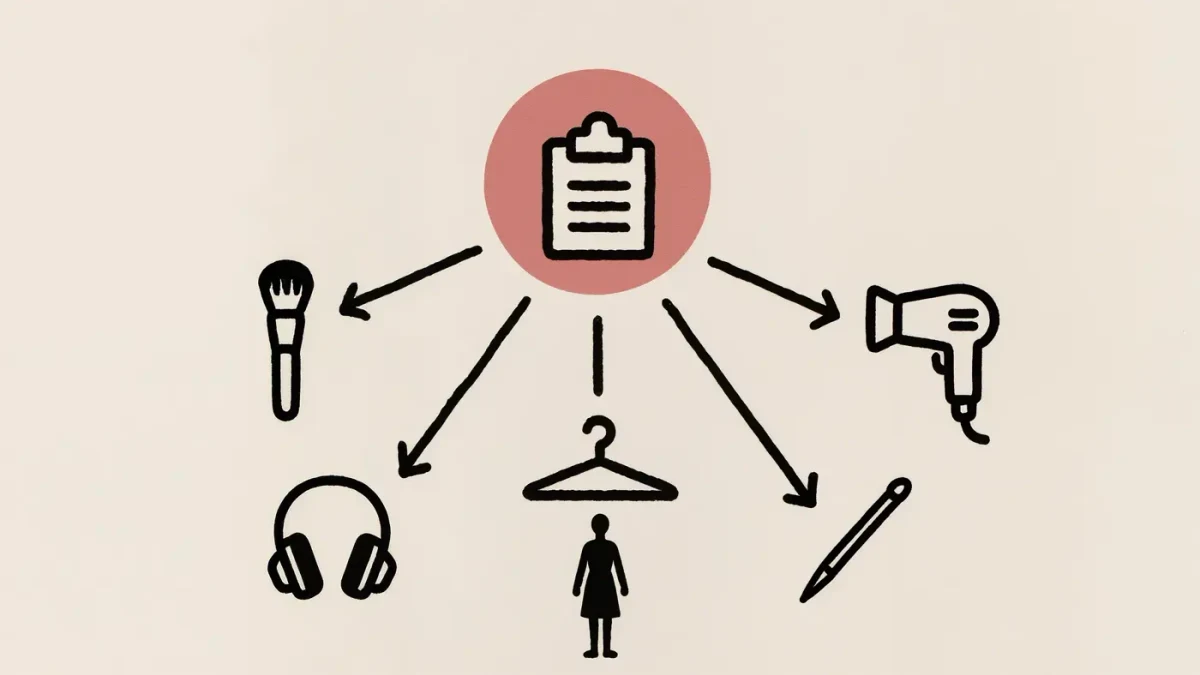
- Show producer: owns budget, vendors, venue, and overall execution.
- Stage manager / show caller: cues every light, sound, and exit from the headset.
- Stylist: builds the running order and the collection's storytelling.
- Key hair and makeup artists: design the look and replicate it across the cast.
- Dressers: one per model; execute every change and repair.
- Casting assistants and model coordinators: run lineup, timing, and traffic.
- Seamstresses: emergency alterations; the unsung heroes of every show.
- Backstage security and runners: keep the door sealed and the supply chain moving.
Why does the hierarchy matter?
Because backstage is a working model of the industry itself — a federal-designated cluster of specialized craft labor operating under extreme time pressure. The flawless surface of the runway is produced by a division of labor as strict as any restaurant kitchen, and the jobs are real careers: producers graduate from production assisting, keys apprentice under keys, dressers become stylists. Labor statistics for the New York metro area count tens of thousands of workers in fashion-related design and production occupations, and on any given show day a meaningful slice of them are inside one building on the West Side or in a Brooklyn warehouse doing a job the audience will never clock.
There is also a culture backstage, and it is more collegial than its reputation. Veterans describe an economy of favors and reputation: the dresser who saves a show with a safety pin is remembered; the key artist who stays calm when the schedule slips is rehired. Names travel. In a gig-based business with no HR department, the backstage org chart is also a job market, and everyone in the room is, in some sense, auditioning for the next show while executing this one.
What reads as a designer's singular vision is executed by specialists whose jobs most audiences could not name.
One more role deserves its own line: the front-of-house manager, the backstage world's mirror image. While the caller runs the room's interior, this person manages doors, seating disputes, standing guests, the livestream camera positions, and the delicate art of starting late enough to absorb arrivals but not so late that the schedule collapses. Front of house and backstage speak on the same headset loop precisely because the show's two halves fail independently — a jam at the door and a jam at the racks produce identical symptoms from the seats, and only the headset knows which one is real. Show folk say the audience never sees the seam between the two operations, and that seam is where most productions are actually won.
The next time a show ends and the room empties in what seems like minutes, watch the crew. Strike begins before the applause finishes. Every one of those roles — producer to runner — disappears into the night, and the room returns to being an empty floor. That is the whole trick.