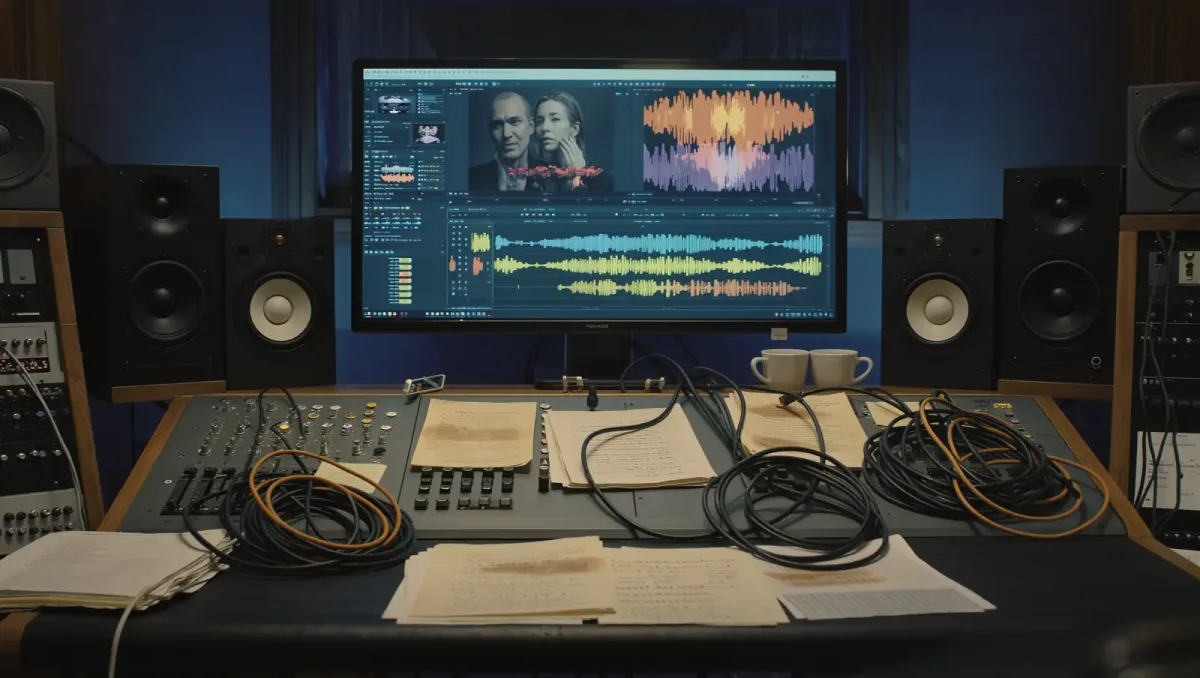
Who makes the music at a fashion show? Usually one of three people: a music director or DJ hired to curate and mix existing tracks, a composer commissioned to score the walk like a film, or — increasingly — a working artist whose unreleased song premieres on the catwalk as marketing. Each route carries a different price and, critically, a different set of rights. The soundtrack is not an afterthought. It is a licensed media product embedded in a livestream that the brand intends to keep and reuse forever.
Ask anyone who has stood in a show room and they will tell you the score does half the work. Tempo sets the gait; a bass drop can make a closing look land like a curtain. Brands know this, which is why the music line has professionalized: there are now specialists whose entire practice is scoring fashion shows, and the credits list on a major production reads like a small record label.
What rights govern show music?
This is where the economy gets real. Every recorded track played at a show implicates copyright: composition rights, recording rights, and — because shows are livestreamed, filmed, and archived — synchronization considerations that a private party would never trigger. Public performance licenses cover the live playback through the standard licensing bodies, but the moment the brand wants the video to live on its channels with the audio intact, sync clearance enters the picture, and sync is negotiated track by track, use by use, term by term. A song cleared for the live room is not automatically cleared for the livestream, the recap film, or the campaign cut.
The workaround is as old as the format: commission original music. A composed score — or a work made under a buyout, where the brand acquires broad rights — costs more upfront and owns everything afterward. For productions with campaign ambitions, the math favors ownership. For smaller shows, a DJ's licensed mix of existing tracks is cheaper and carries the cultural charge of recognizable music, at the cost of a rights posture that usually limits how much of the show video can be legally reposted with sound.
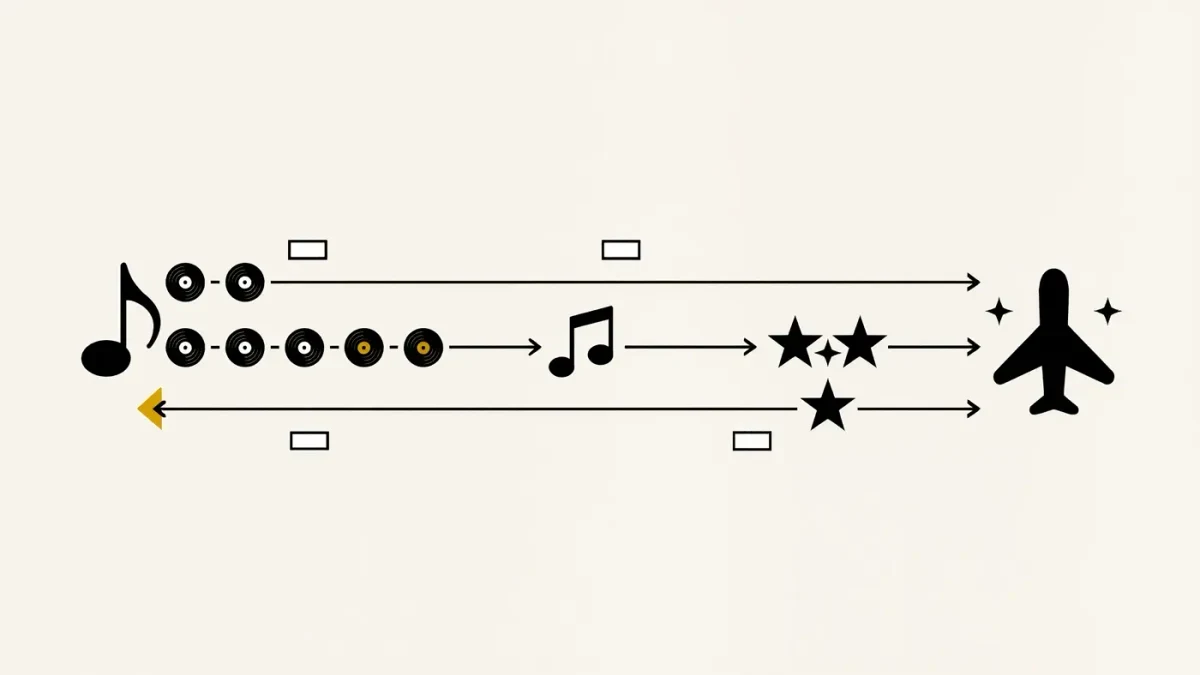
- Curated DJ set: existing tracks mixed live; fast, culturally legible, rights-constrained.
- Commissioned score: original composition; higher upfront cost, clean rights, reusable.
- Artist collaboration: an unreleased track premieres at the show; marketing value flows both ways.
- Live performance: musicians on the runway itself; spectacle plus a separate layer of performance rights.
How much does show music cost?
The honest range is enormous. A respected downtown DJ can be engaged for a four-figure fee; a marquee name with a global following commands fees that rival the lighting budget; a commissioned score from a known composer or producer sits higher still once buyout terms are counted. Licensing a famous master recording for full sync use can dwarf everything else on the audio line, which is why so many shows settle for the recognizable-adjacent: the deep cut, the unreleased remix, the demo from an artist on the way up. The trade of exposure for access is the quiet currency here — an unknown artist will often license cheap or free for the premiere, betting that the association reprices their catalog.
The artist collaboration route has become the most interesting economics in the room. When an emerging musician's track premieres at a show, both parties are buying media: the brand buys cultural heat, the artist buys placement in a piece of content with a built-in press cycle. Fashion weeks function as release platforms this way, and the soundtrack credit in the show notes is, functionally, an A&R announcement.
Why does the music matter that much?
Because a runway show is a timed emotional product, and music is its clock. Editors' accounts of legendary shows consistently cite sound as the difference between a collection that read as art and the same clothes read as inventory. Federal copyright law treats each use as what it is — a use — and the discipline that law imposes has quietly shaped show aesthetics: brands that want clean, ownable video commission scores, and over a decade that preference has nudged the whole calendar toward original sound you cannot Shazam. The absence of a recognizable track is often not a budget choice. It is a rights choice.
There is also the plain physiology of the room. A show's tempo teaches the audience how fast to want the clothes; a funereal pace reads as gravity, a club tempo reads as now. Music directors describe their job as editing the collection's energy, and the best of them are given the lineup before anyone else — because the running order and the score are the same document in different media.
The absence of a recognizable track is often not a budget choice. It is a rights choice.
The rehearsal process reveals how collaborative the score really is. Music directors receive the running order, sketch a tempo map against it, and then sit in on rehearsals with the choreographer and the show caller, adjusting transitions when the walk rhythm demands it — a look that photographs slowly may need its musical bed stretched by eight bars, and a finale procession often gets rebuilt in the room until the sync lands. On show day the DJ or playback operator performs the score live from a rig at the side of the platform, watching the exits the way a club DJ watches the floor. The credits may say one name, but the sound in the room is a negotiation between at least three departments, conducted over headsets, in the final hours before doors.
So the next time a show's last look lands on a perfect crescendo, know that you are hearing three decisions at once: an aesthetic one, a budget one, and a legal one. Only the first was made in public.