What do you wear when Friday is not the weekend's first day but its second? The city-to-Hamptons life created that question, and the answer — a wardrobe engineered to survive a client call at 11 a.m. and a farm stand at 4 p.m. — has become one of the most commercially successful dress codes of the past quarter century. The commuter wardrobe is not vacation clothing. It is a third category: clothes for a life that refuses to declare whether it is working.
The route explains the clothes. From roughly May through September, a certain New York population compresses two lives into one closet: office in Manhattan Monday through Thursday, the Long Island Rail Road's Montauk branch or the eastbound crawl of the LIE on Friday afternoon, and back on Sunday evening with sand in the car. The closet challenge is genuine — summer in the Hamptons is not a beach holiday but a rotating social schedule of dinners, charity events, bike rides and drop-bys, layered on top of remote work sessions conducted from kitchen tables in Sag Harbor and Amagansett.
What defines the Hamptons commuter look?
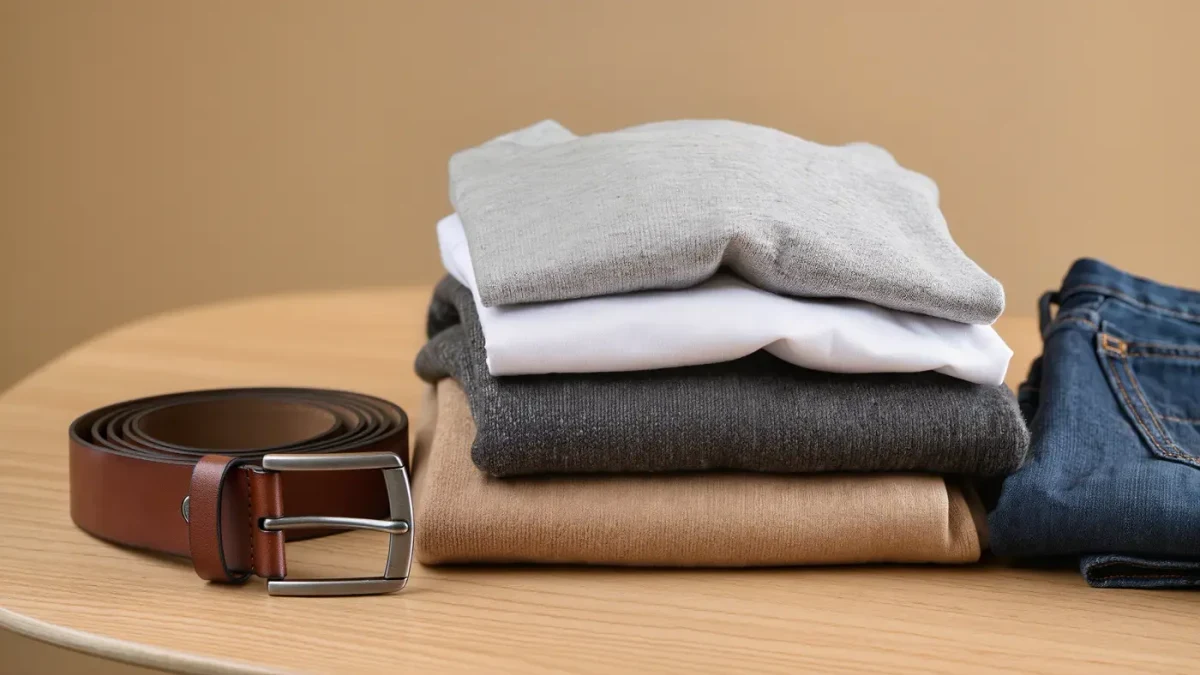
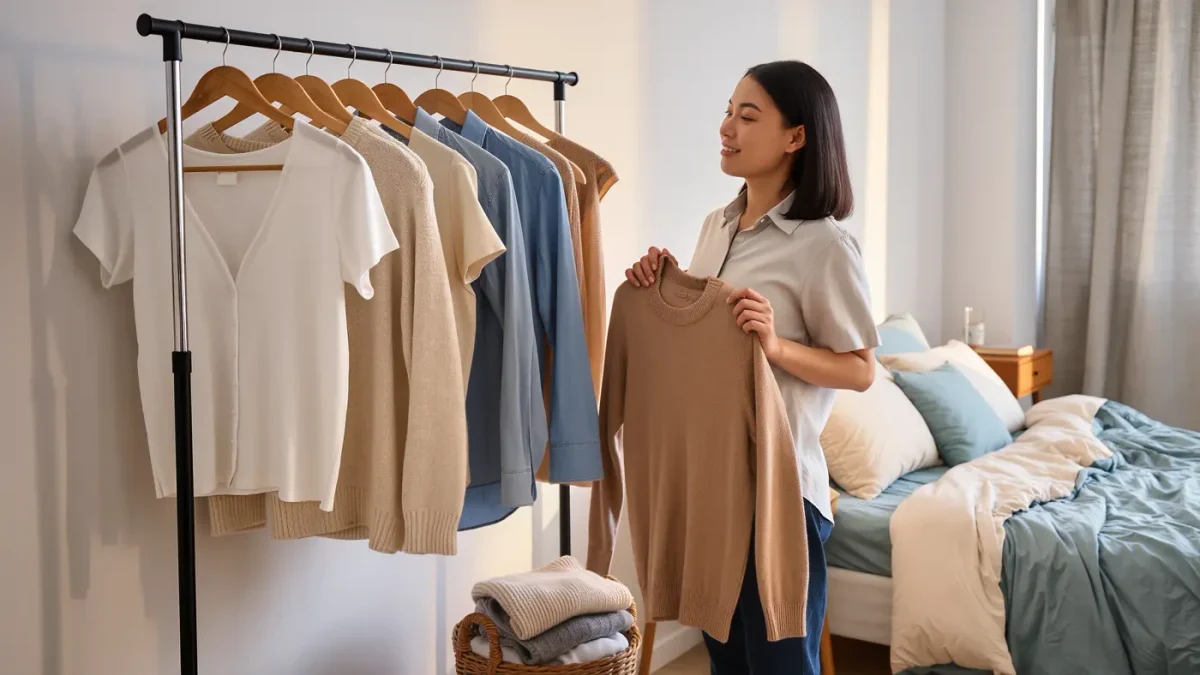
Three garments anchor it. First, the overshirt or chore jacket in linen or faded twill — structured enough to sit on a video call, soft enough for a farmers market. Second, the refined short: tailored, often terracotta or sage rather than loud print, worn with the leather-look sneaker that has become the era's peace treaty between dress shoes and flip-flops. Third, the knit polo, which does more status work per thread than any other garment in the American summer wardrobe. Around these rotate the linen shirt, the light cashmere for ocean evenings — the Atlantic does not warm up on anyone's schedule — and the tote bag sized for a laptop and two days of grocery aspirations.
The palette matters as much as the pieces. The commuter wardrobe is muted — oatmeal, faded blue, olive — because it must photograph as expensive in both contexts: a bright boardwalk color reads cheap in a Manhattan elevator, while head-to-toe tailoring reads absurd at a farm stand. Muted neutrals are the only dialect spoken in both rooms.
Who actually dresses this way?
Two overlapping groups. The year-round wealthy, whose houses east of the Shinnecock Canal make the weekend commute a formality, wear the uniform effortlessly and set its prices. Then the aspirational professional class — finance, law, media, tech — who rent or share for the season and wear the uniform to prove they belong to the geography. Retail noticed the second group decades ago: the preppy tradition that dressed this corridor since the postwar years was commercialized, then re-commercialized through collaborations and heritage revivals, until the commuter wardrobe became a national export worn by people who have never seen Matunuck, let alone Mecox Road.
Economically, the style is a machine. Industry reporting compiled by Bloomberg on lifestyle retail has tracked how seasonal resort wear became a growth category precisely because it monetizes aspiration toward leisure rather than leisure itself. A $300 knit polo is not priced for the beach. It is priced for the fantasy of a life where the beach is Tuesday.
Did remote work finish the job?
It dissolved the last border. Once the office became a laptop, the wardrobe stopped needing to change geographies at all — the same overshirt now serves the Monday video call and the Saturday flea market, and the distinction between workwear, weekend wear and vacation wear has thinned to a marketers' technicality. Hybrid garments stopped being a summer compromise and became the default architecture of American casual dress, with the city-to-country commuter as the prototype customer.
There is a mild absurdity at the center of it all: the uniform of effortless leisure is among the most carefully engineered, deliberately purchased wardrobes in existence. Nothing about looking undone is undone. But that has always been New York's way with style — take a practical problem (one closet, two lives, three hours of traffic on the LIE), and solve it with garments good enough that nobody asks the question. The linen overshirt is the answer to a question about logistics. It just looks like an answer about taste.
What does the wardrobe look like in the car?
The commute itself has a costume, and it is the genre's most honest layer. Sunday-night eastbound or Friday-afternoon westbound, the LIE and the Long Island Rail Road fill with the uniform in transit mode: sunglasses, the weekend's softest clothes, a work bag that betrays Monday's intentions. The outfit is deliberately transitional — comfortable enough for three hours of traffic, respectable enough for the first Monday meeting if the return runs late. Fashion analysts rarely study the in-between state, but that is where the commuter wardrobe's real engineering shows. Clothes designed to make two lives look like one, worn at the exact seam between them.
Retail's consolidation of the look happened in plain sight. What began as actual hand-me-down practicality — old oxford cloth, faded khaki, sweaters kept from college — became a purchasable simulation once enough aspirational commuters entered the market to support dedicated supply. Distressing arrived manufactured; fades arrived pre-faded; the weekend patina of a life outdoors became a factory finish applied to garments sold at full price. The commuter wardrobe is now one of the few dress codes where the authentic version costs less than the imitation, since the original owner's clothes were old precisely because they were already owned. New York finds that joke funny without exactly disagreeing with it.