Why does New York still dress like two cities? Because it functionally is one. The split runs less along a subway line than along a set of assumptions about why people get dressed uptown — for recognition, for rooms you're entering — and downtown — for signal, for streets you're walking. Both codes survive because each one still works, and every few years one raids the other's closet.
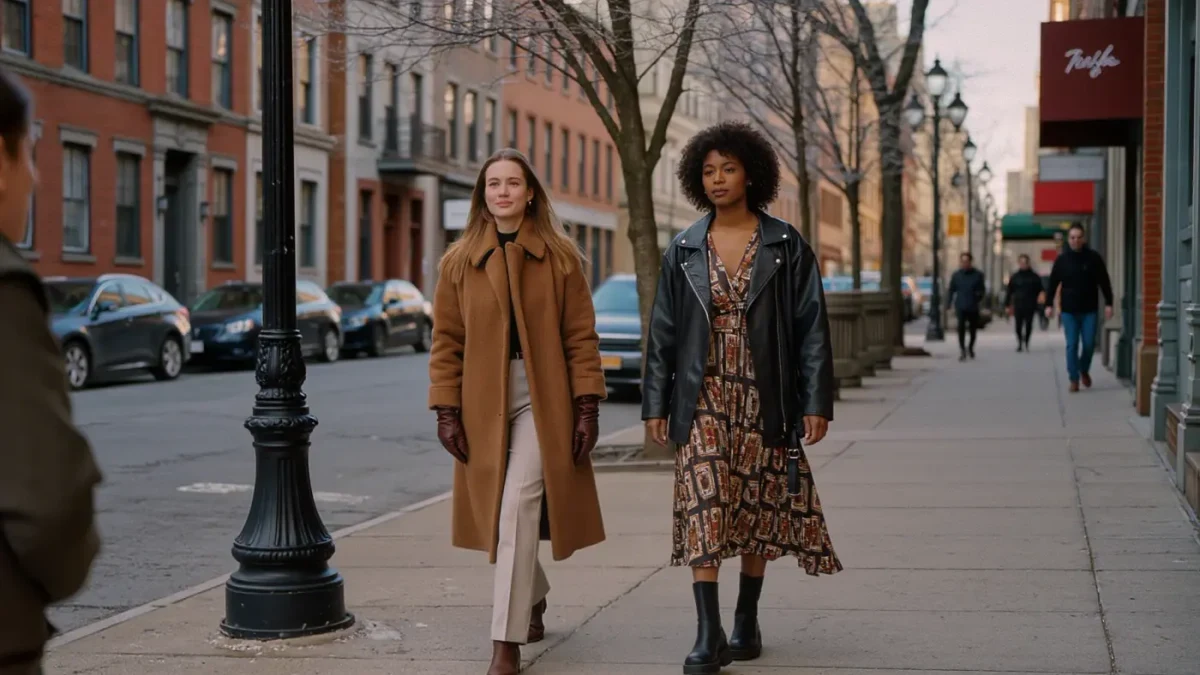
Ask anyone who has lived on both sides. A woman who moves from Lenox Hill to Ludlow Street does not simply change her clothes; she changes her relationship to being noticed. The reverse migration is just as telling. Downtowners who cross 59th Street for a job, a partner, or a co-op board discover that their leather jacket reads differently under the chandeliers of a prewar lobby on West End Avenue. Same jacket, different sentence.
Where did the uptown-downtown divide actually come from?
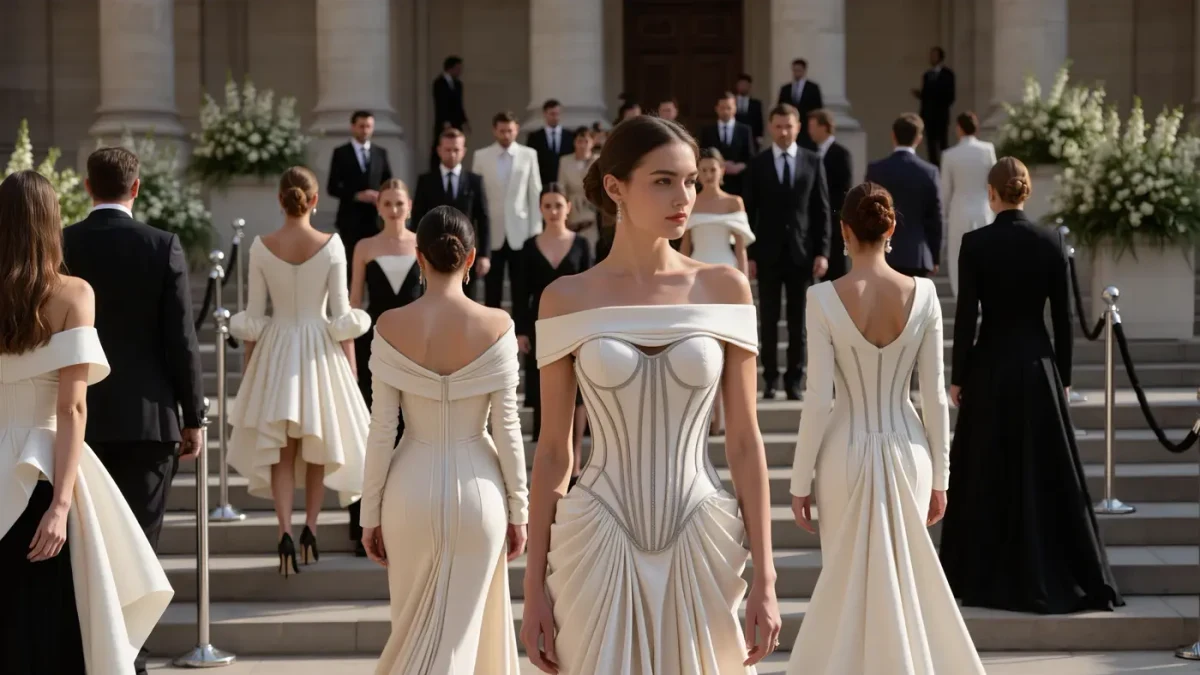
The split is economic before it is aesthetic. Through the twentieth century, uptown — the Upper East Side above 59th, later pockets of Harlem's Sugar Hill — concentrated the kind of wealth that dressed to confirm status: houses with names, charity galas, trunk shows at Bergdorf Goodman on Fifth Avenue. Downtown — the Village, then SoHo, then the East Village and the Lower East Side — concentrated artists, immigrants, and students who dressed to decline the whole arrangement. Uptown clothes said I belong. Downtown clothes said I don't need to.
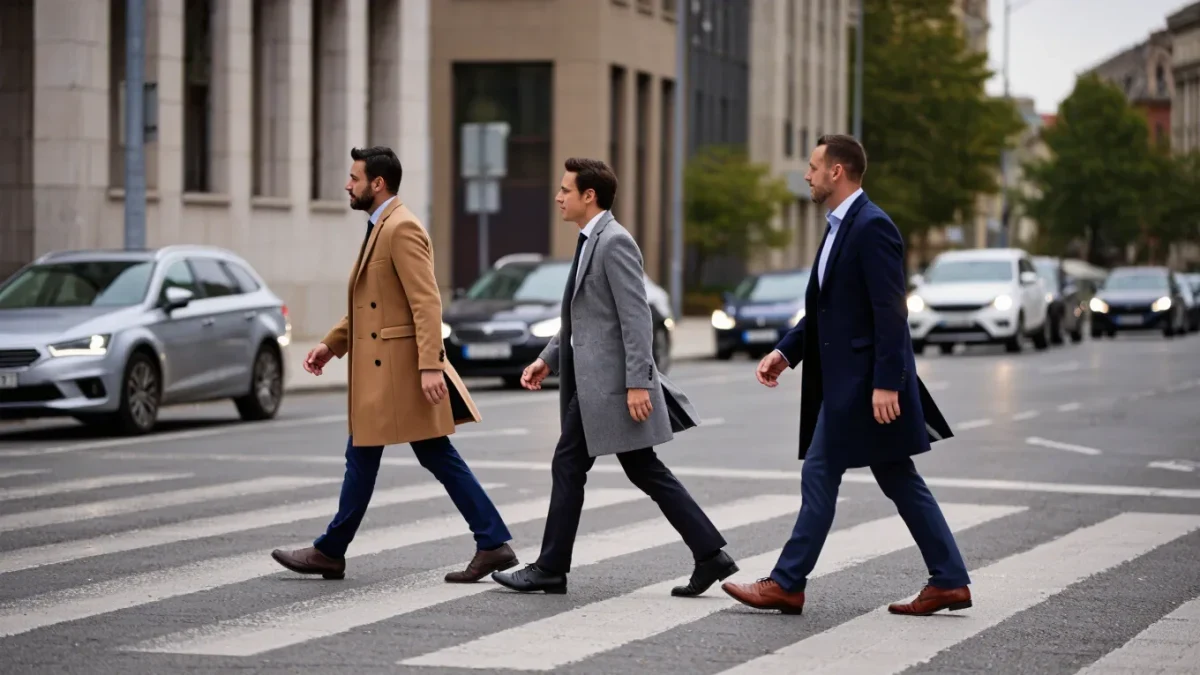
That inversion is the engine. New York's most durable style gestures have almost all been downtown appropriations of things uptown discarded: workwear, military surplus, men's tailoring worn by women. The uptown look barely needed to innovate — its job was continuity, and it treated continuity as a form of taste. A Camel hair coat is not a statement. That is the point of a Camel hair coat.
What does uptown dress code look like now?
Walk Lexington Avenue in the upper 70s on a weekday morning and you can still read the old code in diluted form: tailored coats, quiet cashmere, shoes chosen for polished floors rather than curbs. The uniform survives best where it has an audience — private school drop-offs, the boardroom-to-lunch corridor along Madison Avenue, dinner at a club whose name is a number. But even uptown has softened. The sneaker won. You now see running shoes under wool trousers on Park Avenue, a sight that would have been a social incident in 1995 and is now just Tuesday.
What has not softened is the logic: uptown style is still addressed to a room. It assumes someone is evaluating you — a maître d', a mother-in-law, a hiring partner — and it dresses for the most conservative person present. Logos, when they appear, are small enough to require proximity. The point is legibility to insiders, not visibility to strangers.
And downtown — what is the code there?
Downtown style is addressed to the street, which means it is addressed to no one in particular and everyone with a good eye. Its geography has kept moving as rents push each scene east and south: Greenwich Village in the fifties, SoHo in the seventies, the East Village's thrift corridors on Avenue A and St. Mark's Place in the eighties and nineties, the Lower East Side after that, Williamsburg across the river once Manhattan priced out its own rebellion. Each migration left sediment. Vintage shops, vintage-adjacent chains, and the memory of vintage now line parts of the Lower East Side like geological strata.
The code itself is contradiction management: expensive coat, cheap boots; vintage dress, very current bag. The mix is the message — proof that the wearer knows the original of every reference. Done badly it is costume. Done well it looks like an accident that took an hour.
Do the two codes still matter, or has everything flattened?
Flattening is real. Remote work loosened both uniforms, Instagram taught everyone the same visual grammar, and the sneaker-to-suit pipeline ran in both directions. A 2024 study of American time use and spending patterns by the U.S. Census Bureau and the Bureau of Labor Statistics shows clothing spending concentrated in fewer, higher-quality purchases for many urban households — one reason a single good coat now does more identity work than a closet full of statements.
But watch where New Yorkers change clothes and the border lights back up. The same person who wears head-to-toe black on Orchard Street will pull a blazer from a garment bag for a wedding at a synagogue on West 79th Street. Uptown crowds visiting the Whitney's downtown outpost dress downtown for the occasion. The codes haven't merged; they've become bilingual. Nearly everyone in this city now owns both dialects and switches between them by Zipcode, sometimes by elevator bank.
Who is borrowing from whom this decade?
Mostly, the money is borrowing the attitude. Quiet luxury — the post-2023 fashion for expensive anonymity — was essentially an uptown aesthetic that went mainstream, and it spread precisely because it looked like nothing. Meanwhile downtown absorbed the tailoring it used to mock: pleated trousers and unpadded blazers now sit next to band tees on Orchard Street, the old uniform worn ironically and then, a season later, sincerely. Each side thinks it's winning. Both are just trading.
The border survives because it never was really about geography. It is about the two available answers to the question every city asks when you leave your apartment: who are you dressing for? New York, uniquely among American cities, never forced one answer. Above 59th and below it, people have been arguing about it in wool and cotton for a century, and neither side has conceded. The argument is the style.