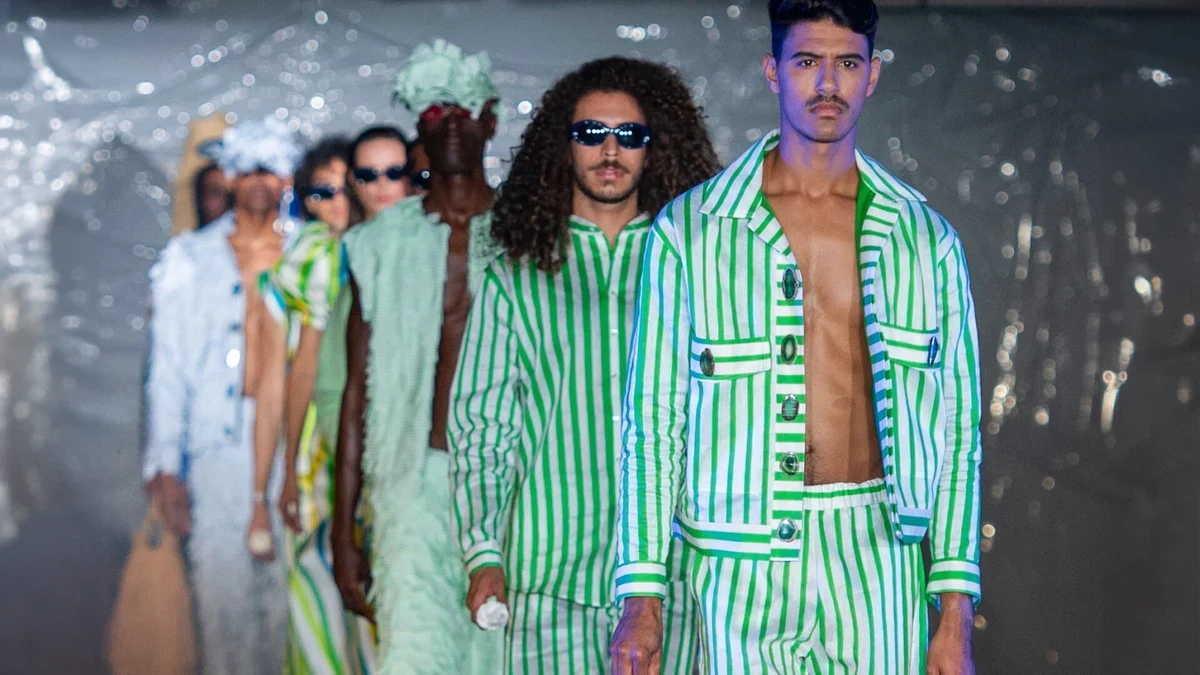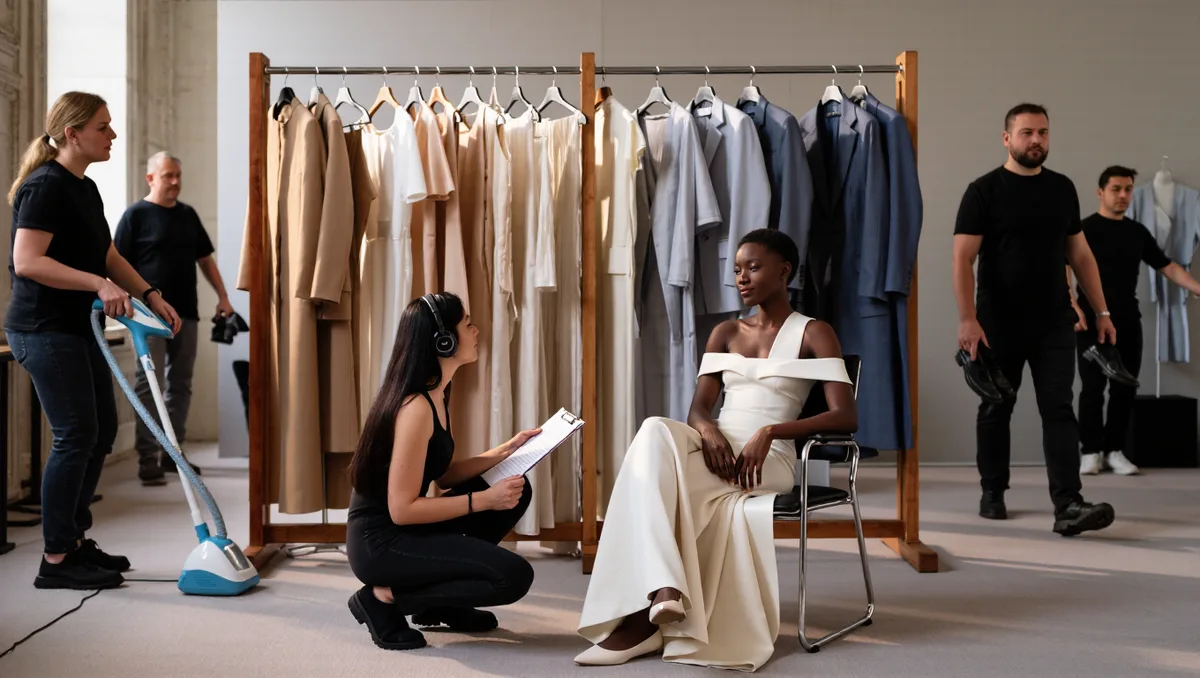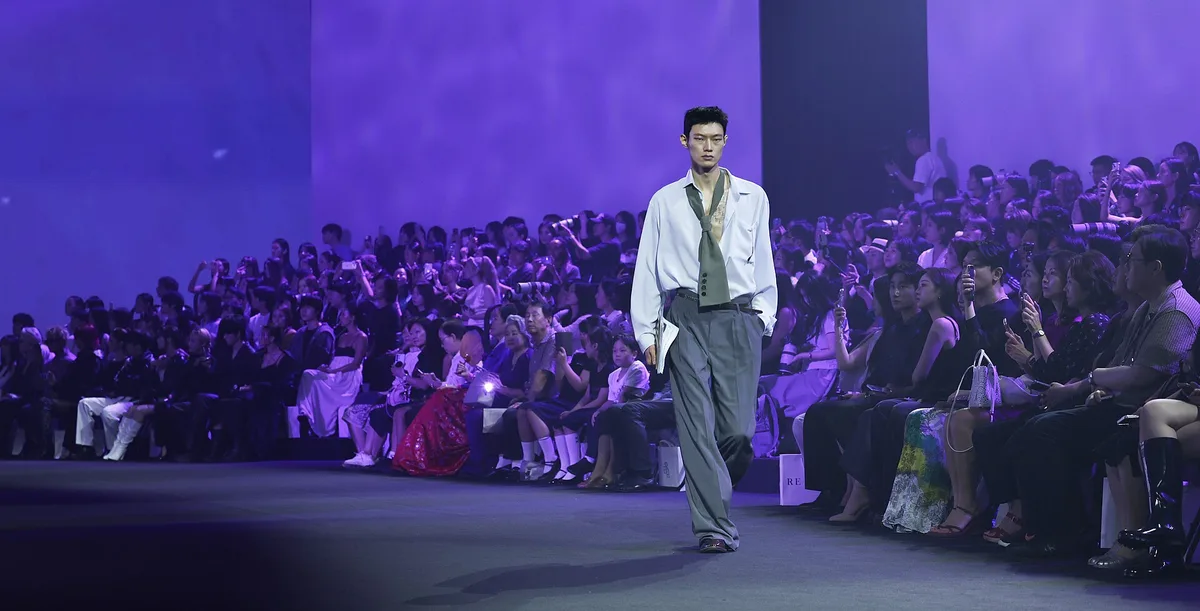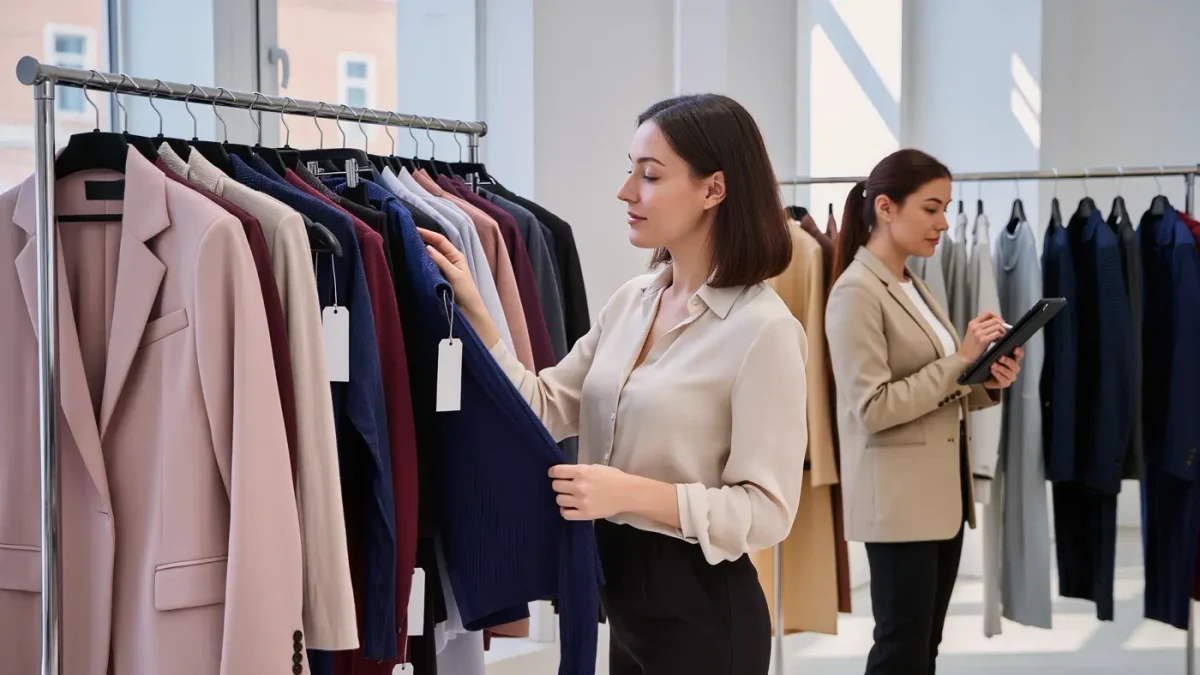
How does a look from a runway show end up hanging in a store six months later? Through the buy: a structured process in which store buyers attend the show, then return to the brand's showroom within days to examine the collection piece by piece, negotiate quantities and delivery windows, and write orders that decide what the public will actually be sold. The show produces desire; the buy converts it into purchase orders. They are different events with different casts, and confusing them is the fastest way to misunderstand how the fashion business works.
During New York fashion week the two populations overlap in the same rooms but do different jobs. Editors watch the runway for narrative and news. Buyers watch it for allocation: which looks are commercial, which are press bait, and which exist mainly to make the commercial pieces look restrained by comparison. Every experienced buyer knows the collection's show order is an argument, not an inventory list.
What happens in the showroom after the show?
The showroom appointment is where the real transaction begins, usually within a day or two of the show. Buyers move through the collection on rails, handle the garments, check the line sheet — the wholesale price list with style numbers, fabrications, and delivery dates — and begin building an order the way an investor builds a portfolio: core styles in depth, statement pieces sparingly, a test allocation for the unknowns. They order against their store's sales history, their customer's size curve, and the local climate, which is why a coat that sells out in Chicago may never reach a Miami floor.
Negotiation is constant and quiet. Minimums are set per style and per delivery; markdown money, return privileges, and payment terms are discussed in the same breath as hemlines. Buyers push for exclusives — a colorway or fabric held for one store — because exclusivity drives traffic, and brands grant them strategically to reward their best accounts. The Sales team's job in the room is to protect the brand's price integrity while hitting the season's order target; the buyer's job is to get depth on what will sell without getting stuck with what won't.
| Stage | Timing | What gets decided |
|---|---|---|
| Show attendance | Fashion week | Brand story, standouts, appointment priorities |
| Showroom appointment | Days after the show | Style selection, quantities, sizes, exclusives |
| Negotiation | Same visit through market week | Terms, minimums, delivery windows, markdown support |
| Order confirmation | Weeks after market | Final purchase orders against production capacity |
| Delivery and reorder | Roughly six months later | Floor placement, sell-through, reorders of winners |
Why is there a six-month gap between show and store?
Because the industry's calendar predates its own speed problem. Fall collections show in the winter and deliver in the summer-to-fall window; the gap covers production, shipping, distribution, and the retailer's own floor-set schedule. Wholesale remains the backbone even in an era of direct-to-consumer: federal retail trade data consistently shows department and specialty stores moving a large share of apparel volume, and a brand that can land orders with respected accounts gets working capital, credibility, and a distribution footprint in one negotiation. The gap also creates the season's central gamble — buyers order from a sample against demand they are forecasting half a year out, which is why reorder capabilities and markdown money matter so much in the terms.
The show's role in this machine is narrower than it looks. It exists to concentrate demand and give the sales team a story to sell against in the showroom days later. A buyer who loved look fourteen will not order look fourteen if the store's customer bought last season's version at full price and returned the statement pieces at mark-down. Shows create the weather; buyers carry umbrellas.
How is the buying process changing?
Quietly, on both ends. Digital ordering platforms and remote appointments have made some showroom visits optional, and data tools give buyers sell-through analytics their predecessors never had — the discipline is drifting from taste toward inventory science. Meanwhile, direct-to-consumer pressure has shortened some brands' cycles, with see-now-buy-later experiments and pre-orders letting eager customers reserve show looks before production. But the core structure holds: someone in a room with the collection on rails, a line sheet in hand, and a quota, deciding what a neighborhood of shoppers will be offered half a year from now. Federal census data on wholesale trade apparel flows underlines the scale: this is not a boutique ritual but a distribution system moving billions of dollars of decisions through two-week windows twice a year.
The show produces desire. The buy converts it into purchase orders.
It helps to know who the buyers are. A department store sends a team: a fashion director who sets the season's point of view, category buyers who build the orders, and planners who pressure-test the quantities against last year's numbers. Specialty boutiques often send a single owner who does all three jobs in one afternoon, and their orders are smaller but faster — an independent shop can commit while the department store's decision cycles through weeks of internal review. Brands sequence their market weeks accordingly, and a label's appointment book during the days after its show is, in effect, a cross-section of American retail, from Mad Avenue flagships to a single-door shop in a neighborhood nobody flies in for.
So the rack you browse in October was mostly decided in a Manhattan showroom in February, by a person who saw the show, thought about your zip code's size curve, and negotiated the delivery date accordingly. The runway got the photographs. The buyer got the last word.